Selling to a Buyer Across the State Line
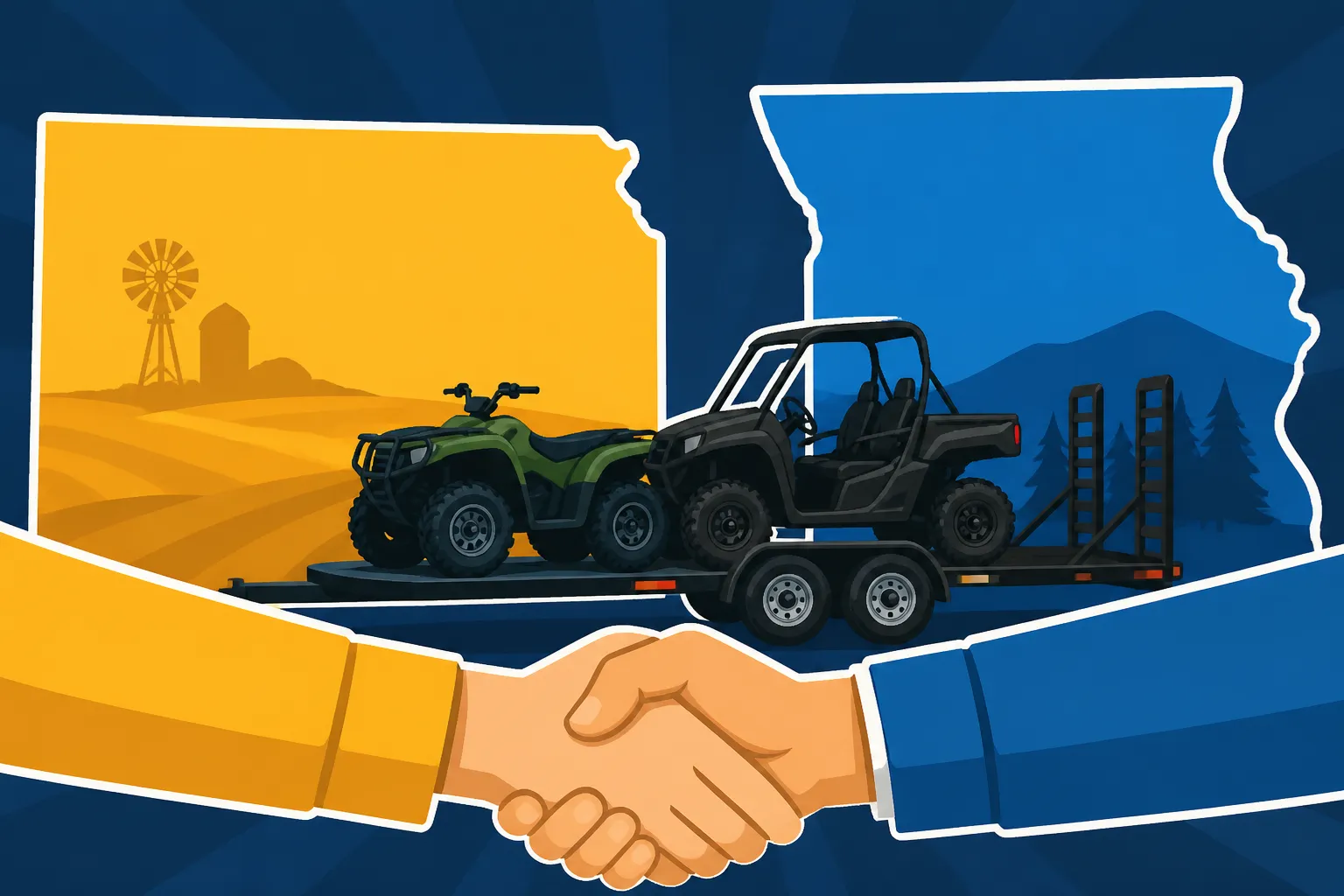
Selling an ATV or UTV can be exciting, but when your buyer is from another state, things can quickly get tangled with different regulations and expectations. It's a common headache for many Kansas sellers, trying to figure out how to transfer ownership smoothly when the buyer's state might have entirely different rules. This guide is here to walk you through every step of selling your off-road machine to an out-of-state buyer, ensuring a clear and confident transaction for both you and the new owner.
The Initial Hurdle: Understanding Kansas Titles vs. Other States
One of the biggest misunderstandings when selling a Kansas ATV or UTV across state lines often revolves around the title itself. What seems straightforward to us in the Sunflower State can be a real head-scratcher for someone used to a different system. It's not uncommon for an out-of-state buyer to have preconceived notions about what a "vehicle title" entails, and off-road machines often don't fit that mold neatly.
Why Kansas Titles Are Unique Nonhighway Status
Here in Kansas, ATVs, UTVs, and even dirt bikes are typically titled as "nonhighway vehicles." This isn't just a quirky label; it means something significant. Unlike passenger cars or trucks, these machines are not designed or intended for regular public road use. This designation is crucial because it influences how the title looks, what information it contains, and what it doesn't imply.
For many out-of-state buyers, especially those from states where off-road vehicles might be registered or even tagged for limited road use, a Kansas nonhighway title can seem a bit… bare. They might be looking for a separate registration card, proof of annual tags, or even something indicating street legality, none of which typically accompany a Kansas nonhighway title. It's essential to explain this distinction clearly. The very reason we have these titles is to prove ownership, not to authorize road use. You can dive deeper into this by understanding [Kansas Titles ATVs as Nonhighway Vehicles] and [Kansas's Nonhighway Title Explained]. This distinct approach can be a point of confusion, so be prepared to gently educate your buyer.
What an Out-of-State Buyer Expects
Buyers from other states often come with a different set of expectations based on their home state's vehicle laws. For instance, some states might require annual registration and a license plate for ATVs or UTVs, even if they're only used off-road. They might assume that a title automatically comes with a registration process or even implies some level of road-worthiness. In Kansas, however, [Kansas Has No OHV Registration] in the traditional sense, which can be baffling to someone from, say, Oklahoma or Missouri, where a different system is in place.
It's common for buyers to ask about annual fees or stickers, which simply don't exist for most Kansas off-road machines. They might also inquire about inspections or emissions tests, which are typically irrelevant for our nonhighway vehicles. Your buyer might also expect the title to be issued by a state-level Department of Motor Vehicles, whereas here, it's the county treasurer's office that handles these transactions. Managing these expectations upfront can save a lot of headaches later on. Be ready to explain what your Kansas title is and isn't, and encourage them to check with their local titling agency about their state's specific requirements before they commit to the purchase.
Preparing Your Kansas Title for Transfer
Once you have an interested buyer, preparing your Kansas title for transfer is straightforward, but it needs to be done meticulously. Your existing Kansas nonhighway title will have sections for the seller to sign and date, indicating the transfer of ownership. It's vital that you fill this out accurately and completely, including the sale date and the buyer's full legal name and address. Any errors or omissions on the title itself can cause significant delays for your buyer when they try to title the machine in their home state.
Make sure you're signing in the correct spots – typically, there's a seller's signature line and sometimes a line for the buyer to acknowledge receipt. If there's more than one owner listed on the title and they are joined by "and," all owners must sign. If they are joined by "or," typically only one signature is needed, but it's always safest to have both if possible. It’s also wise to make a clear, legible copy of the signed title for your own records before handing over the original. For a detailed rundown of the specific sections, you can review [Kansas Title Paperwork Explained]. The clearer and cleaner your title transfer is, the smoother the process will be for your buyer.
Navigating the Sales Process: Paperwork and Payment Across Borders
Selling anything to someone who lives in another state adds a layer of complexity, especially when it comes to legal documentation and financial transactions. You want to ensure the sale is legitimate and that you're protected, while also making the process as transparent and easy as possible for your buyer. This part of the process requires careful attention to detail and a bit of foresight.
The Importance of a Solid Bill of Sale
In any private sale, a bill of sale is your best friend, but when you're selling to a buyer across state lines, it becomes absolutely indispensable. This document serves as a legally binding record of the transaction, detailing what was sold, for how much, and under what conditions. It's not just a receipt; it's proof of the transfer of ownership and can protect both parties from future disputes. A robust bill of sale should include:
- Full Names and Addresses of both seller and buyer.
- Detailed Description of the ATV/UTV: Make, model, year, VIN (Vehicle Identification Number), and any unique identifiers.
- Purchase Price: Clearly stated in both numbers and words.
- Date of Sale.
- Signatures of both buyer and seller.
- "As-Is" Clause: Typically stating that the machine is sold without warranty, allowing you to avoid implied guarantees.
- Odometer/Hour Meter Reading: Though not always required for off-road vehicles, it's good practice.
Many sellers find it helpful to use a professional template for this. Services like LawDepot offer customizable bill of sale forms that can be tailored to include all the necessary specifics for an ATV or UTV sale, providing an extra layer of legal confidence for both parties involved. Having this comprehensive document helps avoid misunderstandings and provides concrete evidence should any questions arise after the transaction is complete.
Handling Payment Securely
Receiving payment from an out-of-state buyer introduces a few unique considerations, mainly around security and verification. You want to ensure the funds are legitimate and fully transferred before you hand over the title and the machine. Here are some common payment methods and what to consider:
- Cashier's Check: While generally safer than a personal check, cashier's checks can still be fraudulent. It's crucial to verify the check directly with the issuing bank (not just the phone number printed on the check) before releasing the machine or title. Ideally, this happens inside your bank, where a teller can confirm its legitimacy.
- Wire Transfer: This is often a secure option, as funds are transferred directly from the buyer's bank to yours. Once wired, the funds are generally considered good. However, once sent, a wire transfer is difficult to recall, so ensure all details are correct.
- Escrow Service: For higher-value machines, an online escrow service can provide excellent security for both parties. The buyer sends money to the escrow service, which verifies it. Once you've transferred the title and the buyer receives and approves the machine, the escrow service releases the funds to you. While this adds a small fee, it significantly mitigates risk.
Avoid personal checks or money orders from unknown buyers, as these are frequently used in scams. Always wait until the funds have cleared into your account and are verified before you finalize the transfer of the title and the machine. Don't let a buyer pressure you into rushing this step.
The Role of the Manufacturer's Certificate of Origin MCO for Newer Machines
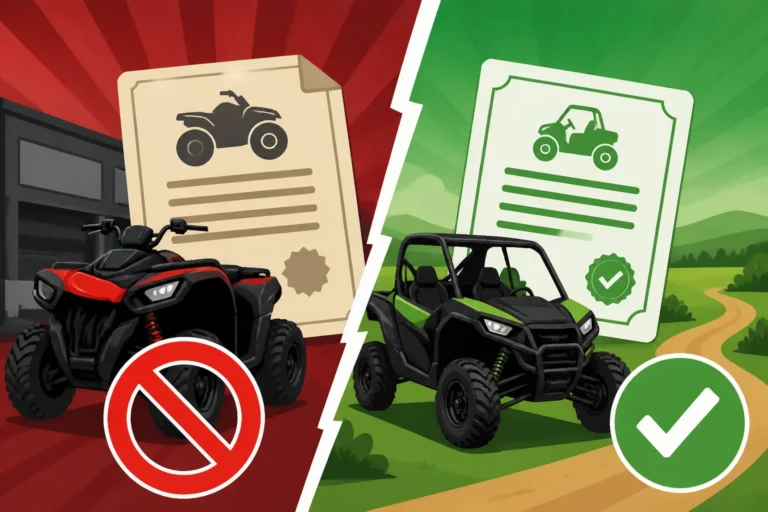
Sometimes, you might be selling an ATV or UTV that's relatively new and has never been formally titled in Kansas. In such cases, the primary ownership document isn't a title, but rather the Manufacturer's Certificate of Origin (MCO). The MCO is essentially the "birth certificate" for the machine, issued by the factory. When a brand-new machine is sold by a dealer, the dealer typically signs over the MCO to the buyer, who then takes it to the county treasurer to get the first title. For more on this process, check out [Taking an MCO to the County Treasurer's Window].
If you're selling a machine that you received directly from a dealer with an MCO and haven't titled yet, you'll need to transfer the MCO itself to your out-of-state buyer. This typically involves signing the seller's portion of the MCO, much like you would a title. The buyer will then use this MCO to apply for a title in their home state. Ensure all information on the MCO is correct and that you've endorsed it properly. It's always a good idea to make a copy of the MCO before you hand over the original.
Logistics and Responsibilities: Getting the Machine to the Buyer
Once the paperwork is done and payment is secure, the next big question is how to get the ATV or UTV from your location in Kansas to your buyer's location in another state. This involves transportation, final details, and ensuring your buyer has all the information they need to complete their side of the process.
Transporting the ATV/UTV
Transporting an ATV or UTV across state lines can be handled in a few ways, and it's important to clarify who is responsible for what.
- Buyer Pickup: The most common and often easiest method is for the buyer to travel to Kansas to pick up the machine themselves. This means they are responsible for their own trailer, tie-downs, and safe transport back to their state. Ensure they have appropriate vehicle and trailer to haul the machine safely.
- Seller Delivery: Less common for interstate sales unless you're selling to a nearby state, but you might offer to deliver the machine for an agreed-upon fee. If you do this, factor in your fuel, time, and any potential overnight stays. You'll also need appropriate insurance for transport.
- Third-Party Shipping: For buyers living further away, a dedicated powersports or vehicle transport company can be hired. This is usually arranged and paid for by the buyer, but you, as the seller, will need to be available for pickup. Always ensure the transport company is reputable and insured.
Regardless of the method, ensure the machine is properly secured for transport. Clear communication with the buyer about pickup times, locations, and responsibilities is key to a smooth handover.
Informing the Buyer About Their State's Rules
While it's ultimately the buyer's responsibility to understand their own state's laws, as a courteous and responsible seller, you can provide a valuable service by gently reminding them to check their local regulations. You've just sold them a "nonhighway vehicle" from Kansas, and their state might classify it differently, or have specific requirements for titling and registration.
For example, their state might charge sales tax on the purchase when they go to title the machine, even if you, as a private seller, didn't collect it. (In Kansas, sales tax is generally collected at the county treasurer's office during titling, as explained in [Kansas Sales Tax Collected at Titling], but this varies widely elsewhere.) Encourage them to contact their state's Department of Motor Vehicles or equivalent agency to understand their obligations. This proactive communication can help your buyer avoid surprises and appreciate your thoroughness. It also helps you avoid being blamed for any issues they encounter in their home state due to their own lack of preparation.
What to Do After the Sale is Complete
After the money is in your account and the buyer has driven off with their new-to-them ATV or UTV, you still have a few crucial steps to take to tie up loose ends and protect yourself.
First, keep meticulous records of the sale. This includes copies of the signed title (especially your signed-off portion), the bill of sale (again, LawDepot templates are great for this), and any communication regarding the sale. These records are your proof that you no longer own the machine and are no longer liable for it.
Second, remove any personal items from the ATV or UTV, such as custom accessories you might want to keep, personal navigation devices, or tools. Double-check storage compartments.
Finally, while Kansas doesn't have an official way to report the sale of a nonhighway vehicle to the state like it does for cars, your bill of sale serves as your definitive proof of transfer. If you had the machine insured, remember to contact your insurance provider to remove the ATV or UTV from your policy. This prevents you from paying for coverage on a machine you no longer own. Completing these steps ensures a clean break and protects you from any future issues related to the machine. More comprehensive advice for local sales can be found in [Selling a Titled Machine in Kansas], much of which applies here.
| Aspect of Sale | Seller Responsibility (Kansas) | Buyer Responsibility (Out-of-State) |
|---|---|---|
| Title Preparation | Endorse Kansas nonhighway title accurately. Make copies. | Present Kansas title to their state's titling agency. |
| Bill of Sale | Provide a comprehensive, signed bill of sale (e.g., LawDepot). | Retain signed bill of sale for their records and titling. |
| Payment | Verify funds are cleared before release. | Ensure legitimate and timely payment. |
| Machine Status | Clearly explain "nonhighway" status. | Understand their state's ATV/UTV classification and road rules. |
| Sales Tax | Private seller typically does not collect. | Pay sales tax to their state's titling agency (if applicable). |
| Registration/Tags | Kansas has no OHV registration or annual tags. | Research their state's registration/tag requirements. |
| Transportation | Coordinate pickup/delivery or third-party shipper. | Arrange pickup or shipping, cover costs. |
| Post-Sale | Keep records, remove from insurance. | Title/register machine in their state, get insurance. |
Common Pitfalls and How to Avoid Them
Even with the best intentions, selling an ATV or UTV across state lines can hit snags. Knowing the most common issues upfront can help you navigate them smoothly, maintain a good relationship with your buyer, and protect yourself from potential problems.
The "Street Legal" Misconception
This is perhaps the most significant point of confusion, especially for buyers new to the nuances of off-road vehicle titling. Many people mistakenly believe that if a vehicle has a title, it must inherently be street legal. This is absolutely not the case for Kansas ATVs and UTVs. As discussed, they are titled as "nonhighway vehicles," a classification that explicitly denotes their primary use off public roads. While some cities in Kansas (and other states) might have ordinances allowing limited street use for certain UTVs, the title itself does not confer street legality.
It's crucial to be upfront and explicit with your out-of-state buyer: "This machine is titled as a nonhighway vehicle in Kansas and is not street legal by virtue of its title." Reiterate that any road use, even in their home state, would depend entirely on their local and state laws, and they should verify those before planning to drive it on public roads. Even if a buyer insists they will make it street legal in their state, ensure they understand that the Kansas title doesn't do that. Clear communication here will prevent accusations of misrepresentation later. You can point them to resources like [Having a Title Does Not Make an ATV Street Legal] to underscore this point.
Avoiding Title Issues
Sometimes, the title itself can present complications that are magnified when an out-of-state buyer is involved.
- Lost or Damaged Titles: If your Kansas title is lost, stolen, or severely damaged, you must obtain a replacement before you can sell the machine. This involves applying for a duplicate title through your county treasurer's office. Trying to sell a machine without a valid title, especially to an out-of-state buyer, is a recipe for disaster and will almost certainly prevent them from titling it in their state. Don't promise to "send the title later" once you find it. Handle this upfront. Information on [Replacing a Lost Kansas Nonhighway Title] is essential if you find yourself in this predicament.
- Machines with No Paperwork: If you somehow acquired a machine without a title or an MCO, selling it to an out-of-state buyer is incredibly difficult, if not impossible. Most states require a valid title or MCO to issue a new title. While Kansas has affidavits for certain situations like [Kansas Title Without a Bill of Sale], these are primarily for Kansas residents trying to obtain a first title. An out-of-state buyer likely won't be able to use such a document to title the machine in their state. It's best to resolve any paperwork issues on your end before listing the machine for sale.
- Liens on the Title: If you financed the ATV or UTV, your Kansas title might have a lien recorded on it. This means a financial institution still has a claim to the machine. You cannot legally transfer clear ownership until that lien is satisfied and released. Before selling, ensure you have received a lien release from your lender. The lien release, along with the signed-off title, is crucial for the buyer to get a clean title in their state. For details on how liens appear, see [Kansas Title and Lien Records].
Addressing these title-related challenges proactively will save you and your buyer immense frustration and potential legal issues.
Protecting Yourself as the Seller
Finally, remember that in any private sale, particularly an interstate one, protecting yourself is paramount.
- Document Everything: As mentioned, a comprehensive bill of sale is your shield. Use a reliable template (like those from LawDepot) and ensure it's fully completed and signed by both parties. Make copies of everything: the signed title, bill of sale, and any communication (texts, emails) that might be relevant. These documents prove you no longer own the machine and transferred it in good faith.
- Verify Funds Completely: Do not release the ATV/UTV or the title until you are absolutely certain the payment has cleared your bank. Scammers often use fake checks or initiate fraudulent wire transfers. If in doubt, wait. A legitimate buyer will understand and respect your caution.
- Communicate Clearly: Set clear expectations from the outset regarding the machine's condition ("as-is"), its non-street-legal status, and the transfer process. Any promises or agreements should be in writing, preferably on the bill of sale.
- Avoid Assumptions: Don't assume the buyer understands Kansas titling laws or their own state's regulations. Provide them with accurate information about the Kansas title, and encourage them to do their due diligence in their home state.
- Final Handover: When the buyer picks up the machine, take a photo of them and the machine (if they consent) and note the date and time. This simply provides another layer of proof of the transaction's completion.
By following these guidelines, you can significantly reduce the risks associated with selling your Kansas ATV or UTV to a buyer across state lines, ensuring a secure and hassle-free experience for everyone involved.
Disclaimer
This article is for general informational purposes only and does not constitute professional advice. Laws, prices and regulations vary by location and change over time. Consult a qualified professional for guidance on your specific situation.