Why an ATV Is Titled as a Nonhighway Vehicle
It's a common point of confusion for folks new to the off-road world in the Sunflower State, or even long-time riders getting their first machine: why does your shiny new ATV get a "nonhighway" title in Kansas? This guide is here to unravel that mystery, explaining the specific legal definitions and practical implications behind Kansas's unique titling system for all-terrain vehicles.
Understanding the Kansas Definition of a Nonhighway Vehicle
When you purchase an ATV in Kansas, whether it’s a brand-new quad from a dealership or a trusty used machine from a private seller, you’ll quickly learn it doesn't get a standard vehicle title like a car or even some types of utility vehicles. Instead, it falls under the classification of a "nonhighway vehicle." This isn't just a quirky name; it's a legal designation with significant consequences for how you own and use your machine in Kansas. The core reason lies in how the state's statutes define different types of vehicles and their intended use.
What Makes an ATV "Nonhighway" in Kansas Law
Kansas law, specifically within its motor vehicle statutes, sets clear parameters for what constitutes a nonhighway vehicle. For ATVs, this classification is essentially a recognition that these machines are designed and built for off-road use, not for navigating public streets and highways. This definition typically revolves around several key characteristics that distinguish an ATV from a conventional vehicle. We're talking about things like engine size, the number of wheels, steering mechanisms, and seating arrangements. ATVs generally have handlebars for steering, a straddle-type seat, and are intended for a single rider or a single rider plus one passenger in a specifically designed seat. These characteristics fundamentally differ from automobiles, which have steering wheels, enclosed cabs, and traditional bench or bucket seating. This is all laid out in detail in [How Kansas Law Defines a Nonhighway Vehicle].
For example, when you look at your typical 4×4 utility quad, it has knobby tires, high ground clearance, and suspension built for rugged terrain, not smooth asphalt. The engine is often exposed, and there's no windshield or traditional safety features you'd expect on a road-going vehicle. These design choices are precisely why the state classifies them as nonhighway. They are powerful machines, but their construction screams "dirt" and "trails," not "interstate."
Differentiating ATVs from Other Off-Road Classes
It's crucial to understand that while ATVs are nonhighway vehicles, not all nonhighway vehicles are ATVs, and not all off-road machines are treated the same in Kansas law. The state has specific classifications for other types of utility vehicles, such as Work-Site Utility Vehicles (WSUVs), golf carts, and micro utility trucks. Each of these has its own set of definitions, titling requirements, and, importantly, specific rules about where and how they can be operated.
For instance, a side-by-side (SxS) might look similar to an ATV, but depending on its width, weight, and seating, it could be classified as a WSUV. WSUVs have a unique set of rules regarding road use, which are often tied to local ordinances. Golf carts, too, have their own distinct category with specific restrictions, often limited to low-speed roads in certain communities. The key takeaway here is that an ATV's designation as a nonhighway vehicle is specific to its design and intended use, and it means it won't be subject to the same rules as these other specialized off-road machines. It's a precise legal pigeonhole that determines a lot about your ownership experience.
The Purpose Behind Nonhighway Titling
So, why does Kansas bother with this "nonhighway" distinction? It’s not just to make things complicated; there are very practical reasons rooted in public safety, revenue collection, and simply reflecting the reality of how these machines are used. The state needs a way to track ownership and ensure accountability, even if the vehicle isn't going to be on a paved highway.
Tracking Ownership and Preventing Theft
One of the primary purposes of any titling system is to establish a clear chain of ownership. Even if your ATV isn't driven on public roads, it's still a valuable piece of property that can be bought, sold, and, unfortunately, stolen. The nonhighway title serves as legal proof that you are the rightful owner. This is incredibly important when you're making a significant investment in a machine. If your ATV were ever stolen, having a title makes it much easier for law enforcement to track it down and for you to prove it belongs to you. It also prevents fraudulent sales. If you're buying a used ATV, always insist on a properly transferred title to ensure you're not purchasing a stolen machine. Services like LawDepot can provide templates for bills of sale to supplement the title transfer, adding an extra layer of protection for both buyer and seller. This documentation is crucial for both [Selling a Titled Machine in Kansas] and [Buying From a Private Seller in Kansas].
Without a formal titling process, the market for ATVs would be rife with uncertainty, making private sales especially risky. The state ensures there’s a public record of who owns what, even for these off-road machines.
Revenue Collection and Sales Tax
Another significant reason for titling, regardless of vehicle type, is revenue collection. In Kansas, sales tax on an ATV purchase is typically collected at the county treasurer's office when you apply for your nonhighway title. This is a critical point that often catches new owners by surprise. Unlike cars, where sales tax is usually handled by the dealer, for ATVs, it's part of the titling process you complete yourself. This means when you buy a machine from a private seller, you're responsible for paying the sales tax directly to the county treasurer within a certain timeframe. [Kansas Sales Tax Collected at Titling] explains this process in more detail.
This system ensures that the state and local governments receive their due revenue from the sale of these machines. If ATVs weren't titled, it would be much harder to track these transactions and collect the appropriate taxes, especially in private sales scenarios. The $10 fee for a Kansas nonhighway title also contributes a small amount to state funds, covering the administrative costs of maintaining these records.
Public Safety and Land Use Management
While nonhighway vehicles aren't intended for public roads, they are still operated by people, often at high speeds, and sometimes on public lands or properties with specific rules. The titling process indirectly supports public safety by establishing ownership, which can be critical in accident reporting or enforcement of land use rules. For instance, if an ATV is involved in an incident on private land or an approved riding area, establishing ownership is a basic step in any investigation.
Furthermore, by classifying ATVs as nonhighway, Kansas clearly signals that these machines have different operational expectations than road-legal vehicles. This helps manage public perception and enforcement efforts, making it clear that ATVs generally belong off the pavement. It reinforces the idea that these vehicles have a specific, limited role in the state's transportation ecosystem, primarily recreational or agricultural, rather than general transit.
What a Nonhighway Title Doesn't Mean
This is where a lot of confusion, and sometimes frustration, can creep in for ATV owners in Kansas. Receiving a title for your machine can sometimes lead people to believe it grants certain permissions or legitimizes road use. However, the "nonhighway" designation is quite explicit in what it doesn't allow. It’s crucial to separate the fact of ownership from the privilege of road operation.
Not the Same as "Street Legal"
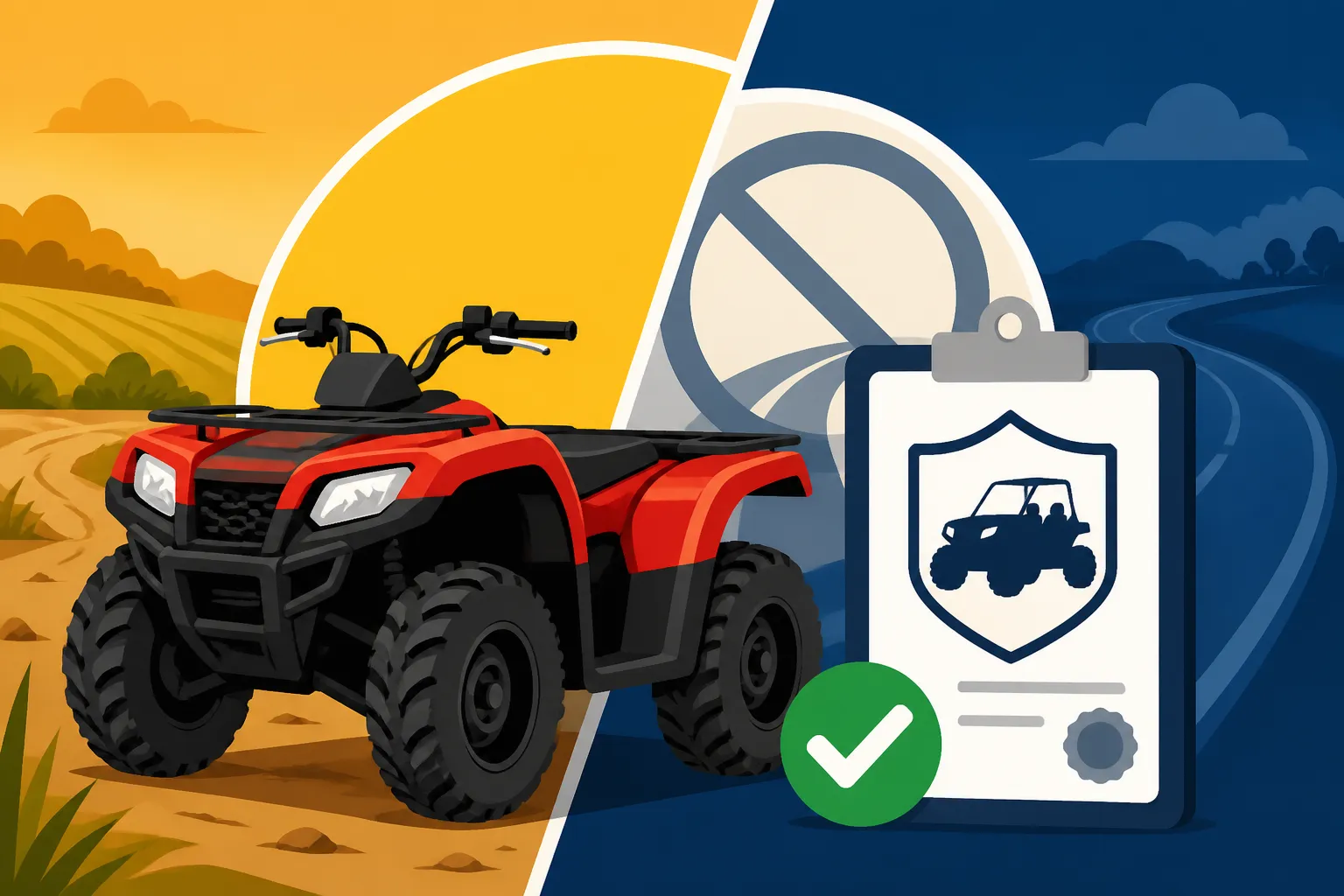
The biggest misconception about having a nonhighway title for your ATV is that it somehow makes your machine "street legal." It absolutely does not. The nonhighway classification explicitly means the ATV is not designed or intended for use on public streets, highways, or interstates. Having a title merely proves you own it. It does not mean you can slap a license plate on it and drive it to the grocery store. Kansas state law generally prohibits the operation of ATVs on public roads, with very few, highly specific exceptions, often related to agricultural purposes or crossing at a right angle.
Many owners, especially those new to the hobby, are caught off guard by this. They figure if they have a title, and maybe even insurance, they should be able to ride anywhere. But the state's definition is unyielding: a nonhighway vehicle stays off the highway. This is a fundamental concept for anyone riding in Kansas, and ignoring it can lead to hefty fines, citations, and even impoundment of your machine. For more details on this, you might want to read [Kansas ATV Road Rules Under 8-15,100].
No Annual Registration or License Plates
Because ATVs are nonhighway vehicles, they are exempt from the annual registration and license plate requirements that apply to cars, trucks, and even some street-legal UTVs in Kansas. This means you will never receive an annual tag for your ATV to display. The $10 nonhighway title fee is a one-time charge for the title itself, not a recurring registration fee. This often feels like a relief to owners, as it’s one less annual expense to worry about. [Kansas Has No OHV Registration] clarifies this point.
However, this lack of registration does not equate to a lack of oversight. While you don't need a tag, you still need to be able to prove ownership if asked by law enforcement or park officials. Always carry your title or a copy of it, or at least be able to access proof of ownership, especially if you're riding on public lands or crossing roads where you might encounter an officer. The fact that [Why a Kansas Nonhighway Title Never Comes With a Tag] emphasizes this distinction is a testament to how often this question comes up.
No State-Mandated Insurance
Another aspect of the nonhighway classification is that Kansas state law does not mandate liability insurance for ATVs in the same way it does for road-going vehicles. Because ATVs are not expected to be on public roads, they don't fall under the same blanket insurance requirements. This is another area where owners might experience a mix of relief and confusion.
While the state doesn't require it, many cities and counties that do allow limited ATV or UTV use on their local streets often will require proof of insurance as part of their local permit process. Beyond that, from a practical standpoint, having insurance on your ATV is a smart move. Accidents happen, and machines can be stolen or damaged. A comprehensive off-road vehicle policy can protect you from significant financial loss, even if you only ride on private land. Don't mistake the lack of a state mandate for a lack of need for coverage. Always check local ordinances if you plan to ride within city limits, and seriously consider personal coverage for your valuable machine.
Practical Implications for ATV Owners in Kansas
The nonhighway vehicle classification impacts several key aspects of ATV ownership, from the initial purchase to how and where you can ride. Understanding these implications upfront can save you headaches and ensure you're riding legally and responsibly.
Titling Your ATV in Kansas
The process for titling an ATV in Kansas is straightforward but specific. Whether you purchase from a dealer or a private party, you will need to visit your local county treasurer's office to apply for your nonhighway title. You'll typically need the manufacturer's certificate of origin (MCO) for a new machine, or the properly assigned title from the previous owner for a used one. A bill of sale is also highly recommended, especially for private sales, to document the purchase price and seller information. [Kansas Title Paperwork Explained] provides an excellent overview of what documents you’ll need to have ready.
You’ll also need to pay the $10 title fee and any applicable sales tax at the time of titling. Kansas gives you 60 days from the date of purchase or assignment to title your machine without incurring late penalties. Missing this deadline can result in additional fees, so it's always best to take care of it promptly after your purchase. The county treasurer's office is your go-to resource for this, not a state-level agency.
Where You Can Legally Ride
Perhaps the most significant practical implication of an ATV being a nonhighway vehicle is where you can legally ride it. By default, ATVs are restricted from public roads in Kansas. This means no riding on state highways, county roads, or city streets unless a specific exception applies or a local ordinance explicitly permits it.
Generally, you are permitted to ride ATVs on:
- Private Property: With the landowner's permission. This is the most common and least restricted place to ride.
- Designated Off-Road Riding Areas: Kansas has a few public and private parks specifically designed for off-road vehicle use, such as Tuttle Creek ORV Area or Syracuse Sand Dunes Park. These areas are established for safe, legal riding.
- Agricultural Land: Kansas law provides limited exceptions for ATVs used for agricultural purposes on public roads, usually involving crossing a highway or riding a short distance for farm work. However, these exceptions are narrow and do not grant general road use privileges.
It's absolutely essential to know the rules of your specific location. Never assume you can ride on a road just because it's gravel or lightly traveled. Always check local city ordinances, county regulations, and the rules of any private parks before you trailer up and head out. Ignorance of the law is not an excuse, and law enforcement in Kansas does enforce these restrictions.
Buying, Selling, and Financing Nonhighway Vehicles
The nonhighway classification also influences how ATVs are bought, sold, and financed. When purchasing a new ATV from a dealer, they will typically handle the initial paperwork, but the responsibility for taking the MCO to the county treasurer to get your title will fall to you. Dealers will often have processes in place to help you with this, but it’s still your ultimate responsibility.
For private sales, the nonhighway title is the critical document for transferring ownership. The seller must properly sign and date the assignment section of the title, and the buyer then takes this to the county treasurer to apply for a new title in their name. Using a robust bill of sale, perhaps a template from LawDepot, can help ensure all terms of the sale are clear and legally documented, especially since title forms can be minimalist.
Financing an ATV is generally similar to financing any other recreational vehicle. Lenders will typically require the title to be recorded with a lien in their favor until the loan is paid off. The nonhighway status doesn't usually complicate financing itself, but it’s worth noting that the machine isn’t collateral for a street-legal vehicle loan, which might affect interest rates or loan terms compared to, say, a car. Always discuss the specific titling implications with your lender to ensure they understand the Kansas nonhighway system.
| Feature | Kansas ATV (Nonhighway Vehicle) | Kansas Automobile (Road-Legal) |
|---|---|---|
| Primary Use | Off-road, recreational, farm | Public roads, transportation |
| Titling Body | County Treasurer | County Treasurer |
| Title Type | Nonhighway Title | Vehicle Title |
| Annual Tag/Plate | No | Yes |
| Registration | No | Yes |
| State-Mandated Insurance | No (unless local ordinance) | Yes |
| Sales Tax Collection | At Titling, by County Treasurer | By Dealer (usually) or Treasurer |
| Road Legality | Generally Prohibited | Generally Permitted |
| Typical Fee (Title) | Minimal one-time fee | Varies, often with registration |
This table clearly illustrates the distinctions that arise from the nonhighway classification, solidifying why an ATV is treated differently than your everyday car or truck.
Disclaimer
This article is for general informational purposes only and does not constitute professional advice. Laws, prices and regulations vary by location and change over time. Consult a qualified professional for guidance on your specific situation.