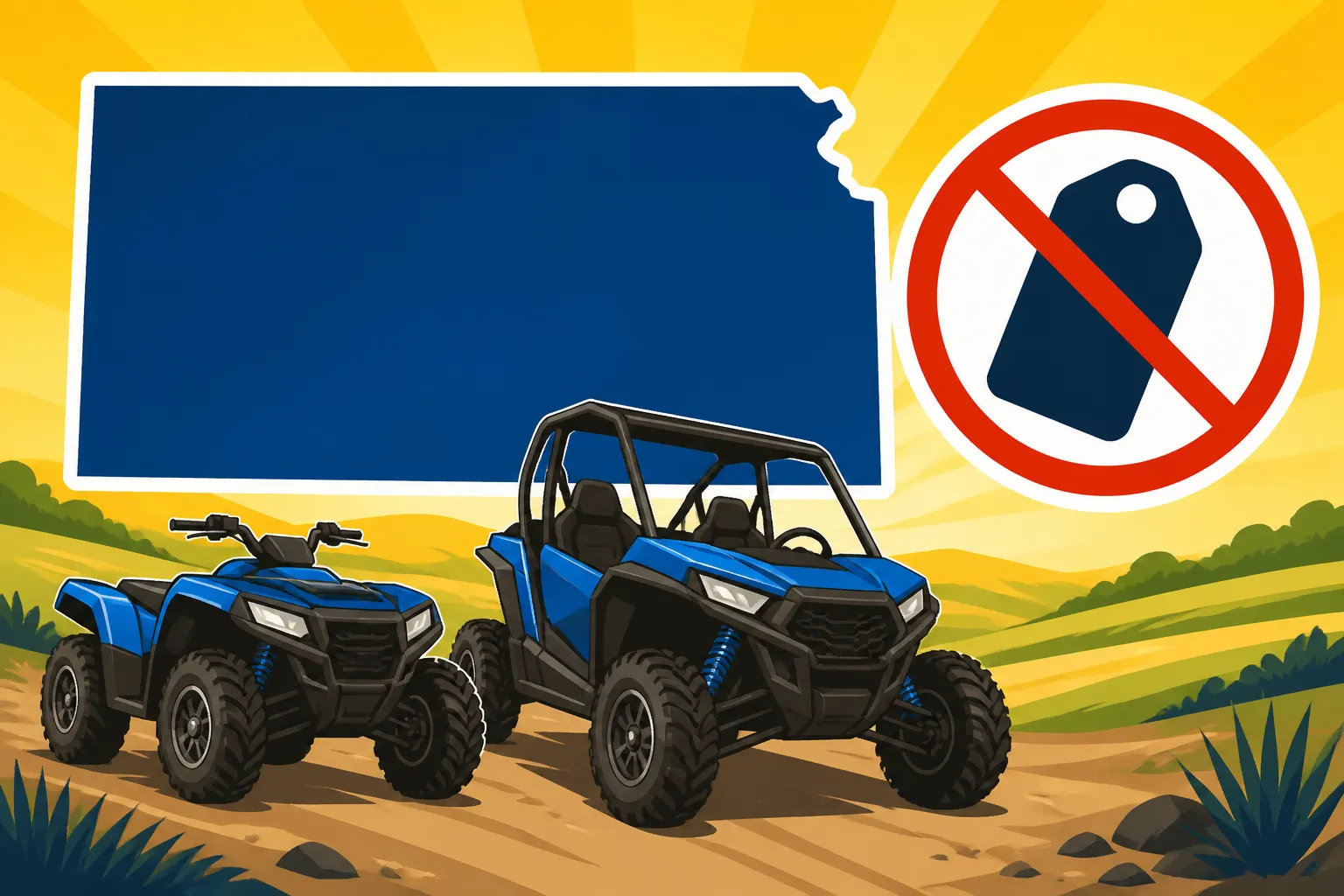
Kansas Has No Annual Tag Fee
One of the most common points of confusion for anyone owning an ATV or UTV in Kansas is the question of annual registration and fees. Many owners, especially those new to the state or coming from areas with different rules, expect to pay a yearly fee to tag their off-road machine. This comprehensive guide will clear up that misconception and walk you through what Kansas does require, confirming that an annual tag fee simply isn't one of them.
Understanding Kansas's Unique Approach to Off-Road Machines
It's easy to get caught up in the details of vehicle ownership, especially when moving between states or buying a machine for the first time. The rules for cars and trucks are pretty consistent across the board: you buy it, you title it, and you renew a tag every year. So, it's only natural to assume the same applies to your shiny new (or new-to-you) all-terrain vehicle or utility terrain vehicle. But Kansas marches to the beat of a different drum when it comes to these machines.
Why "No Annual Tag Fee" Is Such a Big Deal
For many Kansas residents, the realization that their ATV or UTV doesn't require an annual tag is often met with a mix of relief and slight disbelief. In states like Missouri or Oklahoma, you're used to paying an annual fee to keep your off-road machine legally current. This fee often contributes to trail maintenance funds or administrative costs, and skipping it feels like a loophole. But in Kansas, it’s simply how the system works. There's no annual fee because, fundamentally, these vehicles are not treated the same as street-legal vehicles that require annual registration for road use. This distinction is crucial for understanding the overall cost of ownership and the legal framework surrounding your machine. It can significantly impact your budget, saving you money on recurring administrative costs that you might face in other states.
This lack of an annual fee is a direct consequence of how the state classifies these vehicles. It means less paperwork to worry about on a yearly basis, freeing up time and resources for more important things, like actually riding! While this might seem unusual at first, it's a testament to Kansas's specific approach to regulating off-highway vehicles. It's one less item on your to-do list each year, making ownership just a little bit simpler. [Kansas Has No OHV Registration] is a concept that truly sets the state apart.
The Nonhighway Vehicle Classification Explained
So, if there's no annual tag fee, what is an ATV or UTV considered in Kansas? The answer lies in the specific legal designation: a "nonhighway vehicle." This term is pivotal. It essentially means that, by definition, these machines are not designed or intended for public highway use. This is distinct from a car, truck, or even a motorcycle, all of which are built and regulated for the road and, therefore, require annual tags and plates.
Kansas law draws a clear line. A nonhighway vehicle is typically defined by characteristics that make it unsuitable or unsafe for regular road travel, such as low top speeds, open cockpits, or specialized tires. Because they aren't meant for highways, the state doesn't impose the same registration requirements that come with highway use. This classification is why you won't see traditional license plates on ATVs or UTVs used exclusively off-road, and it explains why the associated annual fees are absent. It's a fundamental concept to grasp: [Kansas Nonhighway Title Explained] is the key to understanding your machine's legal status.
This classification has significant implications beyond just fees. It dictates where you can legally ride your machine and what equipment it needs (or doesn't need). While a nonhighway title proves ownership, it doesn't grant you permission to cruise down Main Street. Understanding this distinction is vital for avoiding misunderstandings with law enforcement and for being a responsible off-road enthusiast. It's about recognizing the intended purpose and design of your machine and abiding by the regulations that stem from that purpose.
Titling Your Off-Road Machine in Kansas
Even though Kansas doesn't charge an annual tag fee for ATVs and UTVs, don't mistake that for a complete lack of official paperwork. Titling your machine is still a critical and legally mandated step. This is where the state keeps track of ownership and ensures that machines are properly transferred when sold. It’s essentially the birth certificate for your off-road vehicle.
The Mandatory Titling Process
So, while you might not have an annual tag to renew, you absolutely must title your ATV or UTV in Kansas. This isn't an optional step; it's required by state law. When you purchase a machine, whether new from a dealer or used from a private seller, you generally have 60 days from the date of purchase to apply for a title. If you wait longer than that, you might face late fees, which nobody wants!
The process itself is straightforward: you'll head to your local county treasurer's office. This isn't something handled at the state level directly, but rather through your local county government. You'll need to fill out the necessary forms, provide proof of ownership, and pay a one-time title fee. [Kansas Charges $10 for a Title] – a remarkably low cost compared to many other states’ fees, making the initial step of legal ownership quite affordable. This fee is a one-time cost that simply covers the administrative processing of issuing your ownership document, not an annual renewal. [Sixty Days From the Assignment Date] is a crucial deadline to remember to avoid those penalties.
Many people mistakenly believe that because there's no registration, there's no need to visit the treasurer's office. This is a common and costly error. The title is your legal proof of ownership, a vital document for proving the machine belongs to you, for selling it in the future, or for reporting it stolen. It also allows the state to track sales tax collection accurately. Remember, [Title an ATV at the County Treasurer, Not the State] is the correct procedure to follow.
Required Paperwork for Titling
Getting your off-road machine titled in Kansas requires specific documentation, and having everything in order before you visit the county treasurer's office can save you a lot of hassle and a second trip. The exact papers you need can vary slightly depending on whether your machine is new or used, and where you bought it, but some core documents are almost always required.
For a new machine purchased from a dealer, you'll typically need the Manufacturer's Certificate of Origin (MCO), which is like the birth certificate for your machine. You'll also need a bill of sale or purchase agreement from the dealer, showing the purchase price and any trade-in value. If you purchased a used machine from a private seller, a properly executed bill of sale is paramount. This document should clearly identify the machine (make, model, VIN), the purchase price, and the names and signatures of both the buyer and seller. Sometimes, a previous title, properly assigned by the seller, is also needed. Additionally, you'll need a valid photo ID and proof of address. [Kansas Title Paperwork Explained] goes into greater detail about all the forms you might encounter.
It's important to make sure your bill of sale is complete and accurate. Websites like LawDepot offer templates for creating legally sound bills of sale if you're buying from a private seller who doesn't have one readily available. Using such a resource ensures all necessary information is included, protecting both buyer and seller. A robust bill of sale will specify the VIN, odometer (if applicable, though less common on ATVs), sale date, and the agreed-upon price. This helps in correctly calculating sales tax and preventing future disputes.
Titling After a Private Sale or Out-of-State Purchase
Private sales are incredibly common in the off-road vehicle market, and they come with their own set of considerations for titling. When buying from a private seller in Kansas, the most crucial document is a clean, properly assigned title from the previous owner. The seller should sign off on the title in the designated area, and you, as the buyer, will then present this to the county treasurer along with a bill of sale. If the machine was never titled in Kansas (which can happen with older machines or those used exclusively on private land), you might need to use a nonhighway affidavit, possibly with a [Kansas Title Without a Bill of Sale] process that involves additional steps or forms. For such situations, having a detailed bill of sale from a reputable source like LawDepot can smooth out the process, providing clear documentation of the transaction.
Bringing a machine into Kansas from another state also requires specific steps. If the machine was titled in its previous state, you'll present that out-of-state title to the Kansas county treasurer. They will then issue a new Kansas nonhighway title. If the machine came from a state that didn't require titling for off-road vehicles (some states only register them, or do neither), you'll likely need the original MCO (if still available) or a bill of sale, and possibly a VIN inspection. It's always best to call your local county treasurer's office ahead of time to confirm their exact requirements for [Titling an ATV in Kansas From Out of State] or after a private sale, as procedures can sometimes vary slightly by county. This proactive approach can prevent delays and ensure a smooth transfer of ownership.
Distinguishing Between Different Off-Road Vehicles
Kansas law isn't a "one size fits all" when it comes to off-road vehicles. While many people use "ATV" as a catch-all term, the state makes specific distinctions that can impact everything from titling to where you're legally allowed to ride. Understanding these nuances is key to navigating the rules correctly.
ATVs vs. Side-by-Sides vs. Work-Site Utility Vehicles
Kansas law recognizes several categories of off-road machines, and the distinctions are important. An ATV (All-Terrain Vehicle) is generally defined as a motorized vehicle with three or more wheels, designed for off-highway use, and not for public streets. It's typically ridden by a single operator straddling the seat, similar to a motorcycle. [Kansas Titles ATVs as Nonhighway Vehicles] is a clear example of this.
Side-by-Sides (SxS) or UTVs (Utility Terrain Vehicles) are also nonhighway vehicles but are characterized by bench or bucket seating, a steering wheel, and often a cargo bed. These are designed for multiple passengers and often heavier-duty work. The state specifically includes these under the nonhighway vehicle umbrella, requiring a title just like an ATV. [Titling a Side-by-Side in Kansas] follows the same nonhighway title process.
A more unique Kansas classification is the Work-Site Utility Vehicle (WSUV). This is a specific type of UTV that meets certain criteria, such as being at least 48 inches wide, weighing over 800 pounds, and being primarily designed for work purposes. The WSUV designation can grant slightly expanded (though still very limited) road use privileges in specific circumstances, such as for agricultural purposes or crossing highways. Understanding [What Makes a Side-by-Side a Work-Site Utility Vehicle] is vital if you own one of these larger machines and plan to use it for farm or ranch work. This distinction highlights that even within the "nonhighway" category, there are further divisions that impact how and where you can operate your machine.
Implications for Road Use and Exceptions
The most significant implication of the "nonhighway vehicle" classification – and the absence of an annual tag – is that these machines are generally not street legal in Kansas. When you get a title, it's a [Kansas Nonhighway Title Explained] and does not come with a license plate or tag because it’s not for road use. [Having a Title Does Not Make an ATV Street Legal] is a fundamental principle in Kansas. Riding an ATV or UTV on public roads, streets, or highways is typically prohibited and can result in fines and penalties.
However, Kansas law does provide very specific, limited exceptions to this general ban. For instance, machines used for agricultural purposes may be allowed to operate on certain public roads for short distances to get from one field to another, or to cross a highway, provided they meet specific safety requirements like proper lighting. Some cities and counties in Kansas also have local ordinances that allow for limited street use of UTVs (and sometimes ATVs) within their municipal boundaries, often requiring a special local permit and insurance. These are exceptions, though, not the rule, and they vary greatly by location. [Kansas ATV Road Rules Under 8-15,100] outlines these rules in detail.
It's critical not to confuse the ability to obtain a title with the right to ride on public roads. The title is purely for ownership documentation, not for granting street legality. Always check local ordinances and state statutes before venturing onto any public roadway with your ATV or UTV. What might be allowed in one rural township for farm work could be strictly prohibited in the next. The work-site utility vehicle category is the only one with built-in road use exceptions, as described in [Kansas Work-Site Utility Vehicles Explained], but even these are heavily restricted.
Costs Beyond the Annual Tag (Or Lack Thereof)
While you're saving money by not paying an annual tag fee in Kansas, it's important to have a realistic understanding of the other financial obligations that come with owning an ATV or UTV. These machines, while fun and functional, still represent a significant investment, and there are several costs you'll encounter that go beyond the initial purchase price.
Sales Tax and Other Fees
One of the most significant costs you will encounter, even without an annual tag, is sales tax. In Kansas, sales tax is collected at the time of titling, regardless of whether you bought your machine new from a dealer or used from a private seller. This isn't just the state sales tax, which is a significant percentage; local city and county sales taxes can also apply, depending on where you live and where the transaction took place.
The sales tax calculation is based on the purchase price of the machine. If you trade in another vehicle as part of the deal, the sales tax is typically calculated on the difference between the new machine's price and your trade-in allowance, effectively reducing your tax burden. However, if you're buying from a private seller, you'll pay sales tax on the full purchase price you declare on the bill of sale. It's important to budget for this, as it can add several hundred dollars (or more) to your initial ownership costs. [Kansas Sales Tax Collected at Titling] is a point often missed by first-time buyers.
Beyond sales tax, dealers may charge various fees. These can include documentary fees (for handling paperwork), freight charges (for shipping the machine to the dealership), and setup fees (for assembling and preparing the machine). While these aren't state-mandated taxes, they are part of the "out-the-door" price you'll pay. Always ask for a full breakdown of all costs before you commit to a purchase.
Insurance, Park Permits, and Maintenance
Just because Kansas doesn't mandate statewide insurance for ATVs and UTVs doesn't mean you should skip it. Insurance is a crucial protection for your investment and your liability. If you finance your machine, the lender will almost certainly require comprehensive and collision coverage. Even if you pay cash, liability insurance is a wise choice to protect you in case of an accident where you are at fault, especially if you ride on shared lands or even privately owned property with permission. Some cities that allow limited street use for UTVs do require proof of insurance as part of their local permitting process, so [Do You Need ATV Insurance in Kansas?] often depends on where and how you ride.
If you plan on riding at public or private off-road parks, you'll likely encounter park permits or entry fees. Places like Tuttle Creek ORV Area or private parks like Kansas Rocks Recreation Park often charge day-use fees or offer annual passes. These costs contribute to trail maintenance, facilities, and staff, and they are an essential part of the riding experience. Budgeting for [Kansas Park Permits in Your Budget] is just as important as budgeting for the machine itself.
Finally, don't forget ongoing maintenance. ATVs and UTVs are rugged machines, but they require regular care: oil changes, air filter cleaning, tire replacement, belt checks, and occasional repairs. These costs can add up over time, especially with heavy use or if you frequently ride in challenging conditions. Budgeting for fuel, fluids, and parts is just as important as any upfront fee. Ignoring maintenance can lead to larger, more expensive repairs down the line.
Here's a quick overview of some common costs for Kansas ATV/UTV owners:
| Cost Type | Kansas Rule | Typical Impact on Owner |
|---|---|---|
| Annual Tag Fee | None! | Significant savings on recurring state fees. |
| Initial Title Fee | $10 (one-time fee) | Minimal upfront administrative cost. |
| Sales Tax | State (6.5%) + Local (varies, up to 5%) collected at titling | Can add hundreds to thousands of dollars to purchase price. |
| Insurance | Not statewide mandated, but recommended; often required by lenders/cities. | Varies by coverage, machine, and rider; protects assets. |
| Park Permits/Fees | Required for most public/private riding areas | Day passes ($) to annual memberships ($$$). |
| Maintenance & Repairs | Ongoing, depending on use | Fuel, oil, tires, belts, unexpected fixes. |
| Dealer Fees | Freight, setup, documentary fees (if buying new) | Adds to the "out-the-door" price from a dealership. |
Common Pitfalls and Misconceptions for Kansas ATV/UTV Owners
The absence of an annual tag fee for ATVs and UTVs in Kansas, while a financial benefit, can sometimes lead to misunderstandings about other rules and responsibilities. It’s crucial to separate fact from fiction to ensure you’re operating legally and safely.
The "No Tag, No Rules" Myth
One of the most dangerous misconceptions is that because your ATV or UTV doesn't have an annual tag or traditional registration, it operates under a "no rules" policy. This is absolutely false and can lead to serious legal trouble, accidents, or both. While the state doesn't require annual tags, it still has laws governing the safe operation of these machines, as well as property rights.
Just because there's no tag doesn't mean you can ride anywhere you please. Trespassing on private land without permission is illegal, whether you're on foot or on an ATV. Safety regulations, such as those regarding helmets for younger riders or reckless operation, still apply. Furthermore, laws concerning impaired driving (DUI) extend to ATVs and UTVs, even off-road. Law enforcement can, and will, enforce these laws. The lack of an annual tag is a specific administrative detail, not a blanket exemption from all other rules and responsibilities that come with operating a motor vehicle. Always remember that the absence of a tag doesn't mean the absence of consequences.
Keeping Your Paperwork in Order
Even without annual registration renewals, maintaining proper documentation for your ATV or UTV is critical. Your Kansas nonhighway title is the most important piece of paper you own related to your machine. It proves you are the legal owner. If you ever sell the machine, transfer it to a family member, or if it's stolen, having a clear, unblemished title is essential.
Beyond the title, keep a copy of your bill of sale, especially if you bought it used. This document supports the title and provides crucial details about the transaction. If you've had any modifications or significant repairs done, keeping those receipts can also be helpful for future value assessment or insurance claims. Should your title ever be lost, stolen, or damaged, knowing how to [Replacing a Lost Kansas Nonhighway Title] is important; you'll typically apply for a duplicate through your county treasurer's office. The process is much smoother if you have all your original information readily accessible.
For private sales, ensuring you have a detailed and signed bill of sale is particularly important. This document should specify the VIN, sale price, and condition of the machine. Resources like LawDepot can help you generate a professional-grade bill of sale, providing both buyer and seller with clear documentation and protection. In the absence of state registration, the title and bill of sale are your primary records, and keeping them organized and accessible will save you headaches down the road.
Disclaimer
This article is for general informational purposes only and does not constitute professional advice. Laws, prices and regulations vary by location and change over time. Consult a qualified professional for guidance on your specific situation.