Putting On an Organized Ride at a Park
An organized ATV or UTV ride takes more than choosing a trail and inviting friends. In Kansas, the first challenge is finding out who controls the riding area and what approval the event needs. A private park, Corps riding area and state park do not follow the same process. Confirming permission, route limits, insurance and safety arrangements early helps prevent a canceled ride or a problem at the gate.
Start With the Riding Area and Its Permission Process
Before announcing a date, identify the landowner or operator and ask whether the venue accepts organized rides. A place that welcomes individual riders may still require advance approval for a group event, especially if you plan to reserve space, collect entry fees, bring vendors or use a designated route.
Kansas does not have a single event-permit process that applies to every off-road riding area. The requirements depend on the property and the activity. Private parks set their own entry rules and event procedures. Public recreation sites may have separate rules for gatherings, parking, camping or commercial activity. A permit that covers one use should not be assumed to authorize another.
Private parks
A private park can be a practical choice because it is built for off-road recreation, but its approval is still essential. Ask the park operator about event dates, group size, route access, fees, insurance, waivers, campsite reservations and any restrictions on vendors or fundraising. Get the answers in writing, including what happens if weather closes the property.
Each park can set different conditions. Review the specific rules for Kansas Rocks Park Rules for Riders and Kansas Syracuse Dunes Park Rules if either location is under consideration. For a broader overview of waivers and operating rules, see Kansas Private Park Waivers and Rules.
Do not assume that a public event listing, a group reservation or an annual pass automatically gives your organizers exclusive use of trails or facilities. Ask exactly what the approval includes. It may cover a meeting area but not a trail closure, or allow a group ride without authorizing a vendor booth.
Public recreation areas
Public riding areas can have different managers and approval processes, even when the site is open to riders. Contact the agency or site office responsible for the specific location, describe the event and ask whether it can accommodate an organized group. Confirm whether the event needs a reservation, special-use approval, insurance documentation or limits on attendance.
For example, Kansas has riding areas associated with Corps lands, as well as private parks. The fact that a site does not require a general riding permit does not mean that an organized event can proceed without notice or permission. Individual access rules and event approval are separate questions. Why Corps Riding Areas Need No Park Permit explains the distinction between a general park permit and riding access; ask the site manager separately about your event.
State parks are another common source of confusion. A permit for using designated roads or areas does not create an off-road trail network or automatically approve an organized trail ride. Check Kansas State Parks Have No OHV Trails and contact the specific park before making plans. If the event involves park roads, parking areas or camping, ask what rules apply to those uses.
Questions to ask before you commit
Give the operator a clear description of the event. Include the expected number of riders and machines, whether participants will pay, whether the ride is open to the public, and whether you plan to have vendors, food, raffles, camping or spectators. Ask:
- Is the site available for an organized ride on the proposed date?
- Is written permission or an event application required?
- What attendance or machine limits apply?
- Which routes, staging areas and facilities may the group use?
- Are any routes restricted by machine width, type, skill level or conditions?
- Does the operator require proof of insurance or signed waivers?
- Are fees, deposits or cancellation terms different for events?
- Can the event use signs, banners, vendors or a designated check-in area?
- What happens if weather, trail conditions or another closure affects the event?
Record the name of the person who confirms the arrangements, along with the date and any conditions. If the venue has an event application, complete it before promoting the ride. A verbal “that should be fine” is not a strong basis for inviting a large group.
| Venue type | What to confirm first | Common planning risk |
|---|---|---|
| Private riding park | Event availability, group limits, fees, waivers and permitted activities | Treating normal admission as event approval |
| Corps or other public recreation area | Site manager approval, gathering rules, route access and parking | Assuming open riding means a group event is automatically approved |
| State park | Allowed vehicle areas, road-use requirements and event restrictions | Confusing road access with permission to ride trails |
| Private land | Written landowner permission, boundaries and liability arrangements | Relying on informal permission that does not cover the whole event |
Build an Event Plan the Park Can Approve
A clear, manageable plan makes it easier for a park operator to assess the request and helps participants understand what they are joining. It does not need to be elaborate, but it should explain the event’s size, purpose, schedule and use of the property.
Set a realistic attendance limit
Estimate the number of riders, machines, passengers, support vehicles and spectators separately. A group of 30 machines can create a larger parking and staging demand than the rider count alone suggests. Confirm that the venue can accommodate the total, not just the number of people in the riding group.
Avoid promoting an open-invitation ride before you know whether the site has a capacity limit. If registration is required, set a cap based on the park’s guidance and your ability to manage check-in and safety. The considerations in Kansas Group Size at a Park can help you think through why group size needs to match the location and event plan.
Describe the route and riding groups
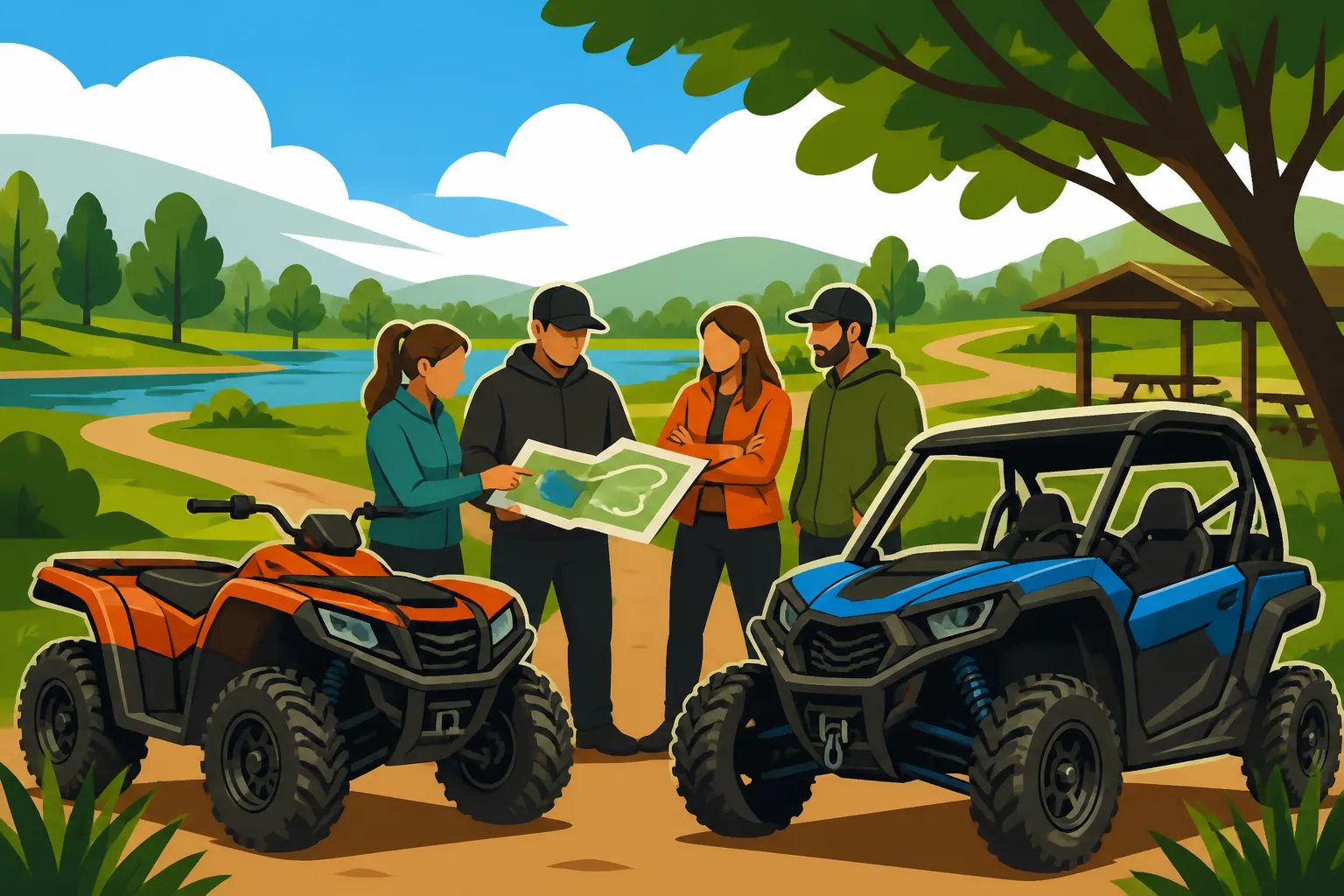
Do not promise a route until the operator confirms which areas are open and suitable for the event. Trail conditions can change, and a route that works for experienced riders may not suit children, new riders or stock machines. If the park allows it, organize riders into smaller groups by pace or experience and identify a lead rider and sweep rider for each group.
Put the route plan in practical terms. Note the meeting point, direction of travel, expected ride duration, regrouping points and procedure if someone becomes separated. Do not mark, block or reroute a public trail without permission. If the operator changes access because of weather or maintenance, make sure the event can adapt without sending riders into closed areas.
Include the operational details
The event proposal should cover the parts of the day that affect the venue:
- Date, arrival window and planned end time
- Expected number of people and machines
- Check-in and staging locations
- Proposed route or riding-area use
- Camping, food, vendors or fundraising plans
- Parking and trailer arrangements
- Accessibility needs and spectator areas
- Cleanup responsibilities
- Event contact and backup contact
- A weather and cancellation plan
If the event is a fundraiser, charity ride or club gathering, say so. Collecting money, soliciting donations or selling goods may raise separate venue or event requirements. Do not assume that approval for a recreational group ride also covers commercial activity.
For supplies such as check-in materials, route markers approved by the venue, or participant wristbands, make a list only after confirming what the park allows. If you use Amazon or another retailer, keep purchases modest until the date and site are confirmed. Some parks may prohibit certain signs, stakes or materials that could damage trails or be mistaken for official markers.
Prepare Participants, Insurance and Safety
A well-run ride depends on clear expectations before participants arrive. Send the rules and event details in advance, and repeat the essential points at check-in. Participants should know that park rules, machine restrictions and route closures take priority over the event schedule.
Explain waivers and coverage
Ask the venue whether it requires its own waiver, proof of liability coverage or additional event documentation. A ride organizer should not assume that a participant’s personal insurance, a club policy or a park admission waiver covers every event-related claim. Coverage varies by policy and activity, so an insurance agent should review the actual plan and the venue’s requirements.
If the park asks the organizer to provide event coverage, confirm the required documents and deadlines directly with the operator and insurer. Insurance a Kansas Event Organizer Has to Carry discusses why coverage needs to be checked for the particular event rather than guessed from general riding rules.
A waiver is not a substitute for permission, insurance or safe event management. Use the venue’s forms if required, keep completed documents secure, and avoid drafting legal language without qualified help. For participants who are minors, ask the venue what parent or guardian consent it requires.
Set clear riding expectations
Before the ride, tell participants what machines are allowed, whether passengers are permitted, and what equipment or conduct the park requires. Do not advertise a route as suitable for all machines unless the operator has confirmed that. A wide side-by-side, a youth quad and a dirt bike may face different access or trail limitations at the same site.
Set a simple event briefing that covers:
- Check-in and the designated staging area.
- The route, pace and regrouping points.
- Required riding behavior and posted park rules.
- What to do if a machine breaks down or a rider becomes separated.
- How to contact event staff and report an injury.
- Weather, closure and cancellation signals.
Keep the briefing short enough that people will listen, but specific enough to be useful. Make sure lead and sweep riders know their roles. If the group is too large to manage as one unit, split it into smaller groups and stagger departures only if the venue approves that approach.
Plan for emergencies without overpromising
Identify the closest reliable way to contact emergency services, and find out whether the venue has its own response procedures. Mobile coverage may be limited in some riding areas, so ask the operator about communication options and the best access point for responders. Do not assume a map application will work throughout the property.
Assign someone to manage check-in and someone who can respond to an incident without leaving the rest of the group without a leader. Keep an accurate participant list and a count of people who have returned. Carry suitable first-aid supplies, but do not imply that volunteers are trained medical responders unless they are.
If conditions are unsafe, postpone, shorten or cancel the ride. Rain, heat, wind, poor visibility or trail damage can change the risk quickly. The park operator’s closure decision should be followed, even if participants have already traveled to the event.
Run the Event and Close It Out Responsibly
On event day, arrive early enough to confirm that the plan still works. Check in with the venue contact, verify open routes and parking arrangements, and make sure any changes reach every participant before departure. A last-minute trail closure should lead to a clear revised plan, not informal detours.
At check-in, confirm attendance and provide the information participants need: where to park, where to stage, which rules apply and how to reach event staff. Do not let unregistered riders join a capped event if the venue has set a limit. Keep spectators and parked vehicles in approved areas.
During the ride, follow the pace and route agreed with the operator. Keep groups together where the venue requires it, yield as posted, and do not pressure slower riders to take risks to keep up. If a machine is disabled, use the plan established in the briefing and notify the appropriate event lead. Do not leave a participant behind without checking that they have support.
Afterward, account for participants and remove event materials, litter and temporary signs if their use was approved. Return any borrowed equipment and report injuries, damage or significant incidents to the venue promptly. Follow the operator’s instructions for incident reports and insurance paperwork.
Finally, close out the event with a brief review. Note what worked, what caused delays and whether the actual attendance matched the estimate. Keep the venue’s written approval, final schedule, participant records and incident documentation in an appropriate, secure place. Ask the operator whether it would consider another event before announcing a repeat date.
The simplest rule is to treat an organized ride as a separate activity from ordinary park access. Confirm the venue’s approval, follow its conditions, and communicate those conditions clearly to participants. That preparation gives the event a better chance of running smoothly without asking riders or park staff to resolve important questions at the gate.
Disclaimer
This article is for general informational purposes only and does not constitute professional advice. Laws, prices and regulations vary by location and change over time. Consult a qualified professional for guidance on your specific situation.