Kansas Riding Near Randolph
If you’re trying to plan an ATV or UTV ride near Randolph, Kansas, the first challenge is finding public riding land that actually allows off-road machines. Tuttle Creek ORV Area is the nearby option to investigate, but a good day depends on checking access, hours, machine fit, weather, and what facilities are available before you load the trailer.
Start With Tuttle Creek ORV Area Near Randolph
Where the riding area is
Tuttle Creek ORV Area is about two miles from Randolph, making it a practical destination for riders staying in or passing through the area. It sits near Tuttle Creek Lake, a setting that can make the ride feel like more than a quick stop—but the lake’s presence does not mean every nearby road, shoreline, or open-looking patch of land is available for riding. Keep your machine within the designated off-road area and obey posted signs.
For planning purposes, Randolph is a useful reference point, not a substitute for checking the final approach. Roads and access points can be easy to mix up when you are towing a trailer or following a map on a phone. The route commonly associated with the riding area includes Gardiner Road and Secrest Road, but check the current approach and signs before you set out. [Tuttle Creek ORV Area in Kansas]
This is also a destination where a map can help with orientation but should not be treated as permission to ride anywhere it shows open. A mapping app such as onX Offroad can help you plan a route and understand the surrounding area, while the posted signs and the land manager’s directions should guide where you actually ride. Save the map details before leaving home in case your phone signal is unreliable.
How much room to expect
The riding area is listed at about 310 acres. That gives riders space to explore, but acreage alone does not tell you how long a ride will take or what the trails will feel like. A group that stops often, rides cautiously, or includes less experienced riders may use the area differently from a group that is comfortable navigating unfamiliar terrain.
It helps to plan for a compact public riding area rather than imagining a long-distance trail network. Decide on a meeting point, agree on a pace, and make sure everyone knows how to regroup if the group gets separated. If you’re riding with children or first-timers, an easy pace and regular check-ins can make the outing much more enjoyable than trying to cover as much ground as possible.
For more detail on the acreage and what that figure means when you’re planning a visit, see [Tuttle Creek's 310 Acres in Kansas]. Treat the stated area as a planning reference, not a promise that every section will be open or suitable for every machine on your visit.
Why the area deserves a little extra planning
Kansas has fewer public off-road riding options than some riders expect. That makes a nearby legal riding area especially valuable—and it also makes it worth checking the details before you tow. A closed entrance, poor weather, or a machine that does not fit the area’s requirements can turn a carefully planned day into a disappointing drive.
The location near Randolph can be convenient for a day trip, but don’t assume that convenience means there is a full-service staging area or that you can easily find help once you arrive. Bring what your group needs for the ride, make sure the trailer is ready for the return trip, and confirm the area’s rules before unloading.
Check Access, Hours, and Conditions Before You Tow
Confirm the approach and current access
A sensible first step is to identify the entrance and the roads you’ll use to get there. If your route brings you onto rural roads, allow extra room for a trailer and take turns slowly. On gravel, dust can reduce visibility, and a sudden stop can be harder to manage when you’re hauling a loaded trailer.
Use a route planner to orient yourself, but compare it with signs along the way. If your map suggests a road that looks like a shortcut, do not assume it is a public access road or that it leads to the riding area. An onX Offroad map may help you prepare, but it should complement—not replace—official directions and posted land-use information.
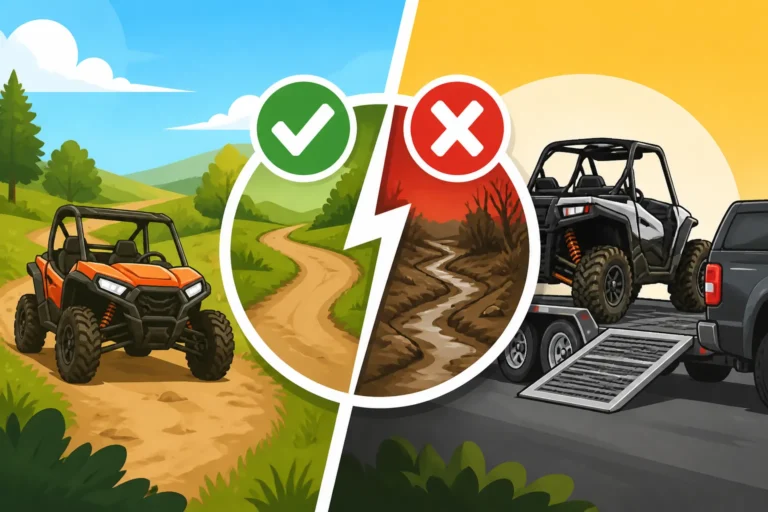
Before leaving, check for updates or notices from the area’s managing agency. Recent rain, maintenance, or another temporary closure can affect access. It’s also smart to have a backup plan for the day: a nearby place to eat or refuel, a safe spot to turn around, and a plan for what you’ll do if the riding area is not open when you arrive. [Kansas Trail Conditions Before You Tow]
Plan around the operating window
The area is associated with riding hours from 9 a.m. to sunset. Plan the day around that window rather than treating sunset as a flexible target. It takes time to unload, check the machines, review the rules, and get everyone ready to ride. Build in enough time to return to your trailer and pack up before the day ends.
The operating window also affects how much riding you can fit in. If you’re traveling from farther away, consider arriving prepared rather than counting on a long setup period after you get there. Have helmets, water, tools, and the basic recovery gear organized so you can use the available riding time efficiently. [Tuttle Creek ORV Hours, 9 a.m. to Sunset]
Hours can be affected by posted notices or changes in access, so check before making a long trip. Don’t plan on riding after dark just because you still have daylight when you arrive; time can disappear quickly when a group is unloading, adjusting gear, or helping a newer rider get comfortable.
Think through weather and ground conditions
Rain can change the character of an off-road ride and the drive to it. A road that seems straightforward in dry weather may be muddy, slick, or harder to navigate after a storm. Wet ground can also make braking and turning less predictable. If conditions look questionable, a conservative choice is often better than getting a tow vehicle or trailer stuck.
Wind matters too, especially when you’re hauling a trailer across open Kansas roads. Secure loose gear, check tie-downs before leaving, and avoid rushing if crosswinds make the trailer feel unstable. Riders coming from a distance should also think about where they can safely stop if the weather worsens.
Use forecasts as a planning tool, then reassess when you’re close to Randolph. If heavy rain or storms are expected, contact the managing office or look for posted notices before heading out. Keep your route flexible, and don’t treat a planned day of riding as more important than safe access or safe trail conditions.
Choose a Machine and Prepare Your Group
Check whether your ATV or UTV is suitable
Before loading up, confirm that the riding area allows the type of machine you plan to bring. Do not assume that an ATV, side-by-side, dirt bike, or other off-road vehicle is automatically allowed just because it is designed for trail use. The area’s rules, signs, and any posted vehicle limits are what matter.
If you’re bringing a side-by-side, check its width and any applicable restrictions before the trip. Some Kansas riding areas have limits that can exclude wider machines; for example, School Creek has a 50-inch limit. That is a different riding area, so don’t transfer its rule to Tuttle Creek without checking Tuttle Creek’s own requirements. [Kansas Trails That Allow Side-by-Sides]
For a group with several machine types, confirm the rules for each one rather than relying on a general statement that the area is open to off-road riding. Take a quick photo of each machine’s identification details and make sure it is in safe operating condition. A pre-ride check should include tires, brakes, steering, throttle return, lights if fitted, fuel, and any loose cargo.
Match the ride to the least-experienced person
The pace of a group is usually set by its newest or least-confident rider. That is not a problem to solve; it is a planning detail to respect. Tell everyone before unloading that it is fine to take a break, ask for help, or skip a section they do not feel ready to ride. A calm start helps people make better decisions once they’re on the machine.
If children are riding, make sure the machine is appropriate for their size and experience, and that they understand the basic controls before entering the riding area. An adult should be close enough to supervise and respond. Don’t assume a child who rides confidently in a yard is ready for unfamiliar terrain or a longer outing.
Agree on simple group rules: ride at a speed that allows everyone to stay together, stop at safe places, and wait when the group reaches a decision point. Establish what to do if someone loses sight of the others. Those small agreements can prevent confusion and keep a minor separation from becoming a bigger problem.
Pack for a day without relying on nearby services
The facilities available at a riding area can matter just as much as its trails. Tuttle Creek is associated with a loading ramp, vault toilet, and picnic tables, but you should still plan as though you may need to be self-sufficient for most of the day. Bring drinking water, snacks, sunscreen, basic first aid supplies, and a way to carry out your trash.
Bring a small tool kit suited to your machines, along with spare items that commonly cause a ride to end early, such as a tire repair kit or a way to secure a loose component. Carry recovery equipment that you know how to use. A winch, strap, or shovel is only useful if the person operating it understands the risks and has a safe plan.
Cell reception may not be dependable in every part of a rural riding trip. Download or save the route and important details before you leave, and tell someone where you’re going and when you expect to return. OnX Offroad can be useful for preparing a map ahead of time, but keep a backup plan for navigation and communication. [Tuttle Creek's Loading Ramp, Vault Toilet and Picnic Tables]
Make the Ride Safer and More Enjoyable
Set expectations before you unload
A short conversation in the parking or staging area can prevent avoidable headaches. Review the posted rules, identify where your group will meet if separated, and remind everyone to stay within the authorized riding area. A trail or opening on a digital map is not enough to establish that it is legal to use.
Talk about speed and passing, especially if your group includes different experience levels. Riders should leave space between machines, avoid sudden maneuvers near others, and stop somewhere visible and safe if they need to adjust equipment. If a member of the group feels unsure, slow down and help them get settled rather than pressuring them to keep pace.
Keep noise, dust, and trail wear in mind. Repeatedly spinning tires or accelerating hard can make conditions less pleasant for other visitors and damage the riding surface. Respectful riding helps protect the area and makes it more likely that other riders, families, and nearby communities can continue to share it.
Ride with the land and other visitors in mind
Public riding areas are shared spaces. You may encounter other machines, people walking near facilities, or vehicles moving around a staging area. Slow down where people are gathered, give others room, and avoid assuming that everyone can hear or see you approaching.
Use established routes and follow signs. Cutting across vegetation to bypass a muddy spot may seem like a quick fix, but it can create damage and confusion about where riding is allowed. If a route is blocked or looks unsafe, turn around or choose another permitted route rather than making a new one.
Good trail etiquette also means leaving the site in good condition. Pack out your litter, secure loose items so they do not fall from a vehicle, and avoid leaving food or equipment behind. For a fuller checklist of courteous riding habits, see [Kansas Trail Etiquette Locals Expect].
Know when to end the ride
Fatigue can build gradually, especially on a windy day or when a rider is concentrating hard on unfamiliar ground. Pay attention to slower reactions, poor judgment, frustration, and repeated mistakes. Taking a break early is much easier than managing a tired rider or an avoidable accident later.
Check the time regularly so your group can return, load, and leave before sunset. Don’t begin a new loop or head farther away from the staging point if the daylight window is shrinking. Keep enough time for a calm return rather than racing back to the trailer.
If a machine develops a problem, stop somewhere safe and assess it before continuing. A minor issue can become a serious one if the group keeps riding without a working brake, damaged steering, or an unsafe tire. When in doubt, end that machine’s ride and arrange a safe way back.
Build a Practical Randolph Riding-Day Plan
Use a simple pre-trip checklist
A written checklist is especially helpful when several people are sharing the preparation. It keeps the final hour before departure from turning into a search for helmets, keys, or tie-downs.
- Confirm the riding area’s access, operating hours, and posted vehicle rules.
- Check the weather and road conditions, including the trailer route.
- Inspect each machine and confirm that it is suitable for the area.
- Pack helmets, water, food, first aid supplies, tools, and recovery gear.
- Save directions and maps for offline use, and share the trip plan with someone.
- Make sure the trailer, hitch, lights, tires, and tie-downs are ready.
- Leave enough time to unload, ride, return, and pack up before sunset.
If you’re coming from farther west or traveling through open country, give the drive more time than a standard map estimate suggests. Wind, road work, gravel, and trailer handling can all slow the trip. [Hauling a Trailer Across Western Kansas in the Wind]
Keep the plan flexible
A good plan has room for adjustments. You may arrive to find different conditions than you expected, or a rider may need more time to get comfortable. If the area is open but the ground looks unsuitable for your machines or experience level, choose a shorter ride or postpone rather than forcing the day to match the original plan.
Have a backup activity in mind if riding is not possible. Randolph and the surrounding area can still be a worthwhile stop, but don’t count on finding another public riding area at the last minute without checking its rules and location. Public and private riding sites can have different access requirements, hours, machine limits, and fees.
If your group wants to camp or make a weekend of it, verify lodging and campground details separately. The presence of picnic tables or a nearby reservoir does not automatically mean overnight camping is permitted where you are riding. [Kansas Trails With Camping]
Use a quick comparison to decide what to verify
The table below is a planning aid, not a substitute for current rules posted at the site. Confirm details before the trip, especially when your route, machine, or group needs are unusual.
| Planning question | What to check | Why it matters |
|---|---|---|
| Is the riding area open? | Posted notices and managing-agency information | Access can change with conditions or maintenance |
| When can we ride? | The operating window and any day-specific notice | Helps you plan unloading and return time |
| Is our machine allowed? | Vehicle rules and any size or type limits | A machine may not fit a particular area’s rules |
| What facilities are available? | Restrooms, loading area, tables, and parking | Helps you pack appropriately |
| Can we rely on phone navigation? | Signal and offline map availability | Rural reception may be inconsistent |
| Is the weather suitable? | Rain, wind, temperature, and road conditions | Conditions affect both riding and towing |
| Is camping allowed? | The campground’s own rules and reservation information | Nearby land does not necessarily allow overnight stays |
For trail orientation, onX Offroad can be one part of your preparation, especially if you save map information before leaving. Pair it with official access details and signs at the site, and be ready to change course if conditions or posted directions call for it.
Disclaimer
This article is for general informational purposes only and does not constitute professional advice. Laws, prices and regulations vary by location and change over time. Consult a qualified professional for guidance on your specific situation.