Kansas Private Park Helmet Rules
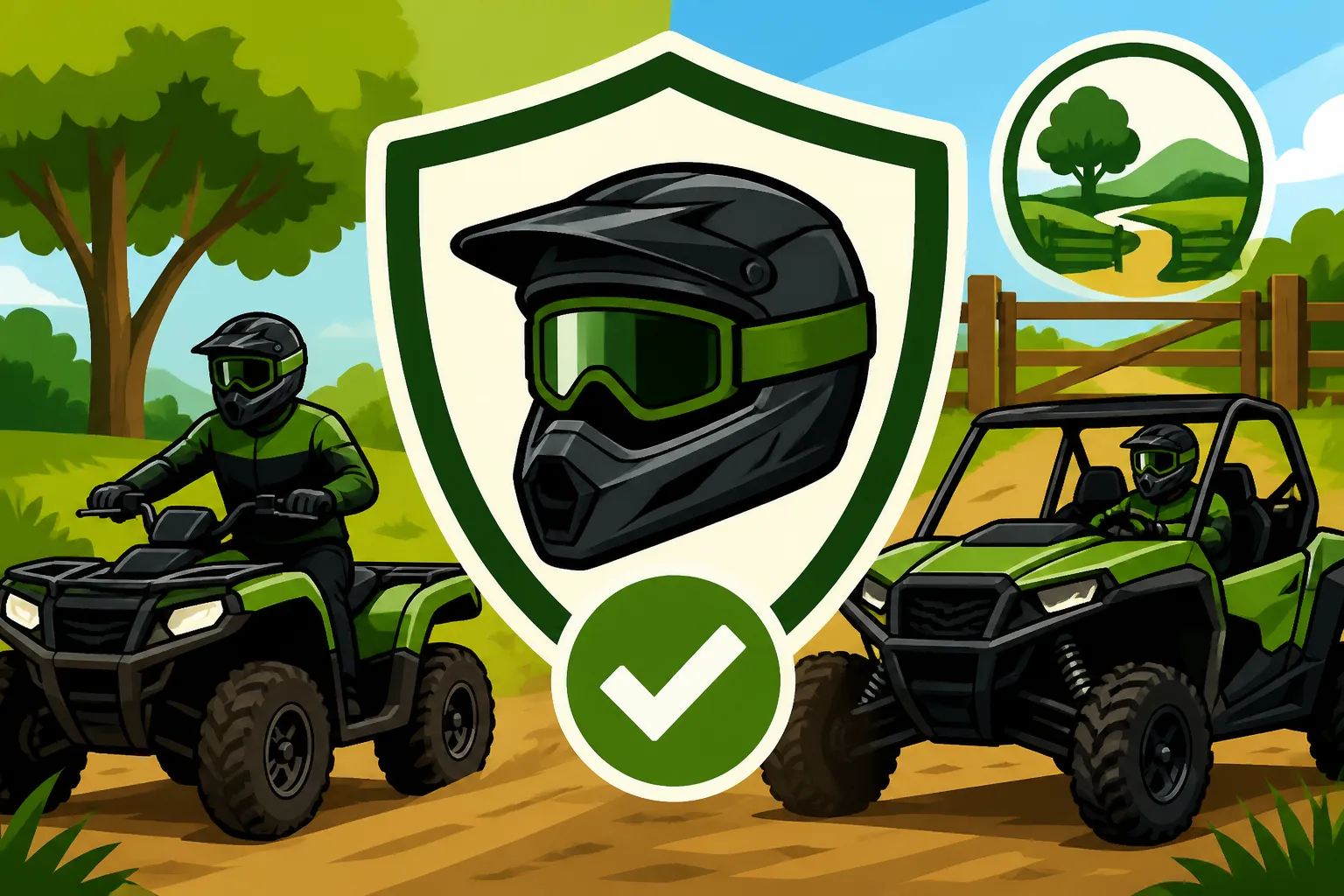
A helmet that is legal for one kind of riding may not meet a private park’s entry rules. In Kansas, riding parks set their own operating requirements, and those can differ by machine, rider age, passenger status, or event. Check the park’s current policy before loading up, then bring properly fitted helmets for everyone who will ride.
Who Sets Helmet Rules at a Kansas Private Park
A private riding park can set conditions for using its property, including whether riders must wear helmets and what kind of helmet is acceptable. Those conditions may be stricter than the rules that apply to a particular public road or off-road setting. A rider should not assume that being permitted to ride a machine somewhere else means the same equipment will be accepted at a private park.
There are two separate questions to answer:
- What does the law require in the situation where you will ride? Rules can depend on the machine, the road or land, the rider, and the type of use.
- What does the park require for admission or riding? The operator may require protective equipment as a condition of entry, regardless of whether a particular law requires it.
This distinction matters because a park can turn away a rider who does not meet its rules. A helmet that is comfortable, in good condition, and suitable for casual property use might still fail the park’s stated equipment standard. Likewise, a helmet acceptable at one riding area does not automatically meet another park’s policy.
Start with the park’s own current rules, not an old post, a friend’s recollection, or a rule from another state. The overview in Kansas Private Park Waivers and Rules can help you think about the other requirements a privately operated area may impose. For rules at specific destinations, check Kansas Rocks Park Rules for Riders or Kansas Syracuse Dunes Park Rules if either is where you plan to ride. Do not assume either park has the same helmet policy as another facility.
The same separation applies to permits. A permit or permission to use a public area does not necessarily set the safety-equipment rules for a private park, and a park pass is not a statement that a helmet meets the park’s standard. For the wider distinction between riding access and state-managed land requirements, see Kansas Park Permit vs Trail Permit.
What to Confirm Before You Load the Machine
A quick call or check of the park’s official rules can prevent a wasted trip. Ask specific questions rather than only asking, “Are helmets required?” The word helmet can mean different things in different policies, and details may matter at the gate.
| What to check | Why it matters | What to ask |
|---|---|---|
| Whether helmets are required for every rider | A park may set a site-wide requirement even when riders are adults | “Does every rider need a helmet on the riding area?” |
| Accepted helmet standard or label | The park may specify a particular certification or type | “Is there a required certification or label?” |
| Full-face or open-face rules | A park may require more coverage for certain activities or machines | “Are open-face helmets accepted?” |
| Age requirements | Children and teens may have extra restrictions | “Do age-based helmet rules apply?” |
| Passenger rules | A driver’s equipment does not satisfy a passenger requirement | “Does every passenger need the same type of helmet?” |
| Condition and fit | Damaged or poorly fitting gear may be rejected or offer less protection | “Can staff refuse a helmet that is damaged or does not fit?” |
| Exceptions | Some activities or event formats may be treated differently | “Are there any exceptions, and do they apply to my ride?” |
| Inspection procedure | Staff may check equipment before entry or at the riding area | “When and where are helmets checked?” |
Look for the rules on the park’s official website, current admission information, posted notices, and any waiver or rider agreement you are asked to accept. If those sources do not answer your question, contact the operator directly and describe the machine and riders in your group. A call is especially useful when bringing children, carrying passengers, riding in an organized event, or using a machine that differs from a typical ATV.
Save or screenshot the park’s current instructions before you leave. That is not a substitute for following updated directions at the entrance, but it helps you remember what you checked and lets you compare the written policy with your gear. If you receive a verbal answer, note who provided it and whether the answer applies to the date and activity you have planned.
Avoid relying on informal statements such as “everyone rides without one” or “they never check.” Enforcement can vary by staff member, event, conditions, or a change in park policy. A rule that is not enforced during one visit may still apply on the next one.
Ask about the standard, not just the helmet shape
Some parks care about a particular safety certification or label; others may describe the required helmet type in plain language. Do not guess what a label means or assume that a helmet marketed for cycling, recreational riding, or general use meets an off-road park’s standard. Ask the operator to identify the standard it accepts, then check the manufacturer’s information on the specific helmet.
If you shop online, including through Amazon, compare the actual model and its documented certification with the park’s stated requirement. Product titles and photos may not provide enough detail, and helmets that look alike can have different intended uses. When the policy is unclear, get confirmation from the park before buying or traveling.
Choosing and Checking a Helmet for Everyone Riding
Even where a park does not specify a particular model, a secure, well-fitting helmet is a sensible part of preparing for off-road riding. An ATV or UTV can tip, strike an obstacle, or throw up debris. Helmets do not prevent every injury, and they do not make a risky ride safe, but head protection can reduce exposure to some impacts.
A helmet should fit the person who will wear it. Sharing one helmet across riders is not a good shortcut: heads differ in size and shape, and a loose helmet can move during a ride. Before the trip, have each rider try on their own helmet and check that it sits securely, does not obstruct vision, and can be fastened as designed. Follow the manufacturer’s fit and care instructions.
Check the helmet itself before leaving:
- Look for cracks, deep scratches, crushed areas, loose parts, or signs it has been involved in a significant impact.
- Check the retention strap and buckle for damage and make sure they fasten correctly.
- Confirm that padding and other components are present and secure.
- Make sure the helmet does not shift excessively when fastened.
- Read the manufacturer’s instructions about inspection, storage, and replacement after an impact.
- Bring eye protection if the helmet does not include a suitable face shield and the park or conditions make it necessary.
Do not assume that an undamaged-looking helmet is safe after a hard impact. Follow the manufacturer’s guidance about replacing a helmet after a crash or other significant hit. Also avoid modifying a helmet in a way that conflicts with its instructions or the park’s rules.
A helmet’s design should suit the activity and the wearer. Some riders prefer more face coverage for dust, flying debris, or rougher terrain. Others may choose a different design where allowed. The priority is to meet the park’s written requirement, ensure a proper fit, and use equipment intended for the activity. For additional context about helmet selection when a law does not settle the question, see Choosing a Helmet When No Law Requires One.
A helmet is only one part of safety gear. Eye protection, gloves, sturdy footwear, long sleeves, and other protective clothing may be appropriate for the machine and conditions. Check whether the park has additional requirements, particularly for organized rides or specialized terrain. A helmet should not lead riders to ignore speed, passenger limits, trail markings, or the machine’s operating instructions.
Make the check personal, especially for children
Do not treat “we have helmets in the truck” as proof that the whole group is prepared. Make sure each rider has a helmet that fits and meets the park’s standard. This includes passengers, not just the person operating the machine.
Children and teens may face additional park rules, even when they are accompanied by an adult. A park can set minimum ages, supervision requirements, or equipment conditions. Check Kansas Private Park Age Minimums alongside the helmet policy rather than assuming that meeting one requirement satisfies the others. Also make sure the machine is appropriate for the rider and that any passenger seat is designed for the number of people riding.
If a child’s helmet is borrowed, check its size and fit instead of relying on its label or the owner’s estimate. A helmet that is too large can shift, while one that is too small may not sit correctly or be comfortable enough to wear throughout the ride. Give children time to try the helmet and secure it before arriving at the park.
Different Machines and Activities Can Mean Different Checks
A park’s helmet policy may apply to everyone, or it may vary by activity, machine, rider age, or event. Do not assume a rule for one type of vehicle automatically answers the question for another. A family bringing an ATV, a side-by-side, and a youth machine should confirm whether the same equipment requirement applies to each rider.
A UTV’s enclosed or semi-enclosed cab is not, by itself, a reason to assume helmets are unnecessary. The operator’s rules decide what equipment riders must wear on the property. Ask whether the policy changes for a UTV, for a passenger, or for a particular course. If you are still sorting out where a side-by-side can ride, Kansas Trails That Allow Side-by-Sides addresses access rather than replacing a park’s safety rules.
Parks may also distinguish between regular riding and special activities. An event, race, guided ride, or designated course could have additional requirements. Confirm the rule for the specific activity you are attending, not just the facility in general. If a park’s website describes an event but does not list equipment details, contact the organizer before setting out.
A sand area, rock course, wooded trail, and open practice area can expose riders to different conditions. That does not mean you should invent a separate rule for each terrain type; it means you should check whether the park actually has different rules. Dust and debris can affect visibility, while uneven ground and obstacles can increase the chance of a fall. The park’s instructions and the rider’s judgment should work together.
The setting also matters. A private facility’s helmet policy is not a general answer to whether a machine can be used on a Kansas street, county road, or public area. Road access, local ordinances, and public-land rules are separate issues. If your route includes a road before or after the park, check the rules for that location too. Kansas UTV Street Legal Rules by City covers a different question from a private park’s admission policy.
Finally, do not treat insurance, a waiver, or a title as proof that a helmet is optional. Those documents serve different purposes. A waiver does not override posted operating rules, and a titled machine does not automatically have permission to ride on a road or on someone else’s land. Keep the focus on the exact place and activity: park permission, vehicle eligibility, rider requirements, and protective equipment are related but distinct checks.
A Simple Pre-Trip Helmet Routine
Make helmet checks part of trip planning rather than a last-minute scramble at the entrance.
- Choose the riding area first. Confirm that the park is open and that your machine and planned activity are allowed. Kansas ATV Trails: Where You Can Actually Ride can help with the larger question of finding places to ride, but a specific private park’s current rules still control at that site.
- Read the current park rules. Look for helmet language in admission information, posted rules, waivers, and event instructions.
- Ask about unclear wording. Confirm the accepted helmet type or certification, whether all riders and passengers need one, and whether age-specific rules apply.
- Match the gear to each person. Check fit and condition for every rider, including children and passengers.
- Pack eye protection and other required gear. Confirm whether the park requires anything beyond helmets.
- Recheck before unloading. Follow staff directions and posted notices when you arrive, even if you checked the policy earlier.
If the park requires a helmet you do not have, do not count on borrowing one at the gate unless the operator has confirmed that rental or loaner equipment is available and meets its standard. Do not plan to ride first and resolve the issue later. A rider who cannot meet the park’s equipment rule may have to sit out, and a group may need to adjust its plan.
It can help to keep helmets in a protective bag and avoid stacking heavy items on top of them during transport. Secure them so they cannot fall from a trailer or bounce around in a cargo bed. Before unloading, inspect them again for damage from travel. Small preparation steps can make the entry process smoother and help the group start the day ready.
If a park changes its policy, follow the current requirement rather than relying on what was accepted during a past visit. When rules are unclear or seem inconsistent, ask a staff member before riding. If the answer differs from what you were told earlier, pause and clarify the requirement rather than risking removal from the riding area.
Frequently Asked Questions
Does every Kansas private ATV park require helmets?
Not necessarily. Private parks set their own operating rules, so requirements can vary. Check the specific park’s current policy and ask about the helmet standard, passengers, and age-based conditions before traveling.
Can I use the same helmet at every park?
Only if it meets each park’s requirements and fits the rider. One park may accept a helmet that another does not. Check the written policy for every facility you plan to visit.
Does a UTV cab mean passengers do not need helmets?
Do not assume so. The park’s rules determine whether helmets are required in a UTV and whether the driver and passengers are treated differently. Ask the operator directly.
Are children subject to different helmet rules?
They may be. A park can set age-based equipment or supervision requirements. Confirm the helmet policy and age rules for each child before the visit.
Is a waiver a substitute for following the helmet policy?
No. A waiver does not mean a rider can ignore the park’s stated equipment requirements. Follow the current rules and ask the operator if anything is unclear.
Disclaimer
This article is for general informational purposes only and does not constitute professional advice. Laws, prices and regulations vary by location and change over time. Consult a qualified professional for guidance on your specific situation.