Kansas Private Park Waivers and Rules
Private riding parks can look like an easy answer when public trails are limited, but the waiver at the gate is only one part of the deal. Before you unload near Mapleton, Syracuse, or another Kansas riding area, understand who sets the rules, what your signature means, which permits may apply, and how to avoid a frustrating turn-away.
How private park waivers and rules work in Kansas
The park sets the conditions for entry
A private off-road park is not the same as a public trail system. The owner or operator can establish conditions for admission, riding, camping, vehicle use, and behavior on the property. Those conditions may include signing a waiver, paying an admission charge, showing proof of age or insurance, attending a safety briefing, or following machine-specific restrictions.
That means two Kansas parks can have very different entry procedures. A rider who has visited Kansas Rocks Recreation Park near Mapleton may still need to read the rules at Syracuse Sand Dunes or another private facility from scratch. Familiarity with one gate’s process does not guarantee that another operator accepts the same paperwork, equipment, or riding conduct.
A park’s rules may be posted online, sent with a reservation confirmation, displayed at the entrance, or explained by staff at check-in. Read the current version before loading up. If a rule is unclear—such as whether a passenger may ride on a particular machine—ask the operator directly rather than relying on a friend’s recollection or an old social media post.
A waiver is not a park permit or vehicle registration
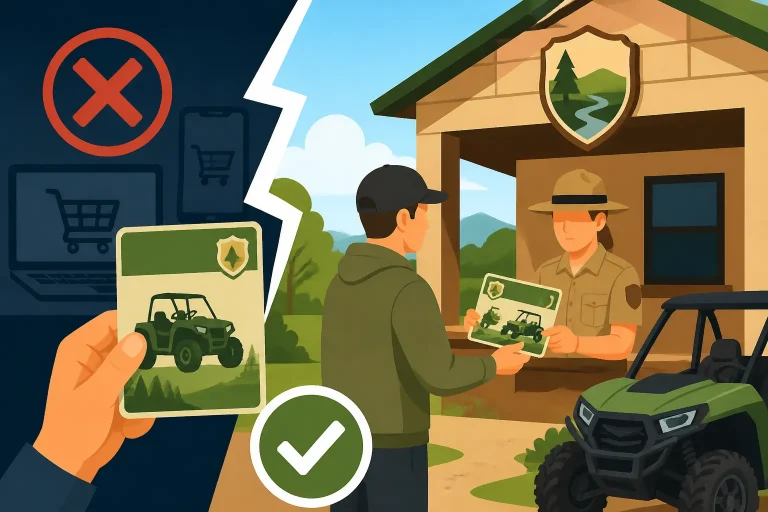
A waiver usually records that a participant has been told about risks and agrees to certain conditions of participation. It is not the same thing as an admission pass, a park permit issued by a public agency, vehicle registration, proof of ownership, or permission to ride on someone else’s land.
This distinction matters because a signed waiver does not automatically satisfy every other requirement. A park may require its own admission process even if the machine has paperwork, while a public area may have access rules that a private park’s waiver cannot replace. Kansas does not issue a universal state OHV trail pass for all private riding parks, and an out-of-state sticker should not be assumed to work as a private park’s admission credential.
For a broader look at what state-issued permissions do and do not cover, see Kansas Has No State OHV Permit. If you are planning to ride on public land rather than a privately operated park, compare the park’s directions with Kansas Park Permit vs Trail Permit. Those are separate questions from whether the operator requires a waiver at its gate.
What to check before signing a waiver
Understand the risks and release language
Waivers often describe ordinary risks of off-road riding: uneven ground, rocks, sand, mud, changing weather, limited visibility, mechanical failure, collisions, and the actions of other riders. The wording can also address risks specific to the property, such as steep ledges, wooded routes, water, or changing trail conditions. Take time to read the document, including any sections on release of claims, assumption of risk, and responsibility for damage.
Do not treat a waiver as a guarantee that nothing can go wrong or as proof that the park is responsible for every injury. It is a document whose effect can depend on its wording and the circumstances. If you do not understand a clause, ask the operator to explain how it applies to park participation. If the question concerns a serious legal dispute or a significant injury, consult a qualified attorney rather than relying on a quick interpretation at the entrance.
A waiver may also contain acknowledgments that feel routine but have real practical meaning: that you will follow posted signs, remain on authorized routes, supervise children, or accept responsibility for your own machine. A rider who signs without reading may later discover that an important restriction was presented in the paperwork, even if they did not notice it in the line at the gate.
Check who must sign and how minors are handled
Parks may require each adult participant to complete an individual waiver. A group leader’s signature generally should not be assumed to cover everyone in the trailer. If you are bringing a spouse, friends, or adult relatives, ask whether each person must sign separately and whether the form can be completed before arrival.
Rules for minors deserve extra attention. A park may require a parent or legal guardian to sign, and the child may also need to acknowledge the rules in an age-appropriate way. The adult may be asked to remain present or directly supervise the young rider. Do not assume that an older sibling, grandparent, coach, or family friend can sign on a parent’s behalf; confirm the park’s policy before traveling.
When a child is riding, check both the waiver procedure and the vehicle rules. A signed form does not make an oversized or unsuitable machine safe for a young rider. Ask whether the park has age restrictions, passenger limitations, or separate requirements for youth areas. For related state-level questions, see [Kansas Rules for a Ten-Year-Old Rider] and Kansas Private Park Minimum Ages. A private park may set its own stricter entry conditions.
Rules that can determine whether your machine gets in
Vehicle type, width, and trail access
A park may limit which types of machines can use certain routes. A narrow trail may be open to ATVs and dirt bikes but unsuitable for a wider side-by-side. Some facilities may set a maximum width, restrict passenger machines on particular sections, or designate routes by difficulty. Those limits are about the park’s terrain and operating rules; they are not the same as Kansas’s legal classification of the vehicle.
Check the park’s definition of an allowed vehicle instead of guessing from the model name. A machine described as a UTV by its owner might be treated differently from an ATV under the facility’s route rules. Width can matter even when the vehicle is mechanically capable of making it through a trail. If the park publishes measurements, measure the machine as equipped, including accessories that add width.
For example, a rider arriving at School Creek with a wider side-by-side should confirm whether that machine is allowed before making the drive. The area is known for restrictions on machine width, and a general assumption that “off-road vehicles are welcome” is not enough to establish that every vehicle can use every route. The park may also update access conditions, so check directly before departure. Related background is available in Kansas Trails That Allow Side-by-Sides and Kansas’s 50-Inch Limit at School Creek.
Equipment, condition, and passenger requirements
Park rules may address helmets, eye protection, working brakes, safe tires, exhaust or sound levels, lights, flags, and vehicle condition. Requirements can differ between a private facility and a public road. A machine that is legal to title in Kansas is not necessarily equipped to meet a private park’s entry or riding standards.
Passenger rules can be especially easy to overlook. The park may require riders to use only factory-designated seats and seat belts, or may prohibit passengers on a single-seat ATV. A child should not be carried in a position that the manufacturer did not design for a passenger. If you have installed aftermarket seating, ask the operator whether the setup is accepted before arriving.
Pack equipment based on the park’s written rules and the day’s terrain, not merely on what you have used elsewhere. Riders sometimes keep a helmet, goggles, gloves, and basic repair supplies in a dedicated bin so they are not scrambling at the trailhead. If you are replacing protective gear, you might compare options at a local powersports retailer or an online marketplace such as Amazon, but confirm that the item suits the rider and the park’s requirements before buying. For park-specific guidance, see Kansas Private Park Helmet Rules and Kansas Rocks Park Rules for Riders.
A practical checklist for arrival day
Confirm admission, reservations, and operating details
Before leaving home, confirm that the park is open and that your intended riding area is available. A facility may have seasonal operations, weather-related closures, private events, or different rules for day visitors and campers. A listing or map saved months earlier may not reflect the gate’s present instructions, so use the park’s own communication channels for the final check.
Ask whether reservations are needed, how check-in works, what payment methods are accepted, and whether all riders must arrive together. If your group is meeting at the park, find out whether late arrivals can complete the waiver separately. Clarify whether admission covers the vehicle, each rider, camping, or other services; do not infer what a pass includes from its name alone.
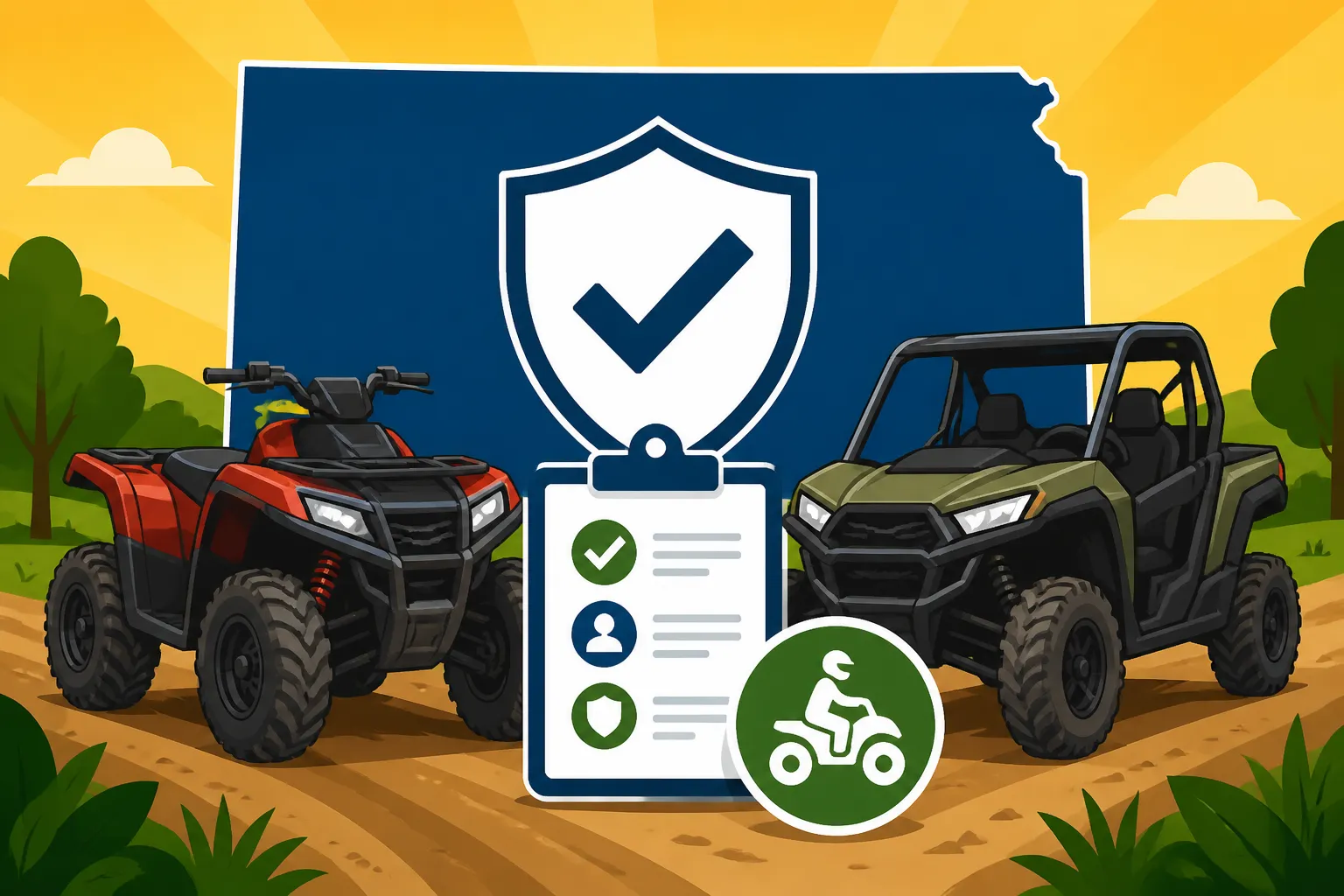
The following table is a useful pre-trip planning tool. It does not replace the individual park’s rules, but it helps you identify the questions to ask before you tow.
| What to confirm | Why it matters | A useful question |
|---|---|---|
| Opening status and riding hours | Seasonal schedules and closures can change a planned trip | Is the park open on our intended date, and what are the gate hours? |
| Admission and reservation process | Some facilities may require advance arrangements or separate check-in steps | Do we need a reservation, and what does admission cover? |
| Waivers | Each participant may have a separate form or signature requirement | Can waivers be completed before arrival, and who must sign? |
| Machine eligibility | Vehicle type, width, age, or condition may affect access | Is this exact machine allowed, and are there route-specific limits? |
| Rider and passenger rules | Age, supervision, and seating requirements may vary | What are the rules for children and passengers? |
| Safety equipment | Missing required gear can keep someone from riding | Which protective items or machine equipment are mandatory? |
| Camping and pets | Overnight stays and animals may have separate restrictions | Are camping, pets, fires, and generators allowed, and under what conditions? |
| Weather and refunds | Rain or unsafe conditions may affect access and reservations | What happens if conditions close the riding area? |
Bring the right documents and supplies
Keep confirmation details, identification, emergency contacts, and any requested ownership or insurance documents together. A private park may not ask to see every document, but arriving prepared is easier than discovering a missing form while the group waits. If a youth participant is attending with someone other than a parent or guardian, verify the park’s consent requirements well ahead of time.
Prepare the machine and trailer before the trip. Check tire condition, brakes, steering, fuel, tie-downs, and any required safety equipment. Bring basic tools and supplies suited to the planned ride, but do not assume that a repair kit or first-aid kit replaces required protective gear. Keep the trailer area organized so unloading does not block the entrance or create a hazard for other visitors.
For maps and navigation, save the park’s directions and any route information before cell service becomes unreliable. A downloaded map can be useful, but obey on-site signs and staff directions if they differ from an older file. Riders planning a trip to a less familiar area may also find Kansas Trail Conditions Before You Tow helpful. Rules at the gate and trail signage should take priority over informal advice.
Riding conduct, safety, and enforcement inside a park
Stay on designated routes and follow posted directions
Private property does not mean unrestricted riding. Operators commonly identify authorized trails, closed sections, one-way routes, speed limits, staging areas, and places where machines must be shut off or parked. Riding into a closed area can damage land, create a collision risk, or put the park’s access arrangements at risk.
Do not treat a trail map as permission to improvise. A route may be closed after rain, altered for an event, or limited to certain machines. If a sign is unclear, stop and ask staff rather than following another rider who appears confident. That short pause is much better than getting separated from your group or entering a route that your machine cannot safely navigate.
Respect other users as well as the property. Slow down near people on foot, at intersections, and around staging or camping areas. Give dust room to settle when practical, avoid aggressive passing, and do not assume that other riders can hear your engine or see you around a blind corner. These habits help keep the park usable for families, beginners, and experienced riders alike.
Alcohol, behavior, damage, and removal from the property
A park may prohibit alcohol or drugs while riding, set quiet hours, restrict fires, or establish rules for generators and pets. These are not minor details if you plan to camp or spend a full day with a group. Ask about them before packing, especially when your party includes children or multiple households with different expectations.
Operators can also set consequences for unsafe conduct, disregard of staff instructions, property damage, or repeated rule violations. Depending on the posted terms, a rider may be asked to stop riding or leave. A waiver or admission payment should not be treated as permission to ignore the rules after entry. If a staff member gives a direction, pause the activity and clarify it calmly rather than turning a disagreement into a safety issue.
If a machine damages a trail, fence, gate, or facility, report it promptly. Hiding damage can make a manageable problem worse and may violate the park’s conditions. Take reasonable steps to protect people and prevent further damage, then follow the operator’s instructions. If someone is injured, prioritize immediate safety and emergency assistance before worrying about paperwork or blame.
How private park rules differ from public-land permissions
A private admission pass is not a statewide riding credential
Kansas riders often hear about permits and stickers and understandably wonder whether one purchase covers every place they might ride. It does not. A private park controls its own admission and property rules. A state park or wildlife area may have separate limits on where machines can travel, while local roads and city streets are governed by different laws and ordinances.
Kansas does not have one general state-issued OHV trail pass that grants access to every private park. Nor does a private park’s pass authorize riding on public roads, another operator’s property, or a public trail that has its own restrictions. The permission is tied to the particular location and the terms the operator sets.
This is where reciprocity can be misunderstood. A visitor’s home-state permit, registration decal, or club membership may be relevant for that state or organization, but it does not automatically satisfy a Kansas private park’s entry process. Call the facility and ask what it accepts. For the state’s general approach to visiting riders, see Kansas Requires No Sticker of Visitors. For a separate discussion of machine documents, see Kansas Proof of Ownership on the Trail.
A private park waiver does not make a machine street legal
Signing a waiver and paying admission do not change the machine’s legal status on Kansas roads. A private riding park’s permission applies to its property and rules. It does not turn an ATV or UTV into a road-legal vehicle, create a city tag, or override a road-use restriction.
This distinction matters when a park is near a town or when the route to the property includes public roads. Do not ride from a trailhead onto a road simply because the park entrance is nearby. Check the applicable law and local ordinance before using a public street, and arrange to haul the machine if road use is not authorized. A vehicle that can travel on a park road or property access lane may still be prohibited from a public highway.
The same caution applies to trailers and towing. A machine’s lack of a state trail sticker does not eliminate other requirements for the tow vehicle or trailer. Plan the route, secure the load, and confirm the park’s unloading instructions. For a clearer separation between ownership paperwork and road use, read Having a Title Does Not Make an ATV Street Legal.
Special planning for families, groups, and overnight visits
Make one person responsible for the group’s details
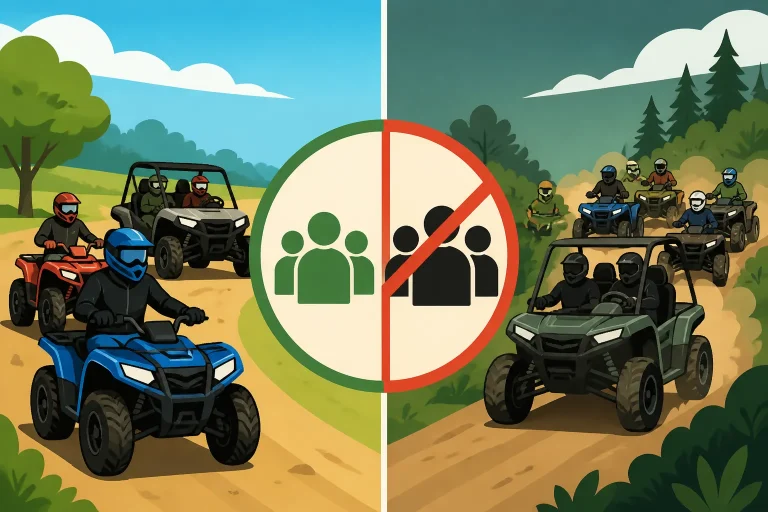
A large group can create a surprising amount of gate confusion. One person may have the reservation, another may be carrying the waiver forms, and a third may have the children’s gear. Choose a trip organizer who will confirm the rules, share the park’s instructions with everyone, and make sure each participant understands the arrival plan.
Send the group a concise checklist before departure: required equipment, waiver steps, meeting location, machine restrictions, and expectations for passengers and children. Ask everyone to respond if they have a question or a machine that may fall outside the park’s rules. That makes it easier to resolve a concern at home rather than with a line of trailers behind you.
For a group ride, agree on basic communication and regrouping procedures. Decide who leads, who rides sweep, and where the group will stop if someone has a mechanical problem. Riders should know how to reach the organizer and what to do if they become separated. A shared plan is particularly useful when the park has multiple routes or when riders have different experience levels.
Camping, pets, fires, and quiet hours need separate checks
A park’s riding rules may not answer every camping question. Overnight visitors may face separate requirements for campsite reservations, generators, fire rings, pets, waste disposal, and quiet hours. A waiver signed by every rider does not necessarily include permission to camp, and an admission pass should not be assumed to include a campsite.
Ask where campers may park trailers and whether machines can be ridden between the campsite and trail access. Some facilities may require vehicles to be transported to a staging area rather than driven through camp. Check whether open fires are permitted under the conditions in effect for the visit, and bring a backup plan if the operator restricts them.
If you are bringing a dog, verify leash, supervision, and designated-area rules. Keep pets away from moving machines and crowded unloading areas, even if the park allows animals. Quiet hours can matter after a long ride, especially when generators or late arrivals are involved. For specific guidance about an overnight stay at the dunes, see Quiet Hours When You Camp at the Dunes and Kansas Private Park Camping Rules.
What to do when a rule or waiver is unclear
Ask before you sign or unload
If a rule is confusing, ask a staff member to explain it before signing, paying, or unloading. A quick question can clarify whether a restriction applies to the entire property, one trail, a particular vehicle class, or a specific age group. Keep the conversation practical: describe your machine, who will ride it, and what you plan to do.
If the answer is not clear, ask for the written policy or an official park map. Avoid relying on a secondhand explanation from another visitor, especially for topics such as passenger eligibility, age limits, route access, or a waiver’s requirements. Staff may have to apply the same rules consistently, and a casual comment from someone who is not responsible for operations may not settle the question.
If you do not agree with a waiver’s terms, do not sign simply because your group has already made the drive. You can ask whether the operator will clarify the clause, but you may need to decide not to participate if the terms are unacceptable to you. For a legal interpretation, speak with a qualified professional. Park staff can explain their operating policy, but they are not necessarily providing legal advice.
Keep a record of the park’s instructions
Save the reservation confirmation, waiver instructions, and any messages that explain a special accommodation or machine restriction. If a park gives you permission to use a particular route or bring a specific setup, ask how that permission will be recognized at the gate. Written confirmation can prevent a misunderstanding when a different staff member is on duty.
After the visit, note anything you would want to remember before returning: where check-in occurred, which routes fit your machine, where to unload, and what equipment the park checked. This is useful planning information, but do not treat old notes as a substitute for checking current policies before the next trip.
If there is a dispute about a fee, injury, damage, or removal from the property, keep communications factual and respectful. Record relevant details while they are fresh, preserve receipts and messages, and avoid posting unverified accusations online. When the issue has legal or financial consequences, get advice suited to the specific facts rather than assuming a general park rule answers the dispute.
A final pre-trip review
Match your plan to the park
The simplest way to avoid a wasted drive is to match the machine, riders, and activity to the facility before leaving home. Confirm that the park is open, your vehicle is allowed, each participant can complete the required waiver, and the planned routes fit your group’s experience. If you are camping, verify overnight rules separately from day-riding access.
Use this short sequence before the trip:
- Check the park’s own operating information and contact the operator if a key detail is unclear.
- Confirm machine eligibility, width limits, passenger rules, age requirements, and required equipment.
- Review the waiver carefully and make sure the correct adults or guardians can sign.
- Verify admission, reservation, camping, pet, fire, and payment procedures.
- Pack required safety gear and keep confirmation details accessible.
- Follow signs and staff instructions once on the property.
That small amount of preparation can prevent the most common gate problems: arriving with a machine the park does not accept, missing a required guardian signature, misunderstanding what admission covers, or assuming a home-state sticker replaces the park’s own process. Private parks can be welcoming places to ride, but the operator’s specific rules are the starting point for every visit.
Disclaimer
This article is for general informational purposes only and does not constitute professional advice. Laws, prices and regulations vary by location and change over time. Consult a qualified professional for guidance on your specific situation.