Kansas Trail Riding After Heavy Rain
A Kansas trail can look rideable from the parking area and turn into slick clay, deep ruts, or hidden standing water a few hundred yards in. After heavy rain, the safest plan is to check the riding area’s status, give soft trails time to recover, and avoid turning a muddy outing into damage to your machine—or the trail itself.
Why Heavy Rain Changes Kansas Riding Conditions
Clay, soil, and standing water can hide trouble
Kansas riding conditions vary by region and by property, but rain can make many routes unpredictable. A firm-looking surface may have a soft layer underneath, while a shallow puddle can conceal a rut, rock, or abrupt drop. Clay can become especially slick when wet, leaving even an experienced rider with less steering and braking control than expected.
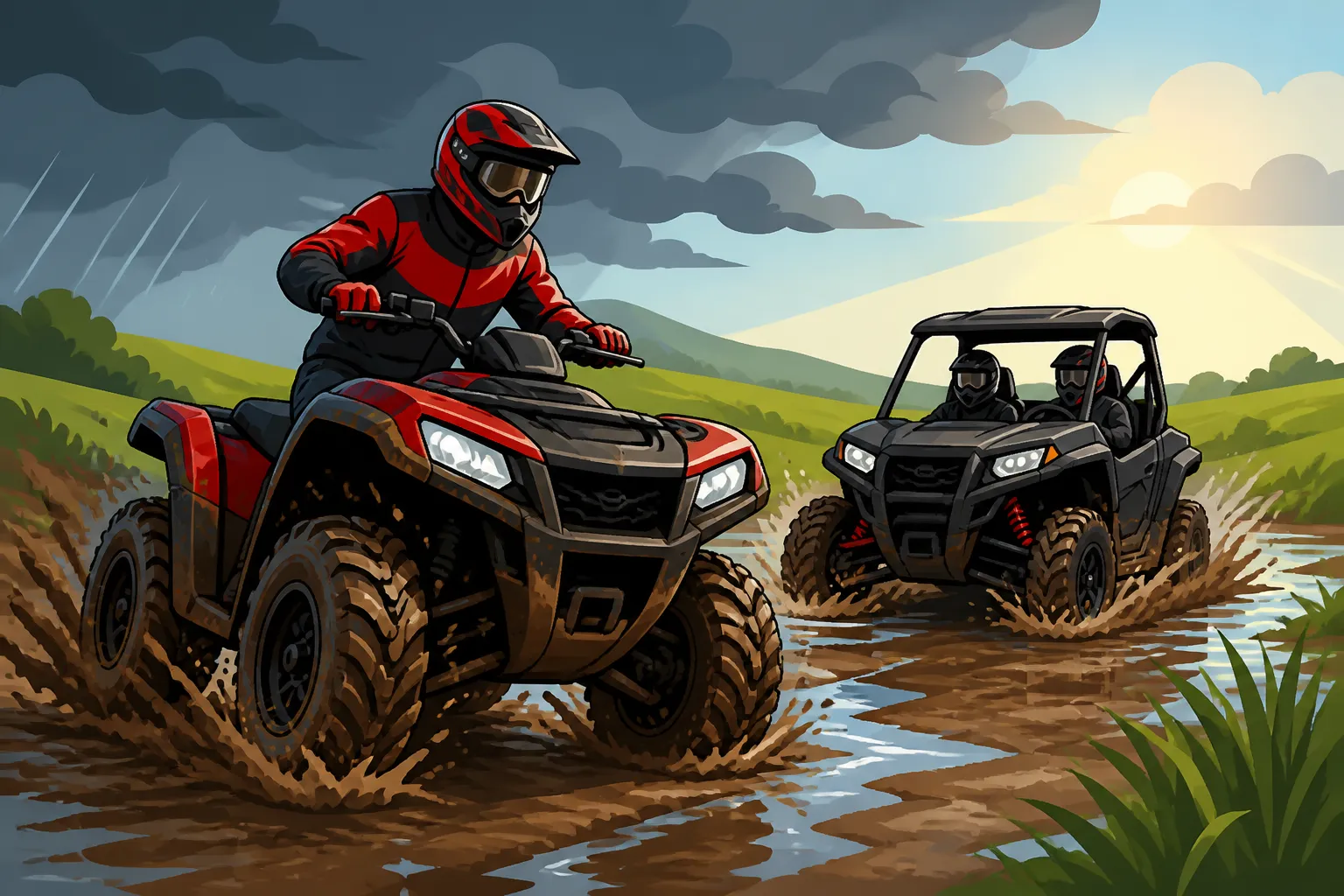
The trouble often begins before a machine gets stuck. Tires may spin as you try to climb a small rise, carving deep grooves that funnel water and become harder to repair. On a side-by-side, the extra weight can press the tires into soft ground; on an ATV, a sudden slide may make it difficult to keep a stable line. Riding faster does not solve the problem. It can make a hidden hole or muddy bend much more dangerous.
Rain also affects different sections of the same riding area differently. A shaded hollow can remain wet after exposed ground has dried, and a low crossing may collect runoff from higher terrain. One route may be firm while another nearby is still soft. That is why a quick look at the entrance—or a friend’s report from another part of the property—cannot guarantee the whole route is ready.
Trail condition matters more than the calendar
There is no dependable number of hours after a storm that makes every Kansas trail safe to ride. How quickly a route dries depends on the amount of rain, soil, shade, drainage, traffic, and local weather after the storm. A windy, sunny afternoon may help an exposed surface dry, while a shaded route can remain slick much longer.
The riding-area operator is usually in the best position to decide whether a property is open and which routes can handle traffic. A route may be open while some sections remain closed, or an operator may ask riders to wait even when the parking area looks dry. Treat those decisions as part of trail safety, not as a frustrating formality. Closures can protect the surface and reduce the chance that riders need a costly recovery.
Before loading up, check the riding area’s own announcements and contact the operator if the status is unclear. For background on what to verify before a drive, see [Kansas Trail Conditions Before You Tow]. If the area posts a closure, do not assume that a different entrance or unmarked route is acceptable. [Kansas Trail Closures After Rain] covers why a temporary closure can be important even after the rain stops.
Kansas riding areas do not all respond the same way
A sandy route, a rocky trail, and a clay-heavy section may behave very differently after the same storm. For example, an area near Mapleton with rock features can present slippery ledges and muddy approaches, while a dune environment has its own concerns, including soft sand and water collecting in low spots. A route beside a reservoir may also have drainage and access conditions that differ from a private park.
Do not assume that a familiar riding area is ready just because you rode there in similar weather before. The storm may have followed a different path, or the property may have received more runoff than the surrounding town. Check the specific location’s rules and status, whether you are considering [Tuttle Creek ORV Area in Kansas], [Kansas Rocks Recreation Park], or [Syracuse Sand Dunes Park in Kansas].
Private parks may set their own rules about wet-weather access, route closures, and recovery. Public access areas have their own boundaries and restrictions. For a broader look at where riders can go, use [Kansas ATV Trails: Where You Can Actually Ride] as a starting point, then confirm conditions with the particular site before traveling.
How to Decide Whether to Ride, Wait, or Turn Around
Check conditions before you put the trailer on the road
A little preparation can save hours of towing, unloading, and discovering that the trails are closed. Look for an official update from the riding area, then check recent weather for the location itself rather than relying only on conditions at home. Kansas storms can affect one area heavily and leave another with much less rain, even when both are within a reasonable drive.
If you use a mapping app such as onX Offroad to review a route, treat it as a navigation aid, not as proof that the trail is open or dry. A mapped line does not necessarily show temporary closures, fresh washouts, soft ground, or a park’s current access rules. Use the map to understand where you are and how a route fits together, then confirm the status with the land manager or riding-area operator.
When you call or message, ask specific questions rather than simply, “Is it muddy?” For example, ask whether the area is open, which routes are closed, whether recent rain caused washouts, and whether the operator recommends waiting. If an answer is uncertain, consider postponing. The inconvenience of a changed plan is usually smaller than the cost of damaging equipment or getting a machine stuck where recovery would harm the trail.
Use a simple go, wait, or turn-around check
The following guide can help you make a conservative decision, but it does not replace posted rules or the operator’s instructions.
| What you find | Safer choice |
|---|---|
| The riding area has posted a closure | Do not enter; wait for the operator to reopen it |
| The site is open, but staff report soft or damaged routes | Use only the routes they identify as suitable, or postpone |
| The surface is firm in your riding area and no restrictions are posted | Ride cautiously, stay on marked routes, and reassess as conditions change |
| Tires begin digging deep ruts or spinning without forward movement | Stop before making the damage worse and turn back if safe |
| A crossing hides its depth or the bottom cannot be seen | Do not enter; find an approved route around it or turn back |
| Weather or trail condition changes during the ride | Return by a known route and avoid exploring new sections |
On the trail, watch for warning signs such as standing water with no visible bottom, fresh runoff channels, soft shoulders, and tire tracks that are already cutting deep grooves. If your tires begin spinning, ease off rather than applying more throttle. Repeated attempts can dig a machine down and make recovery harder.
A good rule is to turn around before you are committed to a difficult section. If you cannot tell whether the route ahead is passable, do not test it by driving into the mud. Choose the known route back, and let the operator know about a washout or hazard if the property provides a way to report it.
Make your route easy to adjust
Wet-weather plans should leave room for a short ride, a change of route, or a canceled outing. Agree on a turnaround time and a meeting point before the group separates. In a group, the least experienced rider and the machine with the least suitable tires should help set the pace. If one person is uneasy about a crossing or slope, pause and reassess instead of letting group pressure make the decision.
Keep track of your position and the route you have already traveled. onX Offroad can help riders view mapped routes and orient themselves, but do not depend on a phone alone in an area where service may be unreliable. Save or carry the route information you need before leaving home, and bring a paper map when appropriate. For more preparation ideas, see [Kansas ATV Trail Map Downloads].
If the trail becomes softer as you go, do not keep pressing deeper just to complete a planned loop. Turn around while the return route is still manageable. That choice may feel disappointing, especially after a long drive, but it is far better than being stranded in a low area as weather changes or daylight fades.
Protect Your Machine and the Trail in Muddy Conditions
Avoid rutting and unnecessary wheel spin
A muddy trail can tempt riders to power through, but wheel spin often does more harm than good. It strips away the surface, deepens ruts, and can leave a trail harder to use after the ground dries. It also makes the machine less predictable: a tire can suddenly regain traction and lurch forward, or slide sideways when it hits a firmer patch.
Use smooth throttle and steering, maintain a cautious pace, and stay on the marked route. Do not bypass a muddy spot by making a new track through grass, a field, or a wooded area. That can damage vegetation and may take you onto land or into an area where riding is not allowed. If the only way forward appears to be spinning through deep mud, the sensible choice is often to turn back.
Keep enough distance between machines to avoid having to stop on a soft incline or in a narrow muddy section. If someone ahead is slowing down, wait for a clear signal before moving. A crowded line of machines can churn up a wet route quickly, and a rider who follows too closely has fewer options if the machine ahead gets stuck.
Prepare for recovery without making the situation worse
Wet-weather recovery requires patience. Before the ride, make sure your machine is in sound condition and that any recovery equipment you carry is appropriate for it. A winch or tow strap is useful only when used safely and attached to a suitable recovery point. Do not attach a strap to a component that is not designed for pulling, and keep people clear of a loaded line.
If a machine becomes stuck, stop spinning the tires. Check the ground, the machine’s position, and the available safe recovery points before trying to move it. A rushed pull can damage a vehicle or injure someone. In a group, assign one person to coordinate rather than having several riders pull or drive at once. If the machine cannot be recovered without damaging the route, contact the property operator for guidance.
Do not use trees, fences, signs, or trail structures as improvised anchors unless the property specifically permits it and the anchor is suitable. Avoid driving off-route to reach a stuck machine if that would cause additional damage or cross a boundary. It can be safer to pause, request help, and wait than to create a second problem while trying to solve the first.
Clean and inspect equipment after a wet ride
Mud can hide damage, hold moisture against components, and make it harder to notice a loose fastener or leaking fluid. After returning, remove packed mud carefully, paying attention to areas around the radiator, suspension, brakes, and underbody. Follow the machine manufacturer’s cleaning guidance; high-pressure water used too close to seals, bearings, electrical connectors, or protective boots may cause problems.
Once the machine is clean enough to inspect, look for damaged guards, bent parts, loose fittings, unusual leaks, and debris caught around moving components. If a warning light appears, braking feels different, or the machine makes a new noise, address it before the next ride. Muddy conditions can also make trailers and loading ramps slippery, so take time to clean and secure equipment before towing.
Trail care matters after the ride, too. Follow the riding area’s instructions about washing machines and disposing of mud or debris. Respecting those rules helps keep equipment from carrying unwanted material between properties and supports the operator’s effort to maintain usable routes. [Kansas Trail Etiquette Locals Expect] offers more guidance on being considerate of other riders and the places they visit.
Plan a Better Post-Rain Ride
Choose the right kind of outing for the conditions
If the operator confirms that some routes are open but conditions remain mixed, plan a conservative outing. Choose a shorter route with clear navigation, avoid low crossings and steep muddy sections, and leave enough time to return before the ground or weather changes. A shorter ride can still be enjoyable; it simply gives you more chances to stop and reassess.
The right plan also depends on the machine and the people riding. A two-seat side-by-side carrying passengers has different handling and recovery considerations from a small ATV. New riders may need more time to judge traction and turning distance, so avoid putting them in a position where they must follow an experienced rider through a difficult muddy section. Keep passengers informed and make sure everyone understands that turning around is always an option.
For a group trip, agree beforehand that no one will pressure another rider to cross a questionable section. Decide who has the route map, who will carry communication equipment, and where the group will regroup if someone needs to stop. [Kansas Private Off-Road Parks] can help you understand the variety of places to ride, but each park’s own wet-weather rules should guide the day.
Keep navigation and local rules in perspective
A route on a digital map is not automatically a legal or open route. Conditions, property boundaries, and park rules still matter. onX Offroad may be useful for orientation and planning, especially when a group needs to follow the same route, but verify access with the property responsible for the riding area. If an app’s route line and a posted sign do not agree, follow the sign and ask the operator for clarification.
It also helps to know what the map cannot tell you. It may not reflect a recent washout, temporary closure, or soft section that developed after rain. Do not treat a recorded route, old ride track, or another rider’s social post as permission to enter. If your destination requires a particular entrance or route, confirm that detail before unloading.
As you plan, keep alternatives in mind: a different open route, another riding area with confirmed conditions, or a rescheduled date. That flexibility is especially helpful when traveling across Kansas, where a long tow to a closed or unusable site can turn a planned family outing into a frustrating day. Confirm the destination, keep the group together, and choose the condition of the trail over the pressure to stick to a schedule.
Use rain as a reason to reassess, not to rush
A wet-weather ride is not automatically unsafe, and a dry-looking trail is not automatically ready. The important question is whether the specific riding area is open and whether its routes can handle traffic without putting people, machines, or the trail at unnecessary risk. When the answer is unclear, waiting is a reasonable decision.
Before you go, check the site’s current guidance, prepare a route you can shorten, and make sure everyone in the group is willing to turn around. During the ride, watch for soft ground and changing traction rather than relying on how the trail looked at the entrance. Afterward, inspect your machine and respect any cleanup instructions.
That approach may mean missing a ride now and then. It also helps preserve the trails that make Kansas riding worthwhile, keeps avoidable recoveries to a minimum, and makes the next outing more enjoyable for everyone.
Disclaimer
This article is for general informational purposes only and does not constitute professional advice. Laws, prices and regulations vary by location and change over time. Consult a qualified professional for guidance on your specific situation.