Kansas Trails Within an Hour of Topeka
Finding an ATV or UTV trail near Topeka can be frustrating: Kansas has fewer public off-road riding areas than many neighboring states, and a spot that looks close on a map may have access rules or machine limits you need to check first. This guide compares the closest practical options, what each ride is like, and how to avoid a wasted trip.
The closest riding options near Topeka
The most convenient places to investigate are Perry Lake Spillway, School Creek, and Tuttle Creek. Their drive times depend on where you start in Topeka, traffic, your route, and the exact entrance you’re using, so treat “within an hour” as a planning estimate rather than a guarantee. Check the destination’s current access information before loading your machine.
| Riding area | Approximate drive from Topeka | What to know before you go |
|---|---|---|
| Perry Lake Spillway | About 30 to 45 minutes | A nearby option with terrain suited to a range of experience levels; check the riding area’s rules and access before traveling. |
| School Creek ORV Area | Around an hour, depending on your starting point | A more restrictive choice for machine size; the area is known for a 50-inch limit. |
| Tuttle Creek ORV Area | Around an hour or a little more | North of Topeka near Randolph; confirm the route, hours, and eligible machines before you leave. |
Perry Lake Spillway for a convenient day ride
Perry Lake Spillway is one of the first places Topeka-area riders may want to check because it is relatively close to town. That shorter drive can make a difference when you’re taking a child along, trying off-road riding for the first time, or hoping to squeeze in a few hours without turning the outing into an all-day road trip.
The area is often described as accommodating both newer and more experienced riders, but that doesn’t mean every trail will feel easy. A beginner can still encounter uneven ground, loose surfaces, or sections that call for careful throttle control. Start conservatively, give faster or more confident riders room to pass where appropriate, and don’t assume that a route that looks simple from the parking area will stay that way.
Before you go, confirm the entrance and rules for the riding area rather than relying on a general Perry Lake map. A lake map may show roads, recreation sites, or boat access without clearly identifying where off-road riding is permitted. For a closer look at the area’s access and terrain, see [The Beginner Loop at Perry Lake Spillway] and [Perry Lake Spillway Riding Hours, Dawn to Dusk].
School Creek for riders with a narrower machine
School Creek ORV Area is another option to investigate from Topeka, particularly if you ride a dirt bike or a smaller quad. Its machine-width restriction is an important part of planning: the area is associated with a 50-inch limit, so a side-by-side or other wider machine may not qualify. Don’t make the drive and assume you can work out eligibility at the gate.
Measure your machine before you leave, and compare the measurement with the riding area’s posted requirements. Width can be easy to misjudge when you’re looking at a machine in the garage, especially if it has aftermarket wheels, tires, or accessories. If you’re close to the limit, ask the site operator or managing agency how width is measured rather than relying on a manufacturer’s advertised figure.
School Creek may be a poor fit for a family group that owns a mix of machines. One person’s quad may qualify while a partner’s UTV does not, which can turn a planned shared ride into separate plans. Review [Kansas's 50-Inch Limit at School Creek] and [Kansas Trails That Allow Side-by-Sides] before choosing it for a group outing.
Tuttle Creek for a larger riding-area outing
Tuttle Creek ORV Area is north of Topeka near Randolph. Depending on your starting point and the route, it may sit near the edge of an hour’s drive or take longer. That makes it worth checking for a full day out, but less convenient if you’re hoping to ride briefly and be home before lunch.
The area is described as covering roughly 310 acres, with riding and day-use details that should be checked before departure. Don’t treat acreage as a promise of a particular trail length or difficulty. An area’s overall size can include varied terrain and non-riding space, and a map or posted route may differ from what you expect once you arrive.
Plan the trip around the gate and riding hours, not just the drive. If you’re bringing a trailer, allow time to unload, check the machine, and review the posted rules before riding. The nearby community of Randolph is a useful geographic reference, but verify the correct entrance and road approach in advance. These details are covered further in [Tuttle Creek ORV Area in Kansas] and [Tuttle Creek's 310 Acres in Kansas].
Choosing a trail that suits your machine and experience
A nearby riding area is only a good choice if it fits your vehicle, your group, and the kind of day you want. It’s easy to focus on mileage from Topeka and overlook the practical details that matter once you arrive: machine-width rules, terrain, daylight, and whether everyone in your group is comfortable with the route.
Match the riding area to your machine
Start with the machine’s actual dimensions and type. A narrow ATV, a wide side-by-side, and a dirt bike can face different access rules even when they’re headed to the same general location. Don’t assume that because a riding area welcomes off-road vehicles, every class of vehicle can use every route there.
This matters especially at School Creek because of the 50-inch restriction. If you ride a side-by-side, check the area’s rules before planning around it. For a wider choice of places to explore, consult [Kansas Trails That Allow Side-by-Sides]. If you’re still deciding what kind of vehicle a particular site permits, [Kansas Trail Difficulty Ratings] can help you think through the riding experience, but the area’s own access rules should guide the final decision.
Also check whether your machine is appropriate for the terrain. A small youth quad might be legal to bring but not well suited to a rough or demanding route. A large, heavy UTV may feel cumbersome on a tight trail, even where it is permitted. Match the machine to the riding area and the riders’ abilities, not only to the trip distance.
Choose difficulty based on the least-experienced rider
A group ride usually goes best when the route fits the least-experienced person in the group. If one rider is new, choose a manageable starting area and agree that nobody has to follow the most confident rider onto a harder section. That simple conversation can prevent a fun outing from becoming stressful.
For a first trip, talk through what riders should do if someone needs to stop, gets separated, or encounters a section they don’t want to attempt. Set a meeting point, ride at a pace that allows the group to stay together, and take breaks before people are tired. Fatigue can make steering, judgment, and patience worse, particularly for younger riders.
Perry Lake Spillway may be worth considering for a mixed-experience group, but check current conditions and use judgment on the ground. “Suitable for beginners” is not a substitute for supervision or safe riding habits. If your group wants a more structured overview of what different terrain can demand, read [Best Kansas ATV Trails for Beginners] and [Kansas Trail Etiquette Locals Expect].
Planning your trip from Topeka
A little preparation matters when you’re hauling a machine out of town. The drive may be short compared with a weekend trip to a distant park, but a missed entrance, unsuitable machine, or closure can still cost you most of the day.
Confirm access, hours, and trail conditions
Check the riding area’s current notices before leaving. Confirm that the site is open, identify the right entrance, review any machine restrictions, and look for information about closures or weather-related conditions. If the available information is unclear, contact the managing office or park before you load up.
Rain can change trail conditions quickly. Clay or muddy surfaces may become slippery or vulnerable to damage, while a dry stretch can mean dust and reduced visibility. If recent weather has been heavy, ask whether the area is open and whether specific routes are closed. [Kansas Trail Closures After Rain] and [Kansas Trail Conditions Before You Tow] offer useful planning context.
Use a map to get oriented, but don’t treat a navigation app as permission to ride. onX Offroad can be one tool for planning a route and reviewing the surrounding area, but it should sit alongside official site rules and signs at the entrance. Make sure your planned route stays within the authorized riding area and doesn’t cross private land or a closed road.
Pack for the ride, not just the drive
Bring the essentials for your machine and the people riding it: water, basic first-aid supplies, protective gear, a charged phone, and anything needed for routine trail-side checks. If you’re towing, confirm that the trailer is secured and that you have the tie-downs and tools you’ll need when you reach the staging area.
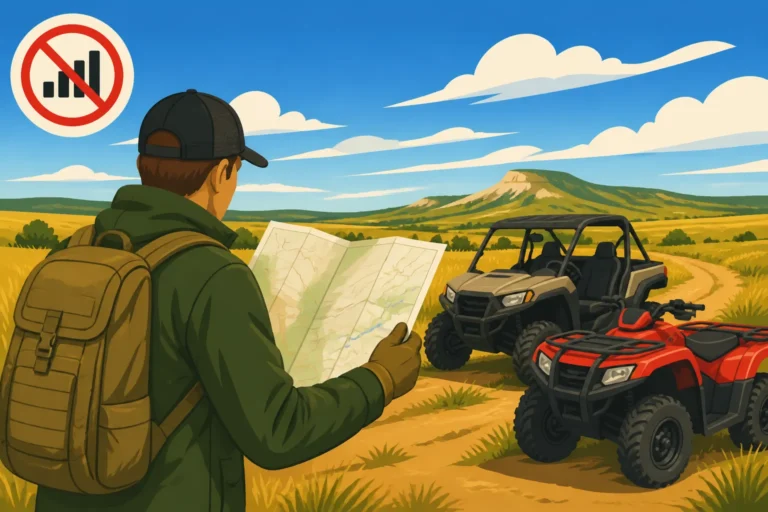
A paper map or downloaded navigation information can help if cell service is weak. Before the ride, let someone know where you’re going and when you expect to return, particularly if you’re riding with a small group or traveling with children. Keep your plan flexible; if the site is crowded, weather turns, or conditions feel beyond your group’s ability, changing plans is the sensible call.
onX Offroad may help you prepare by letting you review the route and nearby features before you set out. Still, compare what you see there with official guidance, posted signs, and any current site notices. A map can support your planning, but it cannot tell you that a trail is open today unless the responsible site confirms it.
When a nearby spot is not close enough
Not every well-known Kansas riding area fits a one-hour trip from Topeka. Kansas Rocks Recreation Park near Mapleton, for example, is generally a longer drive and makes more sense as a destination outing than a quick local ride. If you’re considering it, check its rules and travel time separately rather than treating it as interchangeable with the closer public riding areas.
That distinction is useful when you’re coordinating a group. A private park may offer a different riding experience, but you may need to plan around its own admission, operating schedule, rules, and facilities. Check details directly with the park before setting out. [Kansas Private Off-Road Parks] is a helpful starting point for comparing options beyond the Topeka-area public sites.
A simple way to decide
If the shortest drive is your priority, start by checking Perry Lake Spillway. If your machine is narrow and you’ve confirmed it meets the requirements, School Creek may be worth considering. If you want a larger outing and don’t mind driving near or beyond the one-hour mark, investigate Tuttle Creek and verify the route, hours, and access details.
For any option, take the same three steps: confirm the site is open, confirm your machine is allowed, and check the conditions before you tow. onX Offroad can support your route planning, but use official information to make the final access decision. That small amount of preparation can save you from arriving at the wrong entrance, finding your machine doesn’t qualify, or having to turn around before the ride begins.
Disclaimer
This article is for general informational purposes only and does not constitute professional advice. Laws, prices and regulations vary by location and change over time. Consult a qualified professional for guidance on your specific situation.