Kansas Trails for Kids
Taking kids riding in Kansas can mean anything from a relaxed lap on a familiar machine to a long tow to a trail that turns out to be too rocky, too narrow, or closed after rain. This guide helps families compare Kansas riding areas, choose a manageable first outing, and check the rules and practical details before loading up.
What makes a Kansas riding area suitable for kids
Match the trail to your child and machine
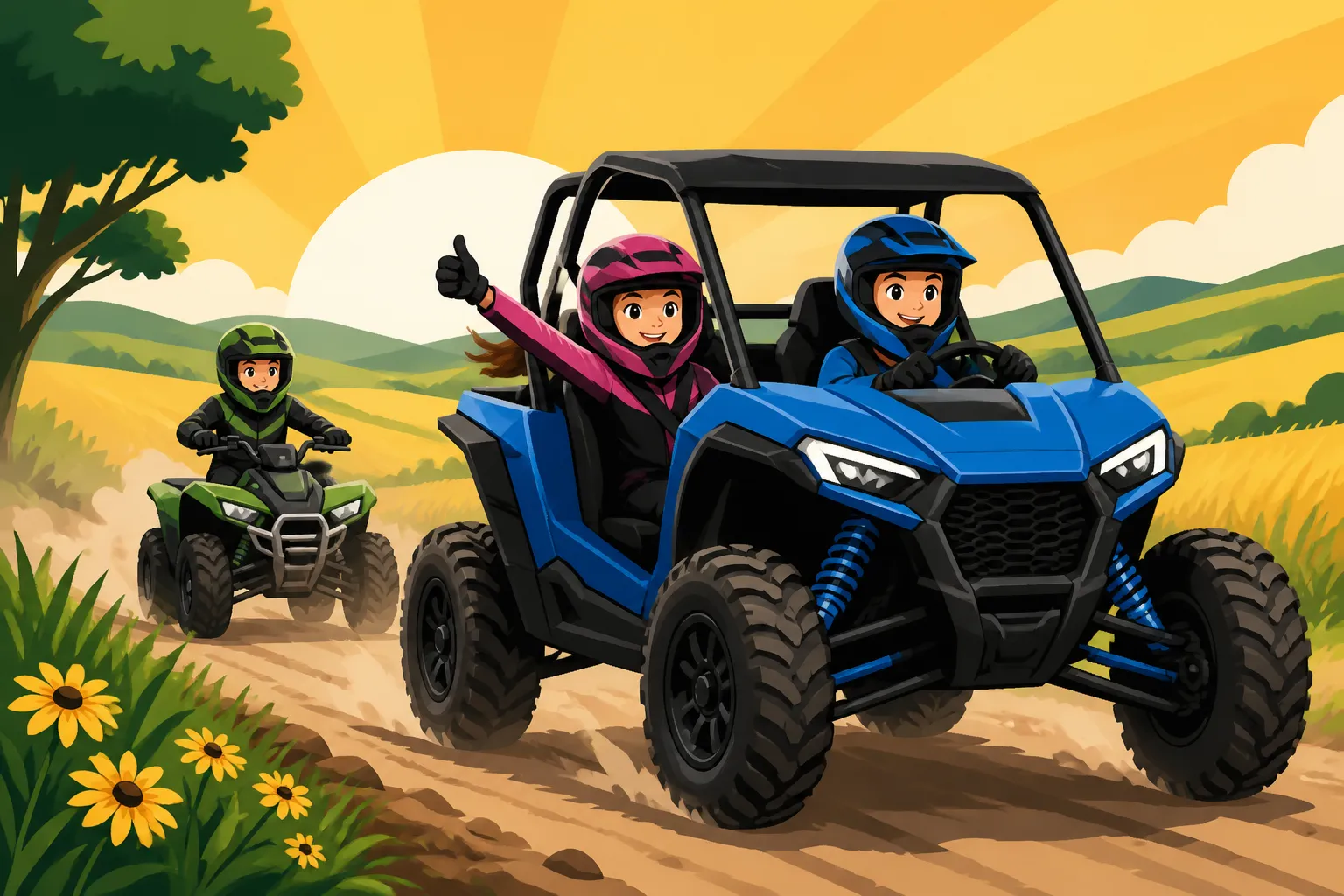
A child-friendly riding area is not automatically a beginner trail. Look for a place where you can choose a short route, turn around easily, and take breaks without feeling pressured to keep up with faster riders. A child who is comfortable on a quad in a pasture may still find unfamiliar terrain intimidating, especially when it includes steep slopes, loose rocks, deep ruts, or other riders coming the opposite way.
Match the route to the least experienced rider in your group, not the adult who is most eager to explore. A small, manageable machine and a short ride with frequent stops can make the day more enjoyable than trying to cover every trail in the park. For a first outing, agree on a simple plan: ride one easy section, check how the child is feeling, and decide whether to continue.
The machine matters as much as the trail. A narrow trail may not accommodate a wide side-by-side, while a young rider may be more comfortable on a properly sized quad than on a large adult machine. Check the specific riding area’s vehicle restrictions before you leave. [Kansas Trails That Allow Side-by-Sides] can help you think through the difference between areas that welcome wider machines and those with tighter limits.
Check rules and conditions before you tow
Families can spend hours preparing snacks, helmets, and a trailer, only to arrive and discover that a route is muddy, a gate is closed, or the machine is not allowed. Check the riding area’s own information before departure, especially after heavy rain or during a holiday weekend. Conditions and access rules can change, so a trail that worked well last month may not be the best choice today.
Look for the permitted machine types, operating hours, age and supervision policies, helmet requirements, fees, and any temporary closures. Private parks set their own rules, and those can differ from one property to another. If your child is riding at a private park, check [Kansas Private Park Age Minimums] and [Kansas Private Park Helmet Rules], then confirm the requirements directly with the park.
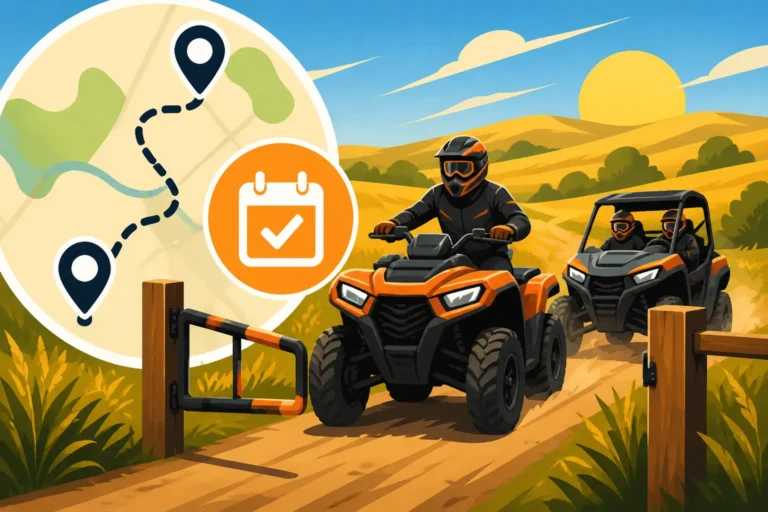
A trail map can also help you judge whether a route has manageable loops and easy places to stop. Families sometimes use onX Offroad to review mapped routes and orient themselves before a trip, but a digital map should not replace posted signs or the riding area’s current directions. For a useful pre-trip checklist, see [Kansas Trail Conditions Before You Tow] and [Kansas Trail Difficulty Ratings].
Kansas riding areas families may want to compare
Tuttle Creek ORV Area
Tuttle Creek ORV Area near Randolph is one option for families looking for a designated place to ride. Its scale can make it appealing for a planned outing, but acreage alone does not tell you whether a particular route will suit a child. Terrain, recent weather, machine size, and your rider’s experience all affect how challenging a loop feels on the day.
Before heading out, review the area’s access details and ask which sections are most suitable for newer or younger riders. Plan a short first loop rather than promising a full day of exploring. Bring water and snacks, and set a clear regrouping point in case riders become separated. You can read more about the area in [Tuttle Creek ORV Area in Kansas] and [Kansas Riding Near Randolph].
A family can also make the experience less stressful by agreeing on simple trail habits before starting: keep a safe following distance, stop somewhere visible if the group gets separated, and let the lead rider know when a child needs a break. These small plans can prevent a minor delay from turning into a worrying moment.
Perry Lake Spillway and School Creek
Perry Lake Spillway is another area families may consider. It is described as suitable for both beginners and more experienced riders, but that does not mean every section will feel easy to every child. Start cautiously, watch for changing surface conditions, and be ready to turn back if the route becomes more demanding than expected. Check current access information and riding hours before you go. More details are available in [Perry Lake Spillway Riding in Kansas] and [The Beginner Loop at Perry Lake Spillway].
School Creek ORV Area has a key restriction families should pay attention to: it is associated with a 50-inch limit and is listed for dirt bikes and quads. That restriction can rule out many side-by-sides, so measure or check your machine’s width rather than assuming it will fit. The width rule may also affect what you can bring if several family members ride different types of machines. See [School Creek ORV Area in Kansas] and [Kansas's 50-Inch Limit at School Creek] for more on this area and its machine limit.
| Riding area | What families should check | A useful planning question |
|---|---|---|
| Tuttle Creek ORV Area | Current access, route difficulty, terrain and hours | Can we choose a short route that suits our least experienced rider? |
| Perry Lake Spillway | Conditions, access and the difficulty of the section you plan to ride | Is there a beginner-friendly route available for our visit? |
| School Creek ORV Area | The 50-inch limit and permitted machine types | Does every machine in our group meet the width and vehicle rules? |
| Kansas Rocks Recreation Park | Park rules, permitted machines, fees and route difficulty | Is this private park a good fit for our child’s experience level? |
Kansas has several kinds of riding opportunities, but state parks are not automatically OHV trail parks. If you are planning around a state park visit, read [Kansas State Parks Have No OHV Trails] and confirm what roads or vehicle use are actually allowed at your destination. For a broader look at where families may ride, browse [Kansas Trails for Beginners].
How to plan a lower-stress ride with kids
Choose the route and pace before you start
Talk through the ride before anyone starts an engine. Explain that the group will stay together, stop at agreed points, and turn around if a section does not feel right. Children may not speak up when they feel nervous, particularly if they think the adults are having fun. Make it clear that asking to stop is a sensible decision, not a failure.
Keep the first ride short enough that the child still has energy for the trip back to the trailer. A route that feels easy at the start can become tiring when it is hot, dusty, or windy. If you use onX Offroad to look at routes beforehand, make sure everyone understands that mapped information is a planning aid—not permission to ride somewhere, a guarantee of trail conditions, or a replacement for posted boundaries.
Set a pace that allows adults to keep the child in sight and respond quickly. Avoid stretching the group out across long distances, and choose a leader who can stop safely without blocking a narrow trail. For more practical expectations, see [Kansas Trail Etiquette Locals Expect].
Pack for comfort, not just the ride
A child who is thirsty, cold, overheated, or uncomfortable may have a harder time focusing on safe riding. Pack water, weather-appropriate layers, eye protection, and snacks. Dust can make a ride unpleasant even when the temperature is comfortable, while open Kansas terrain can leave riders exposed to sun and wind. Take breaks before a child is exhausted rather than waiting for them to ask.
Check that each rider has a properly fitting helmet and suitable protective gear, and make sure the machine is in sound condition before leaving home. Carry a basic first-aid kit and a way to contact someone if your group needs help. Cell service may be limited in some rural areas, so do not assume your phone will work everywhere.
Facilities vary by riding area. If washing off dust and mud matters to your family, check in advance whether the site has wash facilities; [Kansas Riding Areas With Wash Stations] is a helpful related topic. If you want to stay overnight, check the specific campground’s access, rules, and distance from the riding area rather than assuming that camping automatically includes trail access. [Kansas Trails With Camping] offers a starting point for that planning.
A practical checklist before your family ride
Confirm the details that can change the day
Before you load the trailer, check the riding area’s official directions and current notices. Confirm that it is open, that your machine is permitted, and that your intended route is appropriate for your group. Ask about age or supervision policies, helmets, fees, parking, and whether recent rain has affected access. If any rule is unclear, contact the park or managing office rather than relying on an old post or a map listing.
For private properties, remember that admission does not mean every trail is suitable for every rider. Ask staff about beginner areas, one-way routes, narrow sections, and any areas they recommend avoiding with younger riders. [Kansas Private Park Age Minimums] and [Kansas Private Park Helmet Rules] are useful reminders to check each property’s policies instead of assuming one park’s rules apply everywhere.
Set expectations for the whole group
A successful family ride does not have to be long. It may mean a short loop, a picnic, and a child who finishes the day wanting to come back. Build in flexibility: if the trail is rougher than expected, turn around; if the child is tired, call it early. Choosing a calmer day and an easier route is often better than trying to make a demanding trip work.
Before you ride, make sure every adult knows the plan and who is watching each child. Review where to stop, what to do if the group gets split up, and how to signal that someone needs help. When the adults make the ride feel predictable and unhurried, kids have more room to enjoy the experience—and parents have fewer reasons to spend the whole day worrying.
Disclaimer
This article is for general informational purposes only and does not constitute professional advice. Laws, prices and regulations vary by location and change over time. Consult a qualified professional for guidance on your specific situation.