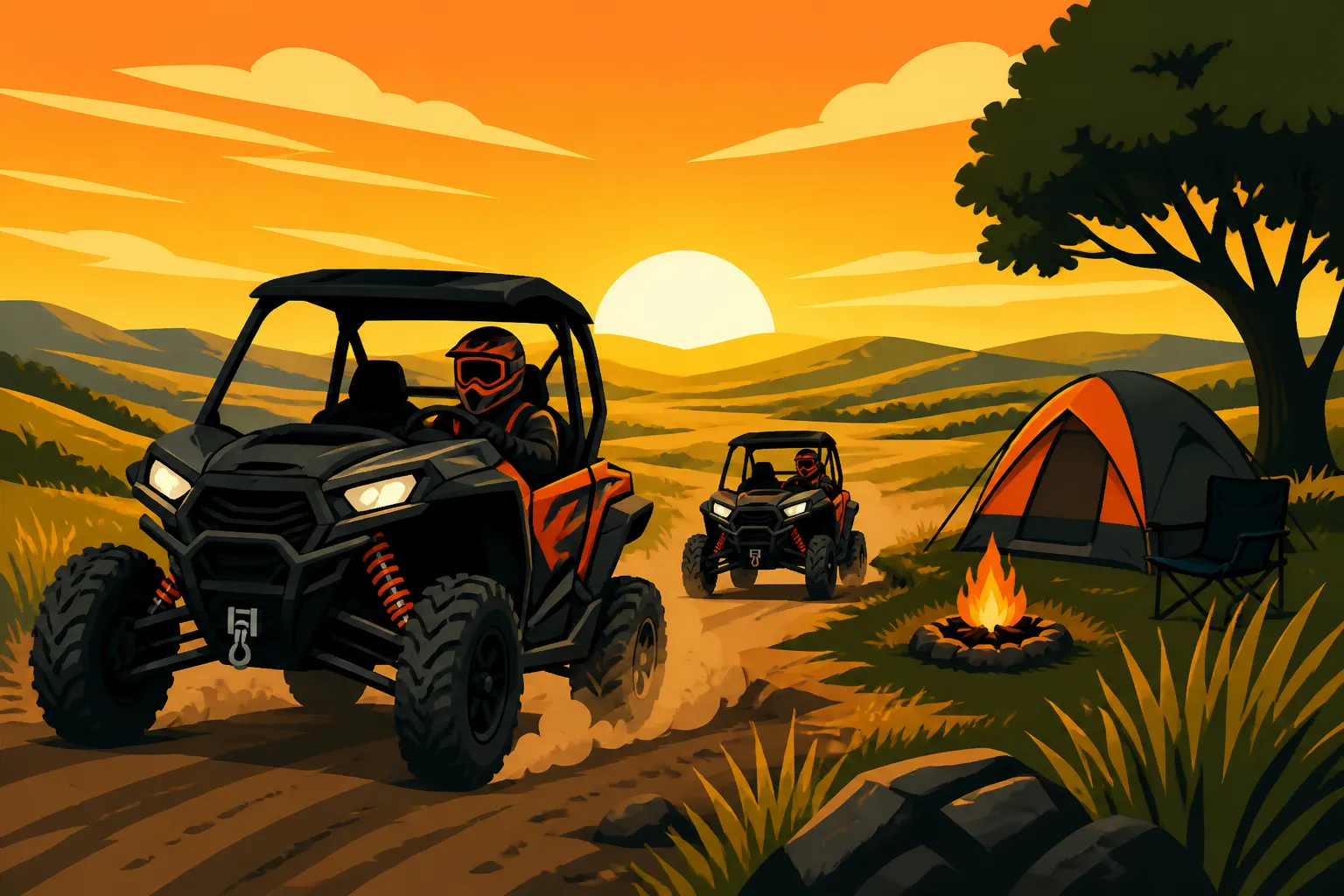
Kansas Trails With Camping
Finding a Kansas riding area where you can camp nearby is harder than it sounds: some parks offer trails but no camping, while others have campsites and riding access under separate rules. This guide compares practical options, explains what to check before towing your ATV or UTV, and helps you plan a trip without arriving to a closed gate or a full campground.
Kansas riding areas with camping nearby
Kansas has a mix of public riding areas and private parks, but camping and off-road access do not always come as one package. A campsite at a state park, for example, does not automatically mean you can ride your machine on every park road or trail. Check both the riding-area rules and the campground’s rules before you leave home.
Tuttle Creek ORV Area and nearby camping
Tuttle Creek ORV Area, near Randolph and the Tuttle Creek Reservoir, is a public riding option worth considering if you want to combine trail time with a campground stay. The riding area is separate from the reservoir’s campgrounds, so plan on transporting your ATV or UTV between the campsite and riding area rather than assuming you can ride directly from your site.
When comparing nearby camping options, look at the driving route between the campground entrance and the riding-area access point. A route that seems close on a map can take longer when you are towing a trailer, especially if you have to use a different entrance or travel around the reservoir. Confirm campground availability, access hours, and any vehicle restrictions directly before booking.
Tuttle Creek ORV Area’s posted hours and riding conditions matter just as much as your campsite reservation. Start with [Tuttle Creek ORV Area in Kansas](Tuttle Creek ORV Area in Kansas) and [Tuttle Creek's Day-Use Hours in Kansas](Tuttle Creek's Day-Use Hours in Kansas) when planning the riding portion. If you are packing for a full day, also check [Tuttle Creek's Loading Ramp, Vault Toilet and Picnic Tables](Tuttle Creek's Loading Ramp, Vault Toilet and Picnic Tables) so you know what facilities are available at the riding area itself.
School Creek ORV Area and Milford Lake camping
School Creek ORV Area is another public option near a reservoir, in the Milford Lake area. It may suit riders looking for a day of riding with a campground stay nearby, but do not assume that a campsite reservation includes access to the ORV area or permission to ride across the state park between the two.
A key planning detail is the machine restriction. School Creek is known for a 50-inch limit, which can rule out many side-by-sides even when they look compact. Measure your machine as required by the riding area’s rules, and verify that your exact model is allowed. The distinction matters: a UTV that fits comfortably on a trailer may still be too wide for the trails.
For a closer look, read [School Creek ORV Area in Kansas](School Creek ORV Area in Kansas), [Kansas's 50-Inch Limit at School Creek](Kansas's 50-Inch Limit at School Creek), and [Kansas Riding at Milford Lake](Kansas Riding at Milford Lake). Check campground locations and availability around Milford Lake separately. A map app such as onX Offroad can help you compare the campground-to-trailhead route and save waypoints, but use official park information for closures, permitted routes, and operating rules.
Perry Lake Spillway and camping options
Perry Lake Spillway offers a public riding option near Perry Lake, with camping choices in the broader lake area. Treat the campground and riding area as separate destinations when you plan. You may need to haul your machine from your campsite to the riding access point, and a reservation at a nearby campground does not itself grant permission to ride on park roads.
This area can work well for a mixed group: some people can spend time at the lake or campground while others ride. Still, verify the riding area’s access hours and conditions before setting the itinerary. A wet spell can change trail conditions, and a site that is available for camping may not mean the riding area is open or suitable that day.
Use [Perry Lake Spillway Riding in Kansas](Perry Lake Spillway Riding in Kansas) to learn more about the riding area, and check [The Beginner Loop at Perry Lake Spillway](The Beginner Loop at Perry Lake Spillway) if your group includes less experienced riders. For a broader overview of public riding options, [Kansas Corps of Engineers Riding Areas](Kansas Corps of Engineers Riding Areas) can help you compare other reservoir-area possibilities.
Kansas Rocks Recreation Park near Mapleton
Kansas Rocks Recreation Park, near Mapleton, is a private riding destination known for rocky terrain. Private parks may offer camping or nearby accommodations, but facilities, availability, and park rules can change. Check directly with the park before relying on a campsite, and ask whether camping is on-site, what type of setup is allowed, and whether a reservation is needed.
The terrain also makes machine preparation important. A rocky route can be demanding on tires, underbody protection, and driver confidence. If your group includes newer riders, ask which areas are appropriate for their experience and whether the park’s current conditions or event schedule affect access.
Start with [Kansas Rocks Recreation Park](Kansas Rocks Recreation Park) and [The Rock Park at Mapleton Opens Only on Weekends](The Rock Park at Mapleton Opens Only on Weekends). The latter is a reminder to confirm the operating schedule before loading up; a long tow is frustrating when the gate is closed. If camping is part of your plan, verify the park’s own lodging or camping details rather than assuming that nearby public camping includes riding privileges.
Comparing Kansas riding and camping options
The most useful comparison is not simply “which park has trails?” It is “which combination of riding access, camping, machine eligibility, and travel time works for my group?” Use this table as a starting point, then confirm current details with the riding area and campground.
| Riding area | General location | Camping approach | Important planning check |
|---|---|---|---|
| Tuttle Creek ORV Area | Near Randolph and Tuttle Creek Reservoir | Look at nearby reservoir-area campgrounds; expect to transport machines to the riding area | Confirm riding hours, campground availability, and route between the two |
| School Creek ORV Area | Milford Lake area | Check nearby Milford-area campgrounds separately from riding access | Verify the 50-inch restriction and measure your machine |
| Perry Lake Spillway | Perry Lake area | Compare campgrounds around the lake and plan for a separate ride to the access point | Check trail conditions, hours, and the route from camp |
| Kansas Rocks Recreation Park | Near Mapleton | Confirm directly whether on-site or nearby camping is available and what rules apply | Check operating days, terrain suitability, and machine preparation |
| Syracuse Sand Dunes | Hamilton County in southwest Kansas | Camping is associated with the riding destination; verify the setup and availability directly | Confirm operating rules, site arrangements, and sand-riding requirements |
A table can narrow your choices, but it cannot replace a call or a current official listing. Campground amenities, reservations, gate schedules, and riding access are all details that can affect a trip. If you are choosing between two options, compare the whole travel plan: towing distance, unloading area, water and restroom access, and whether your machine is allowed on the trails.
How to choose the right trip for your group
For a family weekend, prioritize a campground with facilities your group will actually use, then confirm the riding area is suitable for everyone’s age and experience. For a group of friends focused on riding, choose the trail system first and build the overnight plan around its operating schedule. Those priorities sound obvious, but they prevent a common mismatch: booking a pleasant campsite only to discover the riding area is inconvenient or unsuitable for your machines.
If your group has a wide UTV and a narrow ATV, do not assume one trail system will accommodate both. School Creek’s width restriction is a good example of why model-specific measurements matter. Likewise, rocky terrain at a private park may be a poor fit for a new rider who is still learning throttle control and braking. Call ahead with the machine’s make, model, and width rather than asking only whether “UTVs” are allowed.
Confirm what camping means at each destination
“Camping nearby” can mean a full-service campground, a basic site, or a private park’s limited overnight setup. Ask what is included and what you need to bring. Check whether the site has electrical hookups, drinking water, restrooms, showers, a dump station, or room for a trailer. Do not assume amenities are available just because they appear at another campground on the same lake.
It is also worth asking whether you can leave your trailer or tow vehicle at the campsite while riding, whether there are quiet hours, and whether campfires or generators are restricted. If your group is arriving after work, find out when check-in closes and whether the riding-area gate has a different schedule. These practical details often matter more than the distance between the campground and trailhead.
Plan the ride before you load the trailer
A successful camping-and-riding trip starts with a few checks at home. Rules can differ between public areas, private parks, and campgrounds, so organize the information by destination instead of relying on a general assumption about Kansas riding.
Confirm access, restrictions, and conditions
First, confirm that the riding area is open on the dates you plan to go. Check operating hours, seasonal schedules, closures, and any restrictions related to weather or trail conditions. A campground can remain open while a riding area is closed or difficult to use, so check both separately.
Next, verify that your machine is allowed. Check width limits, permitted vehicle types, age rules, passenger policies, and any required safety equipment. Bring the machine’s measurements and identify its make and model before calling. That makes it easier for staff to answer clearly, especially if your UTV is close to a posted width limit.
Finally, confirm what proof or paperwork you may need. Public and private riding areas can have different entry procedures and rules. Review [Kansas Private Park Waivers and Rules](Kansas Private Park Waivers and Rules) before visiting a private destination, and check [Kansas Proof of Ownership on the Trail](Kansas Proof of Ownership on the Trail) for a reminder to think about documentation as part of your trip preparation.
Check route details and offline navigation
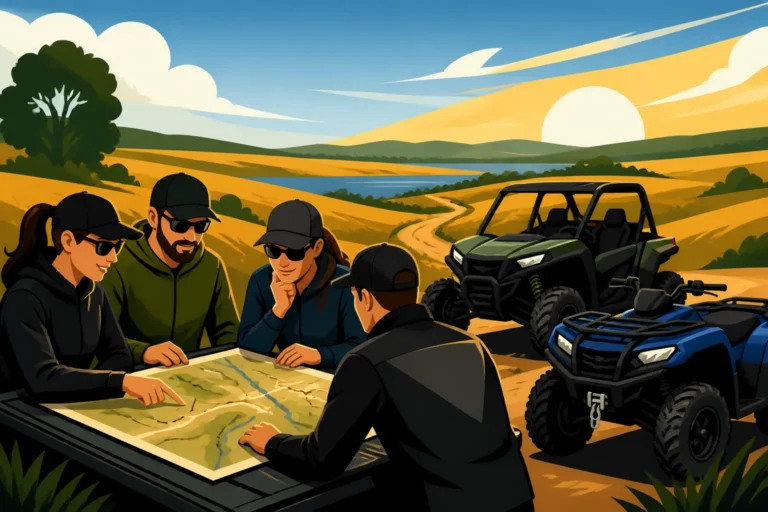
When a riding area sits near a lake or rural road network, the shortest line on a screen may not be the route you can actually use with a trailer. Look for the correct entrance, road surface, turning space, and any restrictions on the way in. Save the campground address and riding-area entrance separately so you do not accidentally navigate to a boat ramp, maintenance road, or closed gate.
A mapping tool such as onX Offroad can be useful for organizing waypoints and checking the broader area, particularly when mobile service is unreliable. Download or save the information you need before you leave coverage. Keep in mind that a digital map is a planning aid, not permission to ride somewhere; posted signs and land-manager instructions take priority.
It is smart to carry a paper backup with the campground address, the riding-area entrance, and an alternate route. If your convoy gets separated or a phone battery dies, that basic information can save time. Agree on a meeting point before unloading, especially when several vehicles are traveling together.
Pack for both camping and riding
Pack the trailer with the assumption that the campground and trailhead may not offer the same supplies. Bring water, snacks, basic tools, a tire repair kit, tie-downs, and any riding gear your group needs. For a rocky area, inspect tires and underbody protection before the trip. For sand, check that your tires and recovery plan suit the terrain.
Keep the camping checklist separate from the riding checklist. A forgotten camp lantern is inconvenient; a missing helmet, tie-down, or essential tool can derail the riding day. If you are camping somewhere without easy access to stores, include extra food, drinking water, and weather-appropriate layers. Kansas wind and sudden weather changes can make a comfortable evening feel very different from the afternoon ride.
Avoid common Kansas camping and trail-planning mistakes
Many trip problems come from treating a nearby campground and riding area as one connected facility. They may be managed separately, have different hours, and follow different rules. Confirm each piece of the plan instead of assuming that a campground reservation settles every question.
Do not assume a park permit is a trail pass
Kansas public lands and private riding areas can have distinct rules about where an off-road machine may travel. A permit that allows access to certain park roads does not necessarily authorize riding on trails or across open ground. Before you leave, identify the specific area where riding is permitted and follow posted signs.
For more background, see [Kansas Park Permit vs Trail Permit](Kansas Park Permit vs Trail Permit) and [The Park Permit That Covers Roads, Not Trails](The Park Permit That Covers Roads, Not Trails). These distinctions are especially important when camping at a state park and riding at a separate ORV area nearby. Staying on authorized routes protects access for everyone and helps avoid a citation or a trip cut short.
Do not trust old schedules or a single map listing
Online listings and saved itineraries can become outdated. Hours may vary by season, events may affect access, and trail conditions can change after heavy rain. A campground might have open sites while a trail area is closed, or a riding destination might be operating only on particular days.
Before towing, check the official information for both locations and call if a detail is unclear. Ask direct questions: Is the riding area open on our planned day? Is my machine allowed? Is the campground open, and can it accommodate my trailer? Are there conditions or restrictions that could affect access? A short confirmation can prevent a long, disappointing drive.
Do not plan a ride from the campsite unless it is explicitly allowed
Even when the campground and riding area are close, the route between them may include roads where an ATV or UTV cannot legally travel. Do not ride between locations just because they appear connected on a map. Plan to trailer your machine unless the route is clearly permitted and you have confirmed the applicable rules.
For additional trip preparation, [Kansas Trail Conditions Before You Tow](Kansas Trail Conditions Before You Tow) can help you think through access and conditions, while [Kansas Trailheads With Trailer Parking](Kansas Trailheads With Trailer Parking) is useful when you need to confirm where you can unload and leave your tow vehicle. A little planning keeps the ride focused on the trails rather than on sorting out an avoidable access problem.
Disclaimer
This article is for general informational purposes only and does not constitute professional advice. Laws, prices and regulations vary by location and change over time. Consult a qualified professional for guidance on your specific situation.