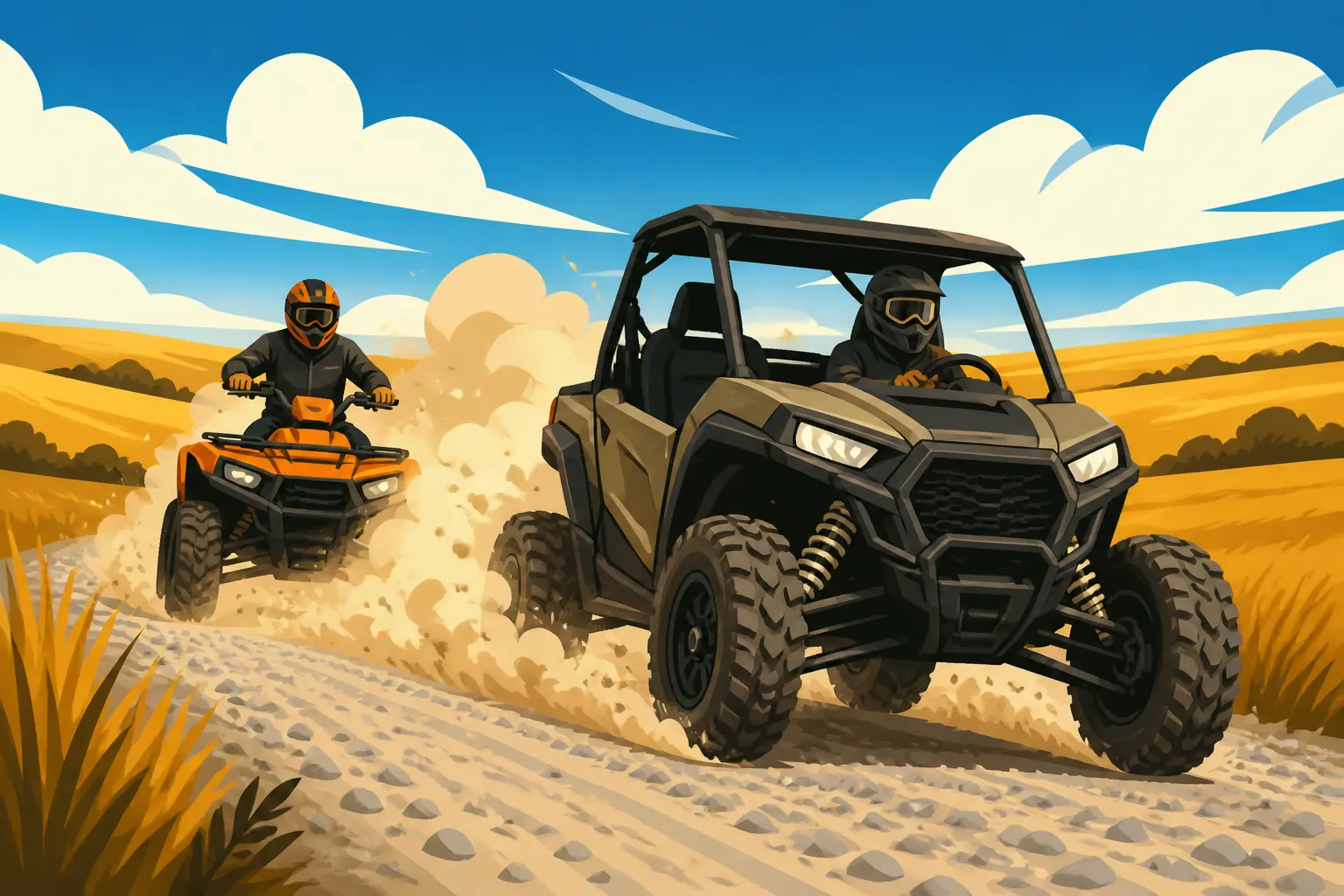
Dust on a Gravel Section Road
There's nothing quite like the freedom of exploring Kansas's rural backroads on your ATV or UTV. But if you've spent any time on our gravel section roads, you know the single biggest headache: dust. It coats everything, obscures your vision, and leaves you, your passengers, and your machine absolutely caked. This guide is all about tackling that pervasive dust problem head-on, so you can enjoy those rides without feeling like you've been in a sandstorm.
The Reality of Kansas Gravel Roads for ATV & UTV Riders
For many of us who love to ride, Kansas offers an incredible network of rural roads that stretch for miles, connecting small towns, farms, and wild spaces. These aren't always the paved routes you'd find closer to the city; instead, they're often gravel section roads, maintained by the county, offering a unique landscape to explore. They’re a lifeline for agricultural communities, providing access to fields, ranches, and hunting grounds. For ATV and UTV riders, these roads represent freedom, adventure, and a chance to get away from it all.
The Unavoidable Presence of Fine Kansas Dust
The very nature of Kansas's topography and agricultural backbone means dust is an inescapable companion on these gravel roads. The soil here, often a fine loess or clay-rich mix, breaks down into incredibly fine particles when it dries, and the constant traffic from farm equipment, trucks, and now ATVs and UTVs, keeps it agitated. Add in the long, hot, and often windy Kansas summers, and you have a recipe for perpetual dust clouds. It’s not a question of if you'll encounter dust, but how much and how often.
Think about a bright, sunny afternoon after a long dry spell. You're cruising down a scenic backroad, the sun glinting off the tall grass. It’s perfect, right up until you hit a particularly dry stretch, or worse, you're following another vehicle. Suddenly, you're enveloped in a thick, choking cloud that reduces visibility to near zero. It’s a common scenario, and it’s the bane of many a Kansas rider's existence. This isn't just an inconvenience; it's a fundamental part of riding off-pavement in our state, something every local rider learns to contend with, whether they like it or not.
The Double-Edged Sword of Riding These Roads
Riding these gravel roads offers an undeniable allure. They often lead to breathtaking views, secluded fishing spots, or direct routes to your favorite hunting lease. For farmers, these machines are essential for daily tasks, from checking fences to moving between properties. The sheer vastness of our rural road network makes it a prime location for extended rides, allowing you to cover significant ground and experience the true breadth of the Kansas landscape. It's easy to see why so many of us are drawn to them.
However, that allure comes with a significant caveat: the dust. What starts as a minor nuisance can quickly escalate into a major deterrent, turning an otherwise enjoyable ride into a gritty, unpleasant experience. Beyond the discomfort, the constant dust raises serious safety concerns, impacts the longevity of your expensive machine, and can even pose health risks. It's a trade-off many riders grapple with – the joy of the open road against the inevitable, pervasive grime. Understanding this trade-off is the first step in learning to manage it effectively.
How Dust Impacts Your Ride and Your Machine
Dust isn't just annoying; it's a genuine hazard and a persistent threat to your off-road machine. When you kick up or ride through a cloud of fine particles, it affects everything from your ability to see to the internal workings of your engine. Ignoring the impact of dust isn't an option if you want to ride safely and keep your ATV or UTV running smoothly for years to come.
Visibility Hazards for Riders and Others
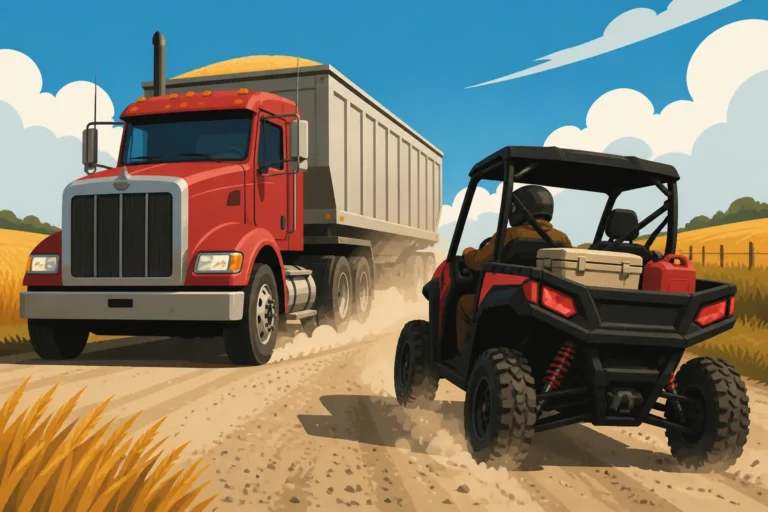
Imagine you're cruising at a moderate speed, and suddenly, a truck passes you from the other direction, or another ATV in your group pulls ahead. In an instant, you're swallowed by a dense, opaque curtain of dust. Your forward visibility drops to zero, and you're essentially driving blind. This isn't just disorienting; it's incredibly dangerous. You can't see potholes, unexpected debris, or even the edge of the road, increasing the risk of losing control or veering into a ditch. For a brief, terrifying moment, you're navigating purely by instinct.
The danger isn't just for you. If you're leading a group, the dust cloud you create can blind riders behind you. Similarly, if you're on a county road, the plume you generate can make you nearly invisible to oncoming vehicles or those attempting to pass. This is especially critical when you're [Sharing a Gravel Road With Loaded Grain Trucks] or other large farm equipment that requires a lot of space and time to react. The general rule is that if you can't see the vehicle in front of you clearly, or if you know you're creating a hazard for others, you need to adjust your speed and spacing. This becomes even more pronounced around dusk or dawn when visibility is already naturally reduced, making [Kansas Sunset to Sunrise Lighting Rules] even more critical.
The Toll Dust Takes on Your Machine
Your ATV or UTV is designed for off-road conditions, but fine dust is its archenemy. The most immediate impact is on your air filter. These filters are the lungs of your engine, trapping airborne particles before they can enter the combustion chamber. In dusty Kansas conditions, a clean air filter can become clogged very quickly, restricting airflow to the engine. This leads to reduced power, decreased fuel efficiency, and can cause the engine to run hot. If dust does manage to bypass a clogged or damaged filter, it acts like sandpaper inside your engine, accelerating wear on cylinders, piston rings, and bearings, drastically shortening its lifespan.
Beyond the engine, dust works its way into every nook and cranny of your machine. It can settle in electrical connections, leading to intermittent failures or corrosion. It can contaminate the grease in wheel bearings, A-arm bushings, and suspension components, causing premature wear and squeaks. Chains and belts become grittier, accelerating wear and requiring more frequent maintenance. For UTVs, dust infiltrates the cabin, coating every surface, making cleaning a monumental task. You might even find it building up on components where you’d never expect, so understanding protection like [Radiator Screens for Wheat Chaff] can be a helpful analogy for thinking about where dust might accumulate. This persistent invasion means more frequent cleaning, lubrication, and replacement of parts if you want your investment to last.
Personal Discomfort and Health Concerns
Riding through dust isn't just bad for your machine; it's plain uncomfortable for you and your passengers. The most common complaints are dust getting in your eyes, nose, mouth, and ears. This leads to irritation, sneezing, coughing, and a generally gritty feeling. For those with allergies or respiratory sensitivities, a prolonged dusty ride can even trigger asthma attacks or exacerbate other breathing difficulties. Imagine trying to enjoy a beautiful trail ride while constantly wiping your eyes and coughing up dust.
Beyond the immediate discomfort, constant exposure to fine particulate matter can have longer-term health implications for your lungs and respiratory system. It can also cause skin irritation and make you feel generally grimy and unpleasant, even after a short ride. If you wear glasses, keeping your lenses clear becomes a constant, losing battle against the ever-present film of dust. The goal of riding is enjoyment, and when you're battling personal discomfort, that enjoyment quickly diminishes. That's why preventative measures are so important for your well-being.
Strategies for Managing Dust While Riding Kansas Gravel Roads
Battling dust on Kansas gravel roads requires a multi-pronged approach that combines smart preparation, appropriate gear, machine modifications, and responsible riding techniques. You can't eliminate dust entirely, but you can certainly mitigate its impact and make your rides much more enjoyable and safer.
Pre-Ride Preparations and Personal Gear
Before you even hit the road, there are several things you can do to protect yourself and enhance your experience. First and foremost, personal protective equipment (PPE) is your best friend. A good quality pair of goggles or a full face shield on your helmet is essential for protecting your eyes from dust and flying debris. Even if [Choosing a Helmet When No Law Requires One] is a personal decision, the eye protection it offers is invaluable. For your respiratory system, a bandana, neck gaiter, or a dedicated dust mask can make a huge difference in filtering out airborne particles before they reach your lungs. You'll be amazed at how much less coughing and irritation you experience.
Additionally, consider your clothing. Loose-fitting clothes might feel comfortable, but they'll flap and allow dust to penetrate easily. Tighter-fitting layers or riding gear designed for off-road use can offer better protection. Don't forget about hydration; dusty conditions can be dehydrating, so always carry plenty of water. Finally, always check [Kansas Trail Conditions Before You Tow] or head out. If it's been excessively dry and windy for days, you might anticipate worse dust and plan your route or riding time accordingly, perhaps opting for early morning or late evening rides when humidity is higher and wind is calmer.
Machine Modifications for Dust Reduction
While your personal gear protects you, certain modifications can significantly reduce the amount of dust your machine ingests and that enters the cabin, particularly for UTVs. One of the most effective upgrades for UTVs is adding a windshield and a rear panel. A full windshield, especially a scratch-resistant one from a reputable brand like SuperATV, helps deflect dust and wind over the occupants. Adding a rear panel is crucial because it prevents dust from being sucked into the cabin from the back, a common problem known as the "dust vortex." Different types of windshields, like half, full, or even flip-up options, allow you to adapt to various conditions, offering versatility.
Beyond the cabin, focus on your machine's air intake. Upgrading to a high-performance air filter system, like those offered by companies such as K&N, Uni-Filter, or specialized SuperATV air filters, can provide superior filtration and better airflow than stock components. Many riders also add pre-filters or filter socks to catch larger particles before they even reach the main filter, extending its life and the intervals between cleaning. Fender flares and mud flaps can also help, as they prevent the tires from kicking up excessive dust directly onto the machine's body or into the cabin. When considering these upgrades, remember to also ensure your machine's overall condition is good, as part of regular [Kansas Equipment Checks by Deputies].
Smart Riding Techniques for Dusty Conditions
Even with the best gear and machine modifications, your riding technique plays a huge role in managing dust. The most important rule when riding in a group is to space out. Leave significantly more room between machines than you might on a paved road. This allows the dust from the vehicle in front of you to settle, or at least dissipate, before you drive into it. A good rule of thumb is to wait until you can clearly see the trail or road ahead before entering the space where the previous vehicle just passed.
Another effective technique is to reduce your speed. Slower speeds kick up less dust, it's as simple as that. While it's tempting to open up the throttle on a long, straight gravel road, moderating your speed will create a much more pleasant experience for everyone, including those sharing the road with you. Try to read the road ahead, anticipating dry, loose sections where dust will be worst, and adjust your speed before you hit them. Avoid sudden acceleration or braking, which can churn up more dust. Also, remember to [Riding as Near the Right as Practicable] when on county roads to give others plenty of room, and this also helps keep your dust plume away from the center of the road.
Legal Considerations and Courtesy on Dusty Kansas Roads
Riding ATVs and UTVs on Kansas roads, even gravel ones, comes with a specific set of rules and, perhaps more importantly, an unspoken code of conduct. While the thrill of open spaces is undeniable, understanding the legal framework and practicing good etiquette is crucial for both your safety and maintaining positive relationships with other road users and landowners.
Road Rules and Etiquette for Dust
In Kansas, ATVs and UTVs are generally classified as nonhighway vehicles, meaning they are primarily intended for off-road use. While some cities have ordinances allowing UTVs on certain streets, and agricultural exceptions permit limited road use, the default is that public roads are not for general ATV/UTV riding. However, rural gravel roads often present a gray area, where local customs and necessity sometimes blur the lines, particularly for activities like [Kansas Agricultural Trips on a 65 mph Road]. Even where it's legally permissible, the dust you generate can be a significant hazard. If your dust cloud is so thick that it blinds other drivers, you could be cited for impeding traffic or reckless operation. It's a matter of courtesy and safety.
When you're out on a county road, especially if you know there are other vehicles around—be it a fellow rider, a farmer in a tractor, or a delivery truck—you have a responsibility to minimize your impact. This means always being aware of your surroundings and the dust you're creating. If you notice a vehicle approaching from behind, and you're kicking up a lot of dust, consider pulling over safely to the side of the road to let them pass. This simple act of courtesy goes a long way. Similarly, if you're approaching an intersection or a blind rise, slow down and be prepared for limited visibility due to either your own dust or someone else's. Remember, even on a gravel road, you are sharing the space, and your actions affect others. Always be aware of [Kansas Rules for Riding a County Road] and [Kansas Rules for Riding a Section Line].
Protecting Your Machine and the Environment
After a particularly dusty ride, immediate and thorough maintenance is vital for your machine's longevity. Your air filter will likely be heavily loaded with dust, so cleaning or replacing it is paramount. Don't just tap it out; follow your manufacturer's recommendations for cleaning and re-oiling, or install a fresh one. Beyond the air filter, it's a good idea to thoroughly wash your machine, paying special attention to suspension components, bearings, and brake areas to remove abrasive dust. A good power wash, ensuring you don't blast water into sensitive electrical components, followed by lubrication of all moving parts, will help prevent premature wear. [Washing Sand Out of a Machine] is a good practice to internalize here, even if it's dust, not sand.
Beyond your machine, be mindful of the broader environment. While many gravel roads pass through open country, some may skirt residential areas or sensitive natural habitats. Avoid unnecessarily creating large dust plumes near homes or livestock. Respect private property, and if you're venturing off the established roadway, ensure you have [Getting Written Permission From a Landowner Before You Ride]. The goal is to enjoy the Kansas outdoors responsibly, leaving minimal impact on both the landscape and the people who live and work there. By taking these steps, you contribute to a positive perception of ATV and UTV riders in our state, ensuring these riding opportunities remain available for everyone.
Here’s a quick overview of dust mitigation strategies:
| Strategy | Description | Benefit for Rider | Benefit for Machine | Cost (Shape) |
|---|---|---|---|---|
| Goggles/Face Shield | Protects eyes from dust and debris, offers clear vision | Significantly improved visibility, eye comfort | N/A | Low (from budget to premium) |
| Dust Mask/Bandana | Covers nose and mouth, filters airborne particulate matter | Easier breathing, reduced respiratory irritation | N/A | Very Low |
| Windshield/Rear Panel | Creates a physical barrier, manages airflow to reduce cabin intrusion (e.g., SuperATV) | Less dust in cabin, protection from debris, wind break | Protects interior components, dashboards, controls | Moderate to High |
| Upgraded Air Filter | Enhanced filtration media and design, sometimes with pre-filters | N/A | Extended engine life, consistent performance, fewer issues | Moderate |
| Spacing Out (Group Ride) | Maintaining significant distance between vehicles in a convoy | Improved forward visibility, safer reaction time | Less direct dust ingestion from preceding machine | None |
| Reduced Speed | Driving at lower speeds on dusty roads | Better control, significantly less dust generated | Reduced wear on all components from abrasive particles | None |
Disclaimer
This article is for general informational purposes only and does not constitute professional advice. Laws, prices and regulations vary by location and change over time. Consult a qualified professional for guidance on your specific situation.