Carrying a Second Rider on a Single-Seat Quad
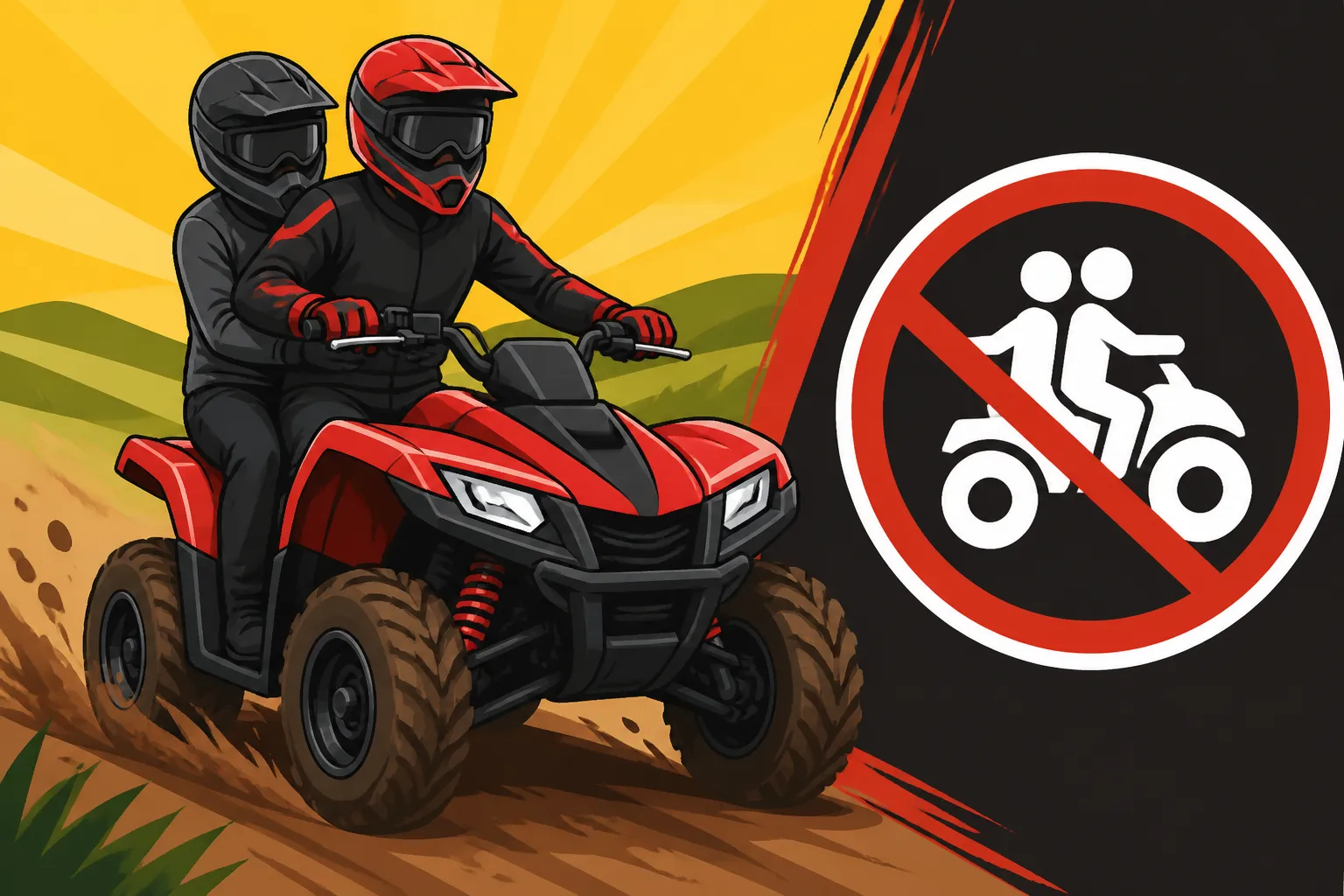
It's a familiar scenario for many Kansas ATV owners: you've got your quad, the sun is shining, and a friend or family member is eager to join you for a ride. The problem? Your machine is designed for one. That desire to share the off-road fun is completely understandable, but putting a second rider on a single-seat quad comes with significant safety risks and legal consequences here in the Sunflower State. This guide will walk you through why it's a dangerous idea, what Kansas law has to say about it, and how you can safely and legally bring along a passenger for your next adventure.
The Perils of Two on a One-Seater
The design of an All-Terrain Vehicle (ATV) is meticulously engineered for a single operator to control it safely across varying terrain. When you introduce a second person, even for a short, seemingly harmless spin, you fundamentally alter the machine's dynamics and expose both riders to serious danger.
Stability, Control, and the Roll-Over Risk
First and foremost, adding a second rider dramatically shifts the center of gravity on a quad that wasn't built for it. These machines are designed to be steered and balanced by the active weight shifts of a single rider. When you have two people, especially if the passenger isn't experienced in off-road riding or isn't anticipating the terrain, that delicate balance is thrown completely off.
Imagine hitting a sudden bump, taking a sharp turn, or trying to climb a slight incline. The added weight, often positioned too far back or too high, makes the ATV significantly less stable. This drastically increases the risk of a rollover, which is one of the most common and severe types of ATV accidents. The machine becomes sluggish to steer, harder to brake effectively, and the suspension, designed for a single person's weight, can be overloaded, leading to unpredictable handling. It's a bit like trying to ride a bicycle built for one with two people – it's wobbly, unwieldy, and far more likely to end in a spill.
The very essence of ATV riding involves leaning into turns and actively shifting your body weight to maintain control. A passenger, no matter how well-meaning, disrupts this crucial interaction between rider and machine. They might lean the wrong way, panic, or simply be unable to react in sync with the driver, creating a dangerous disconnect. This isn't about skill or strength; it's about the fundamental engineering principles that make an ATV safe for its intended use.
While the temptation to share the thrill is strong, the engineering realities are unforgiving. A machine that felt nimble and responsive with one rider can become a beast to control with two, especially on the unpredictable terrain that ATVs are built to explore. The risk simply isn't worth it.
Physical Dangers to Both Riders
Beyond the stability issues, carrying a passenger on a single-seat quad presents immediate and severe physical dangers to both individuals. These machines lack the dedicated seating, handholds, and footrests necessary for a passenger to safely secure themselves.
For the passenger, the risks are manifold. They can be easily thrown from the machine during acceleration, braking, or hitting obstacles. With no dedicated handholds, they might grab onto the operator, inadvertently interfering with their steering or throttle control. Their feet might dangle, risking entanglement with the wheels or being dragged along the ground. There's also the risk of contact with hot engine components or exhaust pipes, leading to serious burns, especially if they are trying to keep their balance. Imagine a sudden stop: the passenger could easily be thrown forward, colliding with the driver or even impacting the handlebars.
For the driver, the danger isn't just about control; it's about the passenger's unpredictable movements. Their body could obstruct your view, limit your ability to shift your own weight, or make it impossible to respond quickly to changing conditions. In a sudden maneuver or an accident, the passenger could fall onto you, pinning you or causing further injury. Neither person is adequately protected or secured, turning a fun ride into a potential emergency situation.
Consider the dynamic on any rough patch of ground. Both riders will be jostled, but the passenger, lacking proper bracing, is far more susceptible to being bounced off or losing their grip. What starts as a simple ride can quickly escalate into a serious injury for one or both, turning a day of enjoyment into a trip to the emergency room.
Kansas Law and the Single-Seat ATV
When it comes to off-road vehicles in Kansas, the law is pretty clear on who can ride where, and crucially, who can ride with whom. Understanding these regulations is vital not just for avoiding fines, but for ensuring everyone's safety.
How Kansas Defines an ATV for Operators
Kansas law, specifically in Chapter 8 of its statutes, has a distinct definition for an All-Terrain Vehicle. Generally, an ATV is defined as a motorized vehicle designed to travel on four low-pressure tires, intended by the manufacturer primarily for use by a single operator on off-highway terrain. That last part, "for use by a single operator," is the critical distinction here. It's not just a suggestion; it's part of the vehicle's legal identity. You can find more details on this in [An ATV Defined in Chapter 8].
What does "designed for a single operator" truly mean? It means the manufacturer has engineered the ATV's seat length, handlebar position, footpeg placement, and overall weight distribution with one person in mind. Adding a second person directly contradicts this design intent. It's not about whether a second person can physically fit; it's about the safety and operational parameters the manufacturer built the machine to handle. This legal definition helps distinguish a standard ATV from other off-road machines like Utility Terrain Vehicles (UTVs), which are often purpose-built with multiple seats and occupant protection systems.
This legal distinction is paramount because it underpins the entire framework of how ATVs are titled, used, and regulated within the state. When you step outside of that single-operator design, you're not just venturing into unsafe territory; you're also potentially moving into a gray area of legal non-compliance that could have repercussions if an incident occurs. The intent of the law is to protect riders, and that protection starts with respecting the vehicle's intended design.
Penalties and Liability for Extra Riders
Riding a single-seat ATV with a passenger in Kansas can lead to more than just a stern warning. While specific citations for "extra rider on single-seat ATV" might vary by jurisdiction or how an officer interprets the situation, you could face penalties for operating a vehicle in an unsafe manner or violating specific local ordinances if they exist. These could range from monetary fines to more serious consequences if an accident occurs. While it's more often associated with roads, violating operational standards can fall under the umbrella of [Kansas Penalties for Illegal Road Riding] in some interpretations, particularly if you are crossing public access areas.
Beyond immediate penalties, carrying an unauthorized passenger dramatically shifts liability in the event of an accident. If you're involved in a collision or a rollover while carrying a second person on a single-seat quad, you could be held fully responsible for any injuries sustained by your passenger, as well as for any damage to property or other individuals. Your actions could be seen as negligent, greatly increasing your personal financial exposure.
Furthermore, your insurance policy might not cover incidents that occur while operating the ATV outside of its manufacturer-specified conditions. Many off-road vehicle insurance policies have clauses that could invalidate coverage if the machine is being used in an unsafe or illegal manner, which carrying an unauthorized passenger would certainly qualify as. This means you could be on the hook for medical bills, property damage, and legal fees entirely out of your own pocket. If you're wondering about coverage, [Do You Need ATV Insurance in Kansas?] is a good place to start, but always check your specific policy for exclusions. The presence of a second rider can also complicate claims, leaving you vulnerable. The rules around [Kansas Rules for a Child Passenger] are even more stringent, so attempting to carry a child on a single-seat ATV compounds these risks significantly.
Safe and Legal Ways to Share the Ride
The good news is that your desire to share the exhilaration of off-road riding doesn't have to be thwarted. There are plenty of safe, legal, and comfortable ways to bring friends and family along for the adventure; it just means choosing the right machine for the job.
Investing in a Purpose-Built Machine
If riding with a passenger is a priority, the best solution is to invest in a machine specifically designed for multiple occupants. There are two primary categories to consider: two-up ATVs and side-by-sides (UTVs).
Two-Up ATVs: These are essentially longer versions of traditional ATVs, engineered with an extended seat, dedicated passenger handholds, and separate footrests or footwells. They retain much of the agile, individual riding feel of a single-seat quad but are built to safely accommodate two people. The suspension, frame, and engine are all designed to handle the increased weight and altered center of gravity. When you're considering a two-up model, look for clear markings from the manufacturer indicating it's approved for two riders. This is a great option if you still prefer the open, saddle-style riding position but want to bring someone along.
Side-by-Sides (UTVs): For the ultimate multi-passenger experience, a side-by-side is typically the way to go. These machines feature bucket seats or bench seating, roll cages, and often come equipped with seatbelts, similar to a car. UTVs offer superior stability, cargo capacity, and a safer environment for passengers, whether you're working on the farm or exploring trails. They come in various configurations, from two-seaters to larger four- or even six-seater models, perfect for family outings or group excursions. When considering a UTV, you'll also want to look into [Titling a Side-by-Side in Kansas] and understand that they might be classified differently, for example as a [What Makes a Side-by-Side a Work-Site Utility Vehicle], which has its own specific set of rules. For those looking to enhance their UTV's safety and utility with added protection or storage, companies like SuperATV offer a wide range of accessories, from full windshields to sturdy bumpers and cargo boxes, which can make your multi-passenger outings even more enjoyable and secure.
When choosing between a two-up ATV or a UTV, think about your primary use, the number of passengers you typically want to carry, and the type of terrain you'll be tackling. [Kansas Title for a Side-by-Side] will be a specific process you'll go through if you opt for one of these multi-passenger vehicles. These machines allow everyone to ride comfortably and securely, providing peace of mind and greatly reducing the risks associated with unauthorized passengers. You'll find that [Kansas Rules for Passengers on a UTV] are much clearer and safer because the machine is designed for it.
Other Considerations for Group Riding
Sometimes, the best solution is for everyone to have their own machine. If you're riding with friends, each person having their own ATV or dirt bike ensures maximum safety and control for every individual. This eliminates the passenger issue entirely and allows each rider to experience the trail independently, matching their own skill level and comfort. You can even find upgrades and accessories for individual quads through brands like SuperATV, allowing each rider to customize their experience.
If you plan to ride at a designated off-road park, it's crucial to check their specific rules regarding passengers and machine types. Many private parks, like Kansas Rocks Recreation Park, have strict regulations to ensure the safety of all patrons, often prohibiting extra riders on single-seat machines. Understanding [Kansas Private Park Rules for Riders] is essential before you even load up your trailer.
Finally, proper planning for group rides can make all the difference. This includes ensuring everyone is properly trained and equipped, understanding the trail conditions, and establishing clear communication. Also, be mindful of [Kansas ATV Age Requirements] for operators, as these are often tied to the size and power of the machine, ensuring young riders are on appropriate vehicles. By making smart choices about your equipment and following safety guidelines, you can ensure that shared off-road experiences are memorable for all the right reasons.
Comparison: Passenger Carrying Options
Here’s a quick overview to help you compare the different options for carrying passengers on your off-road adventures in Kansas:
| Feature | Single-Seat ATV | Two-Up ATV | Side-by-Side (UTV) |
|---|---|---|---|
| Intended Riders | 1 (Operator Only) | 2 (Operator + 1 Passenger) | 2, 3, 4, or 6 (Operator + Multiple Passengers) |
| Legality in Kansas | Not legal for passengers | Legal for passengers | Legal for passengers |
| Safety Features | None for passenger | Extended seat, passenger handholds, footrests | Bucket seats/bench, seatbelts, roll cage, often doors |
| Stability with Passenger | Highly compromised, high rollover risk | Engineered for two, good stability | Excellent stability, low rollover risk |
| Passenger Comfort | None | Designed for comfort | High comfort, often with shocks and ample legroom |
| Cargo Capacity | Limited | Limited to moderate | High, often with dedicated cargo beds |
| Trail Versatility | Excellent for individual use | Good, retains ATV maneuverability | Varies by size, can be wider than some ATV trails |
| Driver's License Needed | No (for off-road use) | No (for off-road use) | Yes (often for street-legal UTVs, varies by city) |
Disclaimer
This article is for general informational purposes only and does not constitute professional advice. Laws, prices and regulations vary by location and change over time. Consult a qualified professional for guidance on your specific situation.