Contractors Spraying Ditches Get the Same Exception
It can feel like a real headache trying to figure out when and where you can legally operate your ATV or UTV on Kansas roads, especially when it's for work. Many folks assume any off-road machine is strictly forbidden on pavement, making essential tasks like ditch maintenance seem impossible. This guide will cut through the confusion and explain the specific, often overlooked exception that allows contractors spraying ditches to use their specialized machines on public roadways.
Understanding the Agricultural and Work Exceptions for Road Use in Kansas
Navigating Kansas road laws for ATVs and UTVs can feel like walking through a legal maze, with bans and exceptions at every turn. Generally speaking, off-road vehicles are, as their name suggests, meant for off-road use. However, Kansas law, recognizing the practical needs of its agricultural communities and the folks who maintain its infrastructure, carves out specific scenarios where these machines can indeed touch the pavement. It’s not a free-for-all, mind you, but rather a carefully defined set of rules.
The General Rule: ATVs Are Banned from Public Roads (Mostly)
Let's be clear upfront: the default rule in Kansas is that ATVs and UTVs are not permitted on public roads. This includes city streets, county roads, and state highways. This blanket prohibition is in place for several reasons, primarily safety. These machines aren't designed with the same safety features as passenger vehicles, nor do they typically meet the same lighting, signaling, or registration requirements. Getting caught on a public road without an exception can lead to fines and headaches. This is why you'll often see signs in cities explicitly stating that ATVs are banned. You can learn more about the broader context in [Kansas ATV Road Rules Under 8-15,100].
However, the law isn't entirely black and white. There are provisions for agricultural purposes, where farmers and ranchers might need to move their machines between fields or to access different parts of their property. These exceptions are critical for rural operations and reflect the reality of life and work in the Sunflower State. The exact wording and interpretation of these exceptions are what often cause confusion, and they're crucial for understanding the specific case of ditch-spraying contractors.
Specific Exceptions: When Machines Can Touch the Pavement
Kansas law does make allowances for certain types of off-road vehicles and specific activities on public roads. These exceptions are usually tied to the function or purpose of the machine's use, rather than a blanket permission for any ATV or UTV. For instance, [Kansas Work-Site Utility Vehicle Road Rules] outline different stipulations for WSUVs, which are distinct from standard ATVs or UTVs due to their design and intended use. Even golf carts and micro utility trucks have their own set of rules for road use, often restricted to lower speed limits and specific ordinances passed by local municipalities.
The key to these exceptions often lies in whether the machine is being used for a bona fide "agricultural purpose" or "work-site activity" as defined by statute. This isn't about joyriding; it's about necessity. For example, moving hay bales or checking fence lines on a large ranch might fall under agricultural use. The law understands that sometimes, the shortest distance between two points on a farm, or for a specific maintenance task, involves a brief stretch of public road. This is where the specific exception for ditch-spraying contractors comes into play, as it’s a necessary work-related activity crucial for maintaining public land and infrastructure.
What "Contractors Spraying Ditches" Really Means Under Kansas Law
It might sound like a niche situation, but the provision for contractors spraying ditches using ATVs or UTVs on public roads is a very practical and important one, especially in rural Kansas. This exception isn't just a casual allowance; it's rooted in the necessity of maintaining roadside areas, preventing noxious weeds, and ensuring drainage. Understanding the specifics of this provision is key for anyone involved in this type of work.
The Legislative Intent Behind the Exception
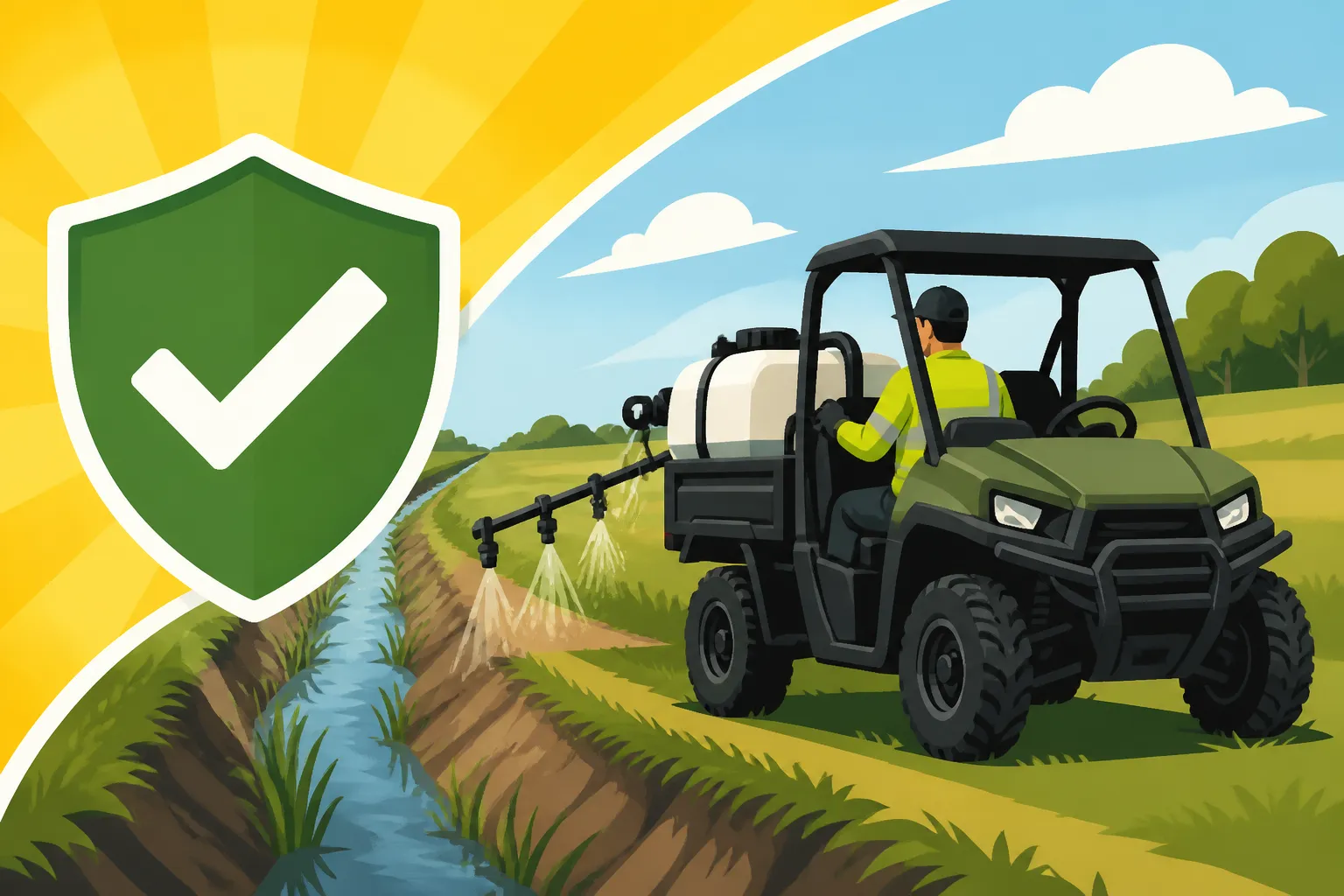
The Kansas Legislature understands that maintaining the state's vast network of roads involves more than just paving and plowing. Roadside ditches are vital for drainage, controlling erosion, and managing vegetation. Often, the most efficient and sometimes the only practical way to spray herbicides for noxious weed control or other vegetation management in these ditches is with an ATV or UTV equipped with a spray rig. These machines can navigate uneven terrain, narrow shoulders, and wet conditions that a standard truck or tractor might struggle with, or even damage.
This legislative carve-out acknowledges that these specialized tasks are not only legitimate but essential for public welfare and infrastructure. Without this exception, contractors would face significant logistical hurdles, potentially increasing costs and decreasing the effectiveness of vital maintenance work. It's an example of the law adapting to the realities of rural operations and specialized labor needs, ensuring that critical work like weed control in ditches can be carried out efficiently and legally.
Who Qualifies as a "Contractor Spraying Ditches"?
This exception isn't for just anyone with a spray rig and a UTV. It specifically applies to individuals or companies acting as contractors for a governmental entity (like a county or township) or a utility company. This means you're typically operating under a formal agreement or contract to perform ditch maintenance. If you're simply spraying your own fence line and have to cross a road to get to another part of your property, that might fall under the general agricultural exemption, but it's distinct from this contractor provision.
The key elements are:
- Contractual Obligation: You're performing the work as part of a contract for a public entity or utility.
- Specific Task: The activity is specifically "spraying ditches" for vegetation control, weed eradication, or similar maintenance tasks.
- Machine Type: The use of an ATV, UTV, or similar off-road machine is appropriate for the task and the terrain.
It's vital to have documentation of your contract or agreement on hand if you're pulled over. A county sheriff or state trooper will want to verify that you are indeed covered by this specific exception. Remember, this isn't about general landscaping; it's about specialized, contract-based work related to public infrastructure.
The "Right-of-Way" and Designated Work Zones
When we talk about contractors spraying ditches, we're really talking about operating within the road's right-of-way. This right-of-way isn't just the paved portion of the road; it extends to the shoulders, ditches, and sometimes beyond, encompassing the area necessary for road maintenance and safety. The exception allows machines to operate within this right-of-way to perform their duties.
However, operating within the right-of-way still comes with responsibilities. You're expected to ensure your machine is visible, especially if you're working on or near the travel lanes. This often means using flashing lights, high-visibility clothing, and potentially even pilot vehicles if the operation encroaches significantly on traffic. The goal is to perform the necessary work while minimizing risk to both the operator and other motorists. It's a balance between efficiency and public safety that everyone involved must respect.
Practical Considerations for Contractors and Landowners
For contractors utilizing ATVs or UTVs for ditch spraying, and for landowners who might hire them or work alongside them, there are several practical points to consider. This isn't just about knowing you can do it, but how to do it safely, efficiently, and legally, ensuring everyone's protection.
Equipping Your Machine for Roadside Work
When your ATV or UTV transitions from purely off-road recreation to a workhorse on the roadside, certain equipment upgrades become not just beneficial, but often necessary for safety and compliance. First and foremost, visibility is paramount. This means your machine should be equipped with bright, functioning headlights and taillights, even during daytime operations, as well as a slow-moving vehicle emblem prominently displayed on the rear. Flashing amber warning lights are also highly recommended, and in some areas, might be required, especially if you're working close to traffic.
Beyond lighting, consider the wear and tear of roadside work. Ditches can be muddy, rocky, and uneven, and carrying a heavy spray tank adds significant weight. Durable tires, perhaps from a brand like SuperATV, designed for mixed terrain and heavy loads, can make a huge difference in performance and safety. You might also look into upgraded suspension components or even an aftermarket winch from SuperATV, which could be a lifesaver if you get bogged down in a particularly soft ditch or need to pull debris. Remember, while the law grants permission, it doesn't waive the need for common sense and proper preparation.
Safety Protocols and Best Practices on the Road
Operating a machine on a road right-of-way, even under an exception, requires a heightened sense of awareness and strict adherence to safety protocols. Traffic, even on rural roads, can be unpredictable. Here are some best practices:
- Visibility First: Always use your machine's lights, flashing beacons, and wear high-visibility clothing. Consider adding reflective tape to your machine.
- Stay to the Right: [Kansas Riders Must Keep to the Right] applies even to those working in the ditch. Stay as far right as practicable, out of the main flow of traffic.
- Signage and Spotters: If your operation will temporarily obstruct a lane or significantly affect traffic flow, deploy temporary road signs warning motorists of workers ahead. A dedicated spotter or flag person can also be invaluable, especially on blind curves or hills.
- Communication: Maintain communication with your crew, especially if multiple machines are working in an area.
- Driver's License and Insurance: The operator should possess a valid driver's license. While ATVs don't have a statewide insurance mandate, city ordinances might require it, and having adequate liability insurance is always a wise decision for a contractor. You never know when an accident could occur, even when you're being careful.
- Secure Loads: Ensure your spray rig, chemicals, and any other equipment are securely mounted and cannot shift or spill while you are moving or working.
These steps aren't just about legal compliance; they're about protecting yourself, your crew, and the public. You can read more about various safety requirements in [Kansas Lighting Rules After Sunset].
Coordination with Local Authorities and Landowners
Before beginning a ditch-spraying project that involves public road rights-of-way, it's always a good idea to coordinate with local authorities, such as the county road department or sheriff's office. This proactive step can prevent misunderstandings and potential citations. Informing them of your planned work, the dates, times, and locations shows due diligence and can help them anticipate and respond appropriately if they receive calls from concerned citizens.
For landowners, if you're hiring a contractor, confirm they are aware of and adhere to all relevant state and local regulations for this type of work. If you're doing the work yourself under an agricultural exception (which is distinct from the contractor exception but may involve similar road use), it's still prudent to understand the nuances of [Kansas Machines Used Only on a Farm] and other relevant statutes. Clear communication and understanding of legal boundaries benefit everyone involved and help maintain a good relationship with your neighbors and local law enforcement.
| Consideration | Contractors Spraying Ditches (on Contract) | General Agricultural Use (by Landowner) |
|---|---|---|
| Legal Basis | Specific exception for public/utility contract work | Broad agricultural exemption for farm-related tasks |
| Operator | Contractor's employee or owner with valid driver's license | Farmer/rancher or employee with valid driver's license |
| Required Equipment | High-visibility lighting, slow-moving emblem, PPE, secure rig | High-visibility lighting, slow-moving emblem, PPE, secure load |
| Visibility | Critical, especially if near traffic lanes | Important, particularly when crossing or briefly using roads |
| Insurance | Highly recommended (liability), potentially contract-mandated | Recommended (farm policy may cover), not state-mandated |
| Proof of Authority | Contract documents, work orders | Proof of ownership/farm operation, purpose of travel |
| Coordination | Advised with county/local authorities | Less formal, but good practice for large movements |
| Primary Goal | Infrastructure maintenance (weed control, drainage) | Farm operation (moving equipment, checking crops/livestock) |
Avoiding Penalties and Staying Safe on Kansas Roads
Even with a legitimate exception allowing you to operate your ATV or UTV on Kansas roads for ditch spraying, vigilance and strict adherence to safety are non-negotiable. The goal isn't just to avoid a ticket, but to prevent accidents and ensure everyone's safety, including your own.
Common Missteps and How to Avoid Them
One of the most common mistakes is assuming that because you have an exception, you can operate your machine just like any other vehicle on the road. This is far from the truth. ATVs and UTVs have different handling characteristics, braking distances, and visibility profiles compared to cars or trucks. Here are some pitfalls to watch out for:
- Speeding: Even if the speed limit is 55 mph, your ATV or UTV with a loaded spray rig might not be safe to operate at that speed, or even legally allowed to. Always operate at a speed appropriate for your machine, the load, the road conditions, and traffic.
- Ignoring Visibility: Forgetting to turn on flashing lights, not having a slow-moving vehicle emblem, or neglecting high-visibility clothing can make you nearly invisible to fast-moving traffic, especially at dawn, dusk, or in poor weather.
- Lack of Documentation: Being unable to quickly produce proof of your contract or the nature of your work can lead to delays, questioning, and potential citations from law enforcement who might not immediately recognize your specific exception. Always carry your relevant paperwork, even if it's a copy.
- Operating Outside the Exception's Scope: Using the "ditch spraying" exception as an excuse to run personal errands or travel long distances for unrelated purposes will land you in trouble. The exception is specific to the task at hand.
- Distracted Driving: Just like in a car, operating an ATV or UTV requires your full attention. Distractions can be even more dangerous on these machines, especially with heavy loads and uneven terrain in the ditch.
Understanding these potential traps and actively working to avoid them is your best defense against both accidents and legal trouble. If a law enforcement officer pulls you over, they will likely ask [What a County Sheriff Can Ask a Rider to Show], so be prepared.
The Role of Law Enforcement and Potential Penalties
Law enforcement officers, whether from the county sheriff's office or the Kansas Highway Patrol, are primarily concerned with public safety. If they see an ATV or UTV on a public road, their initial assumption will likely be that it's illegal. It's your responsibility to calmly and clearly explain that you are operating under a specific legal exception for contractors spraying ditches and to provide documentation.
If you are found to be operating outside the scope of the exception, or if you've committed other traffic infractions (like reckless driving or operating without proper lighting), you could face significant penalties. These can include:
- Traffic Citations: Fines for illegal road use, lack of proper equipment, or other moving violations. [Kansas Penalties for Illegal Road Riding] can vary, but they're rarely cheap and often come with court costs.
- Machine Impoundment: In some cases, if the operation is deemed particularly egregious or unsafe, your machine could be impounded.
- Insurance Ramifications: An accident while operating illegally on a public road could void your insurance coverage, leaving you personally liable for damages.
- Loss of Contract: For contractors, repeated violations or unsafe practices could lead to the termination of your service contracts with governmental entities.
It's far better to err on the side of caution, ensure all your equipment is up to par, and have your documentation ready. Your professionalism and adherence to safety not only keep you legal but also build goodwill with the community and local authorities. For specific work, consider durable accessories from SuperATV to ensure your rig is reliable and safe for the demanding task of ditch spraying.
Disclaimer
This article is for general informational purposes only and does not constitute professional advice. Laws, prices and regulations vary by location and change over time. Consult a qualified professional for guidance on your specific situation.