Kansas Motorcycle Lighting Standards
Trying to figure out the maze of lighting rules for your ATV or UTV in Kansas can feel like navigating a dark trail without a headlamp – confusing, frustrating, and a little bit dangerous. While ATVs and UTVs aren't typically street legal in the Sunflower State, there are specific situations, like crossing a highway or riding in a city with an ordinance, where understanding lighting requirements becomes absolutely critical. This guide is here to shine a light on how Kansas’s motorcycle lighting standards might just apply to your off-road machine and what you need to know to stay compliant and safe.
Understanding Kansas’s Approach to Off-Road Lighting
It's easy to assume that if your ATV or UTV isn't registered for road use, lighting standards don't really apply. But Kansas law, like many states, has nuances that can quickly change that assumption, especially when you venture onto public roads or operate after dark. The key often lies in how your machine is classified and the specific circumstances of its operation.
The Nonhighway Vehicle Distinction
In Kansas, ATVs and UTVs are typically classified as "nonhighway vehicles," meaning they're not designed or intended for regular use on public roads. This classification is fundamental because it generally exempts them from many of the standard motor vehicle requirements, including some of the stringent lighting regulations that apply to cars, trucks, and motorcycles. You see this reflected in things like [Why an ATV Is Exempt From Registration Entirely] – there’s no annual tag fee because they aren’t meant for the streets.
However, this doesn't mean you're off the hook entirely. Even though your quad won't get a standard license plate, situations arise where it interacts with public rights-of-way. When your machine crosses a highway, travels on a county road under an agricultural exemption, or operates within city limits that have an ordinance allowing UTVs, you suddenly fall under a different set of expectations regarding visibility and safety. It's during these moments that the lines blur, and you might find yourself needing to meet standards surprisingly similar to those for on-road vehicles.
When Road Rules Apply to Your Off-Road Machine
The biggest headache for many off-road enthusiasts is the patchwork of rules that pop up depending on where and how you're riding. A core frustration is that there isn't one universal "ATV lighting law" in Kansas. Instead, you have to look at various statutes. For instance, if you're using your UTV for farm work and need to travel short distances on a public road, the law generally requires your machine to be equipped with certain lighting for visibility, especially between sunset and sunrise. This agricultural exception often points back to general motor vehicle lighting principles.
Similarly, if your city has passed an ordinance allowing UTVs on certain streets – and many have, like Louisburg or Scott City – those ordinances almost always stipulate that the UTV must comply with specific state motor vehicle lighting standards. This is where motorcycle lighting standards can come into play for your UTV, as cities don't want poorly lit machines sharing the road with cars. They want to ensure your machine is as visible as any other vehicle on the street, and state law provides those benchmarks. This can lead to some head-scratching moments as you try to figure out if your stock headlights and taillights cut it when you're used to just needing them for trail visibility.
Specific Motorcycle Lighting Standards in Kansas Law
To understand what might be expected of your ATV or UTV in certain scenarios, it helps to know the foundational rules Kansas has laid out for motorcycles. While your quad isn't a motorcycle, these standards often serve as a benchmark for visibility and safety when any vehicle operates on a public road, especially after dark.
Headlamps: Illuminating the Path Ahead
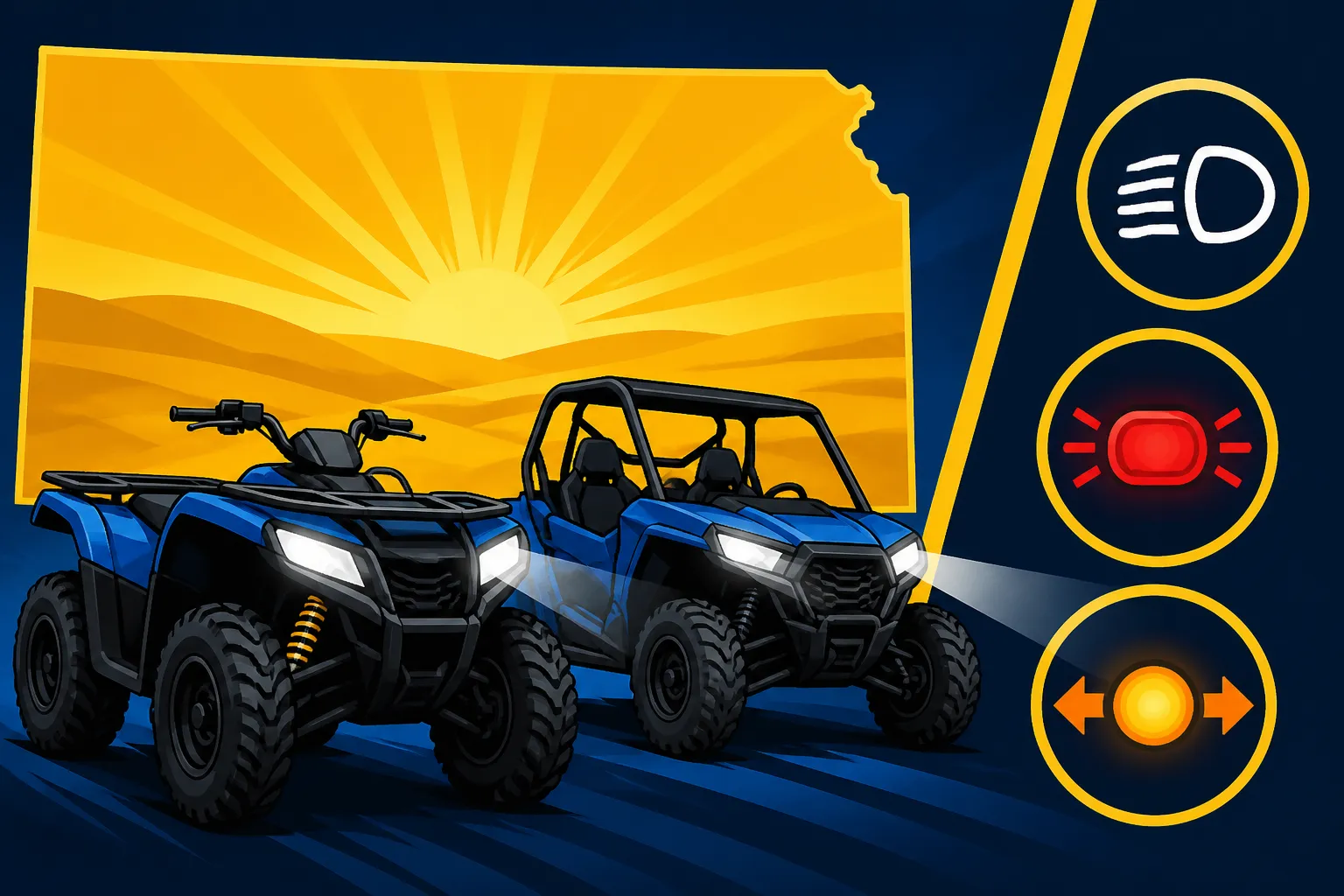
Kansas law dictates specific requirements for motorcycle headlamps, and these are often referenced for other vehicles when street use is permitted. A motorcycle must have at least one and no more than two headlamps that emit a white light, visible from a distance of at least 500 feet to the front. These headlamps need to be mounted at a certain height – generally not less than 24 inches nor more than 54 inches from the ground. Furthermore, they must have both high and low beam capabilities, allowing the rider to dim the lights for oncoming traffic.
For ATV and UTV owners, this means that if you’re riding on a county road after sunset, simply having a single, dim stock headlight might not be sufficient. You might need to ensure your machine's lighting provides adequate illumination and is aimed correctly to prevent blinding other drivers while still allowing you to see the path ahead. Many aftermarket solutions, like high-powered LED light bars from SuperATV, can significantly upgrade your front illumination, but you need to be mindful of state laws regarding the number of lights and their operation on public roads. You might find more insight on this in [Kansas Lighting Rules After Sunset].
Tail Lamps and Stop Lamps: Showing Your Presence and Intent
Just as crucial as seeing where you're going is ensuring others can see you. Kansas law requires motorcycles to have at least one red tail lamp on the rear, emitting a red light visible from at least 500 feet to the rear. This tail lamp needs to be illuminated at all times when the headlamps are on. Additionally, motorcycles must have a red stop lamp (or brake light) that illuminates when the brake is applied, also visible from 500 feet to the rear.
For an ATV or UTV operating on a road, even for a brief moment, having a functioning tail lamp and a bright stop lamp is non-negotiable for safety. Many stock ATVs and UTVs come with basic taillights, but the stop lamp functionality might vary or be less visible than a dedicated motorcycle setup. If you're frequently on roads where other traffic is present, considering an upgrade to brighter LED taillights or adding a dedicated stop lamp might be a smart move, especially if your local city ordinance references these standards. It's about making sure the driver behind you knows you're there and when you're slowing down.
Turn Signal Lamps: Communicating Your Movements
While not always a default feature on every ATV, turn signal lamps are a standard requirement for motorcycles in Kansas. These must be amber in color, mounted on both the front and rear of the machine, and capable of flashing to indicate a turn or lane change. They need to be visible from distances specified by law, both day and night.
For ATVs and UTVs, the requirement for turn signals typically arises when a city ordinance explicitly allows them on public streets. If your town is one of the [Kansas Cities That Authorize ATV Street Use], you'll almost certainly find a clause that mandates turn signals to comply with state motor vehicle code. This means adding a complete turn signal kit, often involving wiring, switches, and amber lights for all four corners of your machine. Companies like SuperATV offer universal turn signal kits designed specifically for UTVs, making this upgrade more manageable. Without them, you're not legally communicating your intentions to other drivers, which is a major safety hazard.
Translating Motorcycle Standards to ATVs and UTVs
The biggest challenge for ATV and UTV owners in Kansas is taking a rulebook written primarily for highway vehicles and figuring out how it applies to machines that spend most of their lives off-road. It's not always a direct one-to-one translation, but understanding the intent behind the motorcycle standards can guide your decisions.
Navigating the "Similar in Design and Function" Clause
Kansas law occasionally uses language that implies vehicles should meet standards "similar in design and function" to conventional motor vehicles when they operate on public roads. While your ATV might not be "similar in design" to a motorcycle, when it comes to function on a shared roadway, visibility is paramount. For example, the intent behind a motorcycle's headlamp requirement – to illuminate the road ahead and make the rider visible to oncoming traffic – is equally critical for an ATV crossing a busy highway.
This means that even if the law doesn't explicitly say "your ATV must have a 500-foot visible tail light," if you're riding after dark on a road, a law enforcement officer will expect your tail light to be clearly visible and functioning to prevent an accident. They're not going to pull out a tape measure, but if your lights are dim, broken, or simply inadequate, you could face a citation. It’s about common sense safety and providing other drivers with the same visual cues they expect from any other vehicle. This is often an area where [Kansas Rules Riders Get Wrong].
Practical Interpretations for County Roads and Crossings
For ATVs and UTVs operating on county roads under an agricultural exemption or simply crossing a state highway, the "motorcycle lighting standards" can be interpreted as a minimum baseline for safety. You might not need all the bells and whistles, but fundamental visibility is key. This typically means:
- Working Headlights: Bright enough to illuminate the path and make you visible, especially at dawn, dusk, or night.
- Working Tail Lights: Clearly visible red light from the rear, ensuring you're seen by traffic approaching from behind.
- Working Brake Lights: When you slow down or stop, the person behind you needs to know immediately.
- Reflectors: Often overlooked, but reflective tape or dedicated reflectors on the rear and sides of your machine can significantly enhance visibility, especially if your powered lights fail.
Consider a scenario where you're hauling hay with your UTV across a two-lane county road at dusk. The agricultural exemption allows you there, but if your single stock tail light is caked in mud and barely glowing, you're a serious hazard. In that instance, a deputy might not cite you for not meeting motorcycle standards, but for general unsafe operation due to inadequate lighting. Investing in a robust lighting setup from a reputable brand helps you go above and beyond the bare minimum for safety.
What City Ordinances Mandate
This is where the direct translation often happens. When a Kansas city opts in to allow UTVs on its streets, the ordinance almost always details specific equipment requirements, frequently referencing Kansas Statute Chapter 8, which covers motor vehicles. These local laws might state, "UTVs must be equipped with headlights, taillights, turn signals, and brake lights that comply with K.S.A. 8-1703 et seq.," which are the statutes covering motor vehicle lighting.
If you plan to ride your UTV on city streets, you absolutely must read your specific city's ordinance. Don't assume. Some cities, like Louisburg, even have an inspection process where police will check your machine's equipment before issuing a city tag. This inspection will typically confirm you have all the necessary lights functioning correctly, often to standards that mirror those for motorcycles and other street-legal vehicles. This means having proper amber turn signals, working high/low beam headlights, and a visible brake light system, ensuring you meet the city's requirement to safely share the road. You can find more details in [Kansas UTV Street Legal Rules by City].
Why Adequate Lighting Is Crucial for Off-Roaders
Beyond just legal compliance, having robust and reliable lighting on your ATV or UTV is a fundamental aspect of safe operation. Whether you're blazing trails, working the back forty, or navigating a local road, being seen and seeing your surroundings can prevent accidents and greatly enhance your riding experience.
Enhanced Visibility to Others
This is probably the most critical reason for good lighting. Off-road machines, by their nature, are often smaller and less visible than cars and trucks. When you’re even momentarily sharing a public road, whether it's for a short crossing or riding legally within city limits, you become part of a traffic ecosystem that isn't always expecting you. Bright headlights, clear taillights, and functioning brake lights are your primary means of communication with other drivers. They tell others where you are, which direction you're facing, and what you're doing.
Imagine trying to cross a busy highway at dusk. Your small machine could easily be overlooked by a driver in a large pickup if your lights are dim or broken. A bright, properly aimed headlight makes you stand out, and a clear, red taillight ensures you don't become a rear-end collision waiting to happen. This isn't just about avoiding a ticket; it's about avoiding serious injury or worse. Companies like SuperATV understand this, offering a wide array of lighting solutions designed to significantly boost your machine's presence.
Improved Situational Awareness for the Rider
Beyond being seen, your ability to see what's around you is equally vital. Riding in low light conditions – whether it's the fading light of evening, the deep shadows of a treed trail, or the complete darkness of night – without adequate illumination is incredibly dangerous. You can easily miss obstacles, misjudge terrain, or fail to see other riders or animals.
Good headlights not only light up the trail directly in front of you but also broaden your field of vision, helping you anticipate turns, dips, and hazards. Supplementary lighting, such as floodlights or ditch lights, can expand your peripheral vision, illuminating areas directly to the sides of your machine that stock headlights often miss. This added visibility reduces fatigue, improves reaction time, and makes for a much more enjoyable and safer ride, allowing you to focus on the fun rather than squinting into the gloom.
Safety in Various Riding Environments
The type of lighting you need can also depend on your typical riding environment.
- Deep Woods/Trails: In dense forests or heavily wooded trails, shadows can be intense even during the day. At night, it's pitch black. Here, powerful LED light bars and pod lights are invaluable. They cut through the darkness and highlight obstacles like fallen logs, rocks, or deep ruts.
- Open Fields/Prairies: While seemingly less hazardous, open areas can have their own challenges after dark, like hidden fences, ditches, or livestock. A good throw pattern from your headlights helps you see far ahead.
- Sand Dunes: Riding sand dunes at night requires extreme visibility. Bright, broad floodlights are essential for navigating the ever-changing terrain. Also, many dune parks require whip flags with lights for visibility over crests. [Syracuse Sand Dunes Park in Kansas] is a prime example of a place where good lighting is more than just a convenience.
- Work Sites/Farms: For those using their machines for work, task-specific lighting like backup lights, work lights, or even interior cabin lights can make evening tasks safer and more efficient. Whether you're plowing snow, checking cattle, or retrieving equipment, you need to see what you're doing and avoid accidental bumps or rollovers.
In all these scenarios, relying solely on stock lighting that might meet basic, minimal "motorcycle standards" for road crossings simply isn't enough for true safety and utility.
Upgrading Your Machine's Lighting System
So, you've read through the technical bits and realize your stock ATV or UTV lighting might not cut it, either for legal compliance in specific situations or for your own peace of mind and safety. The good news is that upgrading your lighting system is one of the most impactful and relatively straightforward modifications you can make to your off-road machine.
Essential Lighting Upgrades
Start with the basics, then consider enhancements based on your riding style and environment.
- Brighter Headlights: Many stock headlights are adequate for daylight visibility but lack the power or beam pattern for serious night riding or consistent road use. Upgrading to brighter LED bulbs or entirely new headlight assemblies can dramatically improve your forward vision. Look for options that offer both flood and spot patterns, or separate high and low beams, mimicking the functionality required for street-legal vehicles.
- More Visible Tail/Brake Lights: Ensure your rear visibility is top-notch. LED taillights are significantly brighter and faster to illuminate than incandescent bulbs, giving drivers behind you more reaction time. Integrated brake lights are essential, and some aftermarket kits include a third brake light for even greater visibility.
- Turn Signal Kits: If your local ordinance allows your UTV on streets, a full turn signal kit is a mandatory upgrade. These typically include amber lights for all four corners, a dash-mounted switch, a flasher relay, and all necessary wiring. Make sure to get a kit designed for the specific voltage of your machine.
- Reflectors and Reflective Tape: Even with excellent powered lighting, static reflectors provide an additional layer of safety, especially if your battery dies. Apply reflective tape to the front, rear, and sides of your machine, particularly on vulnerable areas.
You'll find many of these upgrade components from companies like SuperATV, which specialize in aftermarket ATV and UTV accessories. They offer a huge selection of LED light bars, pod lights, whip lights, and complete street-legal kits designed to integrate seamlessly with various machine models.
Auxiliary Lighting for Enhanced Off-Roading
Once your essential road-safety lighting is addressed, you can turn to auxiliary lighting to boost your off-road capability.
- LED Light Bars: These are perhaps the most popular auxiliary lighting upgrade. Available in various lengths and power outputs, light bars cast an incredibly bright and broad beam, turning night into day. Mount them on the roof, bumper, or grille. Just remember that while incredibly powerful, they are usually not street-legal for use on public roads due to their intensity. Use them on private land, trails, or designated riding areas.
- Pod Lights/Cube Lights: These smaller, versatile lights are great for specific applications. Mount them as ditch lights to illuminate the sides of your trail, as reverse lights, or even as rock lights under your chassis to see obstacles when crawling. They come in flood, spot, or combo patterns.
- Whip Lights: Especially popular for dune riding or open areas, whip lights are tall, flexible poles topped with a brightly colored, often illuminated, flag. They increase your vertical visibility, making it easier for other riders to spot you over crests or through dusty conditions. Many dune parks, such as the Syracuse Sand Dunes, strongly recommend or even require them.
- Work Lights: If you use your machine for chores or hunting, dedicated work lights that illuminate a specific area (like a trailer hitch or cargo bed) can be incredibly useful.
When installing any auxiliary lighting, ensure it's wired correctly, protected from the elements, and includes appropriate fuses. Always be mindful of local regulations regarding auxiliary lights, especially when operating near public roads, to avoid dazzling other drivers.
Maintenance and Best Practices
Finally, all the fancy lights in the world are useless if they don't work or are obscured.
- Regular Cleaning: Mud, dust, and debris can quickly obscure your lights, drastically reducing their effectiveness. Make it a habit to clean your lenses after every ride, especially if you've been in dirty conditions.
- Wiring Checks: Vibration and exposure to the elements can wreak havoc on electrical connections. Periodically inspect your wiring for fraying, corrosion, or loose connections.
- Aiming: Ensure your headlights are properly aimed. Too high, and you'll blind oncoming traffic; too low, and you won't see far enough ahead. This is a common requirement for street-legal lighting.
- Battery and Charging System: Increased lighting demands more from your machine's electrical system. Ensure your battery is in good health and your charging system (stator and regulator) can handle the added load. If you're adding a lot of accessories, consider a high-output stator or an auxiliary battery system.
By taking a proactive approach to your ATV or UTV's lighting, you're not just adhering to the letter of the law in specific situations; you're significantly enhancing your safety, improving your riding experience, and prolonging the life of your machine by preventing avoidable incidents.
Disclaimer
This article is for general informational purposes only and does not constitute professional advice. Laws, prices and regulations vary by location and change over time. Consult a qualified professional for guidance on your specific situation.