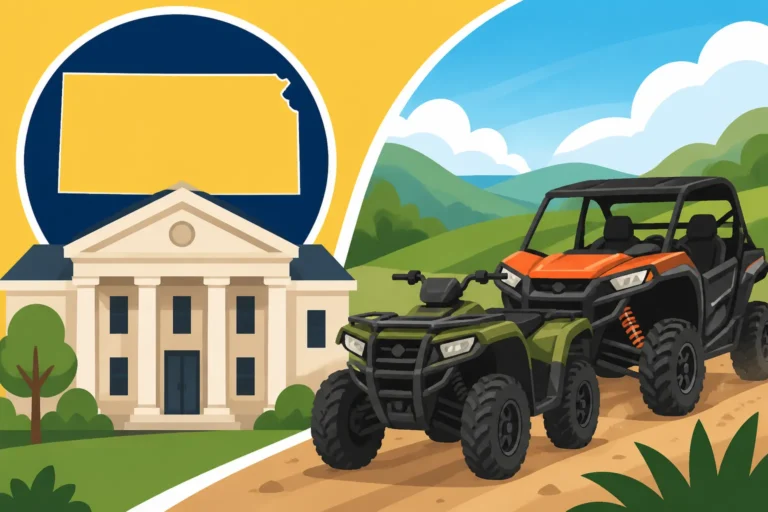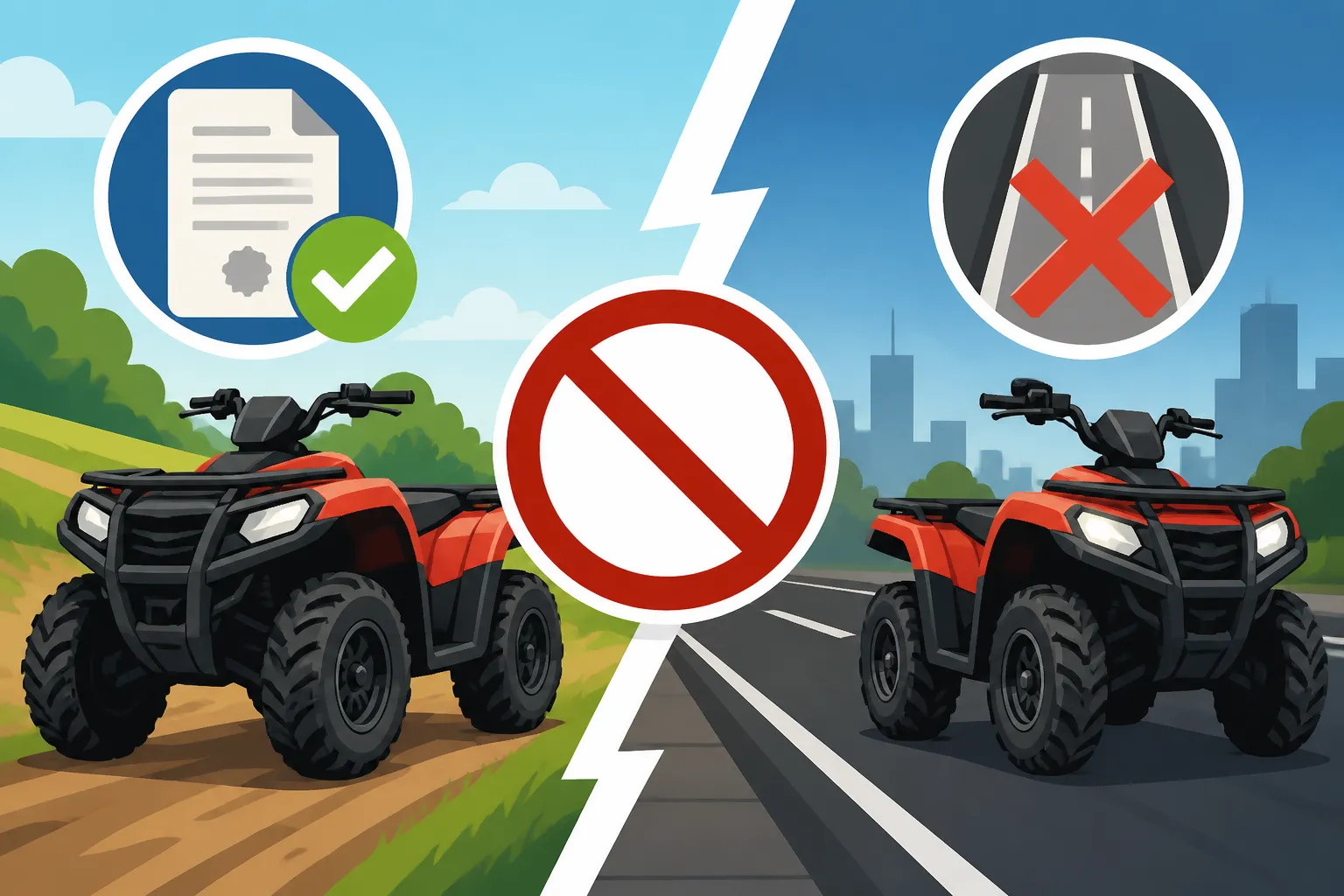
Having a Title Does Not Make an ATV Street Legal
It's a common point of confusion, and frankly, a bit frustrating for many Kansas ATV and UTV owners: you've gone through the process, paid your fees, and finally have a shiny title in hand. You might naturally think, "Great! Now I'm all set to ride wherever I need to go." But here's the kicker that catches a lot of folks off guard: having a title for your ATV or UTV in Kansas absolutely does not automatically make it street legal. That title is proof of ownership, yes, but it doesn't grant you permission to cruise down public roads. This guide is here to help you understand why that is, what a Kansas nonhighway title really means, and where your machine is actually allowed to operate.
The Core Misconception: A Title Isn't a License to Drive
When you get a title for a car, you often think of it hand-in-hand with registration and the ability to drive on public streets. It’s logical to assume the same for your ATV or UTV, especially after navigating the paperwork at the county treasurer's office. However, Kansas law treats these off-road machines very differently from your everyday car or truck. The title serves a specific purpose, but it's not about granting road privileges.
What a Kansas Nonhighway Title Really Means
In Kansas, most ATVs, and many UTVs, are classified as "nonhighway vehicles." This classification is crucial because it inherently defines them as machines not designed or intended for use on public roads. Think of it like a title for a boat or a snowmobile in states where they're common – it proves you own it, but it doesn't give you a green light to drive it on the highway. Your [Kansas Nonhighway Title Explained] is essentially a document verifying your legal ownership, protecting you against theft, and allowing you to sell the machine legally, but it's completely separate from any road-use authorization.
The title paperwork ensures that there's a clear record of who owns the machine. This is vital for transferring ownership when you sell it, for insurance purposes, and for reclaiming it if it's ever stolen. Without a title, these processes become significantly more complicated, which is why even for off-road machines, getting that title is an important step.
The Difference Between Titling and Registering
This is where a lot of the misunderstanding comes in. For cars and trucks, you title the vehicle and register it annually, receiving a license plate or tag that allows you to drive on public roads. For ATVs and most UTVs in Kansas, you only title the machine. There is no statewide registration system for these vehicles that leads to a license plate. In fact, [Kansas Has No OHV Registration] at all for general off-road use. This means there's no annual tag fee to worry about, but also no tag to put on your machine to make it road-legal. This is precisely [Why a Kansas Nonhighway Title Never Comes With a Tag].
The absence of a registration tag is the biggest giveaway that your machine isn't considered street-legal by the state. While some specific types of UTVs or certain local ordinances might introduce a form of registration, it's not the default for the vast majority of ATVs and UTVs in Kansas. Understanding this distinction is key to knowing where you can and cannot legally ride.
Why Kansas Classifies ATVs as Nonhighway Vehicles
The definition of a vehicle in Kansas law determines its intended use and, consequently, where it can be operated. ATVs and UTVs fall into categories that, by default, restrict them from public thoroughfares. It's not a judgment on the machine itself, but a legal classification based on their design and typical operating environment.
The Legal Definition of an ATV in Kansas
Kansas law specifically defines an "all-terrain vehicle" (ATV) as a motorized vehicle manufactured and designed for off-highway use, having four or more low-pressure tires, a seat designed to be straddled by the operator, and handlebars for steering. This definition, found within Chapter 8 of Kansas statutes, is crucial. It puts ATVs squarely in the "nonhighway" camp. Because they are defined this way, they are inherently not considered suitable for general public road use. This classification is a foundational piece of [How Kansas Law Defines a Nonhighway Vehicle].
For many UTVs, the situation is similar. While they might have steering wheels and side-by-side seating, unless they meet specific criteria to be classified as a "work-site utility vehicle" (WSUV) or are explicitly permitted by local ordinance, they also fall under a general "nonhighway" umbrella or similar restriction, effectively banning them from most roads.
The Default Ban on Public Roads
Because of their nonhighway classification, there's a default ban on operating ATVs and UTVs on public roads, streets, and highways across Kansas. This isn't just a suggestion; it's law. You cannot legally ride your ATV or non-WSUV UTV on interstates, federal highways, or even most county roads and city streets. [Kansas Bans ATVs on Interstates] and [Kansas Bans ATVs on Federal Highways] are clear examples of this. Similarly, [Kansas Bans ATVs Inside City Limits by Default]. This broad prohibition means that if you're pulling your machine to a riding spot, it needs to be on a trailer, not driven on the road to get there.
This default ban is designed for safety, given that ATVs and UTVs often lack the same safety features, signaling, and speed capabilities as road-legal vehicles. It also helps manage traffic flow and reduce potential hazards. Ignorance of this law is not a defense, and deputies or city police can and do issue citations for illegal road use.
Limited Exceptions to the Rule
While the general rule is a resounding "no" for ATVs on Kansas roads, there are a few very specific and limited exceptions. These exceptions are important to understand, as they represent the only times your titled machine might legally touch a public thoroughfare. However, they are highly conditional and do not apply to all machines or all situations.
Agricultural and Work-Related Exemptions
One of the most common exceptions for road use involves agricultural purposes. If you're using your ATV or UTV for specific farm-related activities, such as moving between fields or accessing a pasture, [Kansas's Agricultural Exception for Road Use] may permit limited operation on public roads. This exception is generally for trips under two miles and specifically for legitimate farm work. It doesn't mean you can take your quad into town for groceries, even if you live on a farm. These are strict, functional exemptions. Similarly, certain work-site utility vehicles might have specific allowances for limited road use related to their job function, which we'll touch on next.
It's vital to remember that these are not blanket permissions. They come with stipulations, such as needing a valid driver's license for the operator, and they typically do not override local city ordinances if you enter city limits. Always consult local regulations to ensure you're in compliance.
City Ordinances for UTVs
Here's where it gets a little more nuanced, particularly for UTVs. While the state generally prohibits ATVs on roads, Kansas state law does allow individual cities to pass their own ordinances to permit the use of certain UTVs on city streets. This means that [Kansas Cities That Authorize ATV Street Use] can, through their local government, create rules for tagging, insuring, and operating UTVs on specific streets within their municipal boundaries. This is not a statewide rule, and it does not apply to ATVs.
If a city has such an ordinance, you'll need to follow their specific rules for obtaining a city tag, which often includes proof of insurance, a valid driver's license, and an inspection of the machine to ensure it meets equipment requirements (like lights, horn, turn signals). For example, a city might require your UTV to display a city-issued plate on the left rear panel and restrict speeds to 30 or 45 mph. This is the closest many UTVs get to being "street legal" in Kansas, but it's entirely dependent on the specific city you're in and its local laws. Always check with the city clerk's office before assuming you can ride.
The Work-Site Utility Vehicle WSUV Distinction
Kansas law has a unique classification for "Work-Site Utility Vehicles" (WSUVs). These are generally UTVs that meet very specific criteria: they must be 48 inches or less in width, weigh over 800 pounds unladen, have four or more low-pressure tires, and be designed for off-highway use with seating for two or more side-by-side passengers, and a steering wheel. [Kansas Work-Site Utility Vehicles Explained] have a bit more flexibility for road use than standard ATVs or non-WSUV UTVs, primarily for construction, utility, and governmental work.
Even WSUVs have restrictions. While they may be permitted to cross highways and operate on certain roads for specific work-related tasks, they are not granted full street-legal status for recreational cruising. The rules for [Kansas Work-Site Utility Vehicle Road Rules] are distinct and focused on their functional purpose rather than general public access. If your UTV meets these precise measurements and weight requirements, you'll need to be aware of the specific allowances and limitations that apply to it.
The Importance of a Title, Even Without Street Legality
Given that a title doesn't grant street legality, you might wonder why it's so important. The truth is, a title is fundamental for entirely different, but equally crucial, reasons. It protects your investment, streamlines transactions, and ensures you have legal proof of ownership for your valuable off-road machine.
Proving Ownership and Preventing Theft
Having a title for your ATV or UTV is the definitive proof that you are the legal owner of the machine. This is absolutely critical for several reasons. If your machine is ever stolen, your title is what the authorities will use to verify your claim and, hopefully, return it to you. Without a title, proving ownership can become a nightmarish, bureaucratic battle. It also prevents fraudulent sales, as a legitimate seller should always be able to provide a clear title to a buyer. Think of it as the deed to your property – even if that property is only used for recreation or work off public roads, the legal documentation is paramount.
When you're dealing with private sales, it's particularly important to ensure the title is properly transferred. Don't ever buy an ATV or UTV without a clear title, unless you are fully prepared for the significant hurdles you'll face trying to get one later. It's not just about compliance; it's about protecting your financial investment and avoiding future headaches.
The Titling Process: A Quick Guide
So, even if it doesn't make your machine street legal, you still need to title it. The process is relatively straightforward but requires attention to detail. [Kansas County Treasurers Handle Titles], so that's where you'll head. You'll need specific paperwork, which typically includes the Manufacturer's Certificate of Origin (MCO) if it's a new machine, or a properly assigned title from the previous owner if it's used. For private sales, a clear bill of sale is crucial, and services like LawDepot can help you generate a professional and legally sound document to ensure all necessary information is captured. This ensures a smooth transfer of ownership and helps prevent future disputes.
You have a specific window to get this done: [Kansas Gives You 60 Days to Apply] for your title from the date of purchase or assignment. Missing this deadline can result in penalties, so don't procrastinate! The [Kansas Title Paperwork Explained] usually involves filling out a form, presenting proof of identification, and paying the required fees. [Kansas Charges $10 for a Title], which is a fairly standard administrative fee, but you'll also pay sales tax on the purchase price at the time of titling, unless you purchased from a dealer who collected it directly. For a comprehensive walkthrough, check out [How to Title an ATV in Kansas].
Here’s a quick overview of what to expect:
| Feature | Titled ATV/UTV (Kansas Nonhighway) | Registered Vehicle (Kansas Street-Legal) |
|---|---|---|
| Purpose of Status | Proof of Ownership | Proof of Ownership & Road-Use Authorization |
| Road Legality | Generally NOT street legal | YES, generally street legal |
| Annual Tag/Plate | NO state-issued annual tag/plate | YES, requires annual registration tag/plate |
| Primary Use | Off-highway, private land, designated areas | Public roads, highways, streets |
| Titling Entity | Kansas County Treasurer's Office | Kansas County Treasurer's Office |
| Registration Entity | None (statewide for ATVs) | Kansas County Treasurer's Office |
| Fees Beyond Title | Sales tax at titling, city tag (if applicable) | Sales tax, annual registration fees, property tax |
| Required Driver's Lic. | Often required by city ordinances/exceptions | Always required |
| Insurance | Required by some city ordinances only | Mandatory liability insurance |
Remember, getting that title is an essential step for any off-road machine owner in Kansas. It's about protecting your asset and establishing legal ownership, even if it doesn't give you the freedom to ride down Main Street. For private sales, using a robust bill of sale from a source like LawDepot can make the process much smoother for both buyer and seller, ensuring all details are correctly documented for the treasurer's office.
Disclaimer
This article is for general informational purposes only and does not constitute professional advice. Laws, prices and regulations vary by location and change over time. Consult a qualified professional for guidance on your specific situation.