Bench or Bucket Seating Side by Side
It can be incredibly frustrating to navigate the unique world of off-road vehicle titles in Kansas, especially when you're trying to figure out if your side-by-side's seating arrangement — whether it has a bench seat or individual bucket seats — makes a difference in how it's officially recognized. Many owners don't realize that a seemingly minor detail like seating can play a significant role in classifying their machine, impacting everything from its title type to potential road use. This guide will meticulously break down how Kansas law views different seating configurations on side-by-sides, helping you understand the specific criteria and ensure your vehicle is titled correctly.
Decoding Kansas's Nonhighway Vehicle Classes for Side-by-Sides
Kansas law carves out very specific definitions for various off-road machines, and side-by-sides, often referred to as UTVs, are no exception. It’s not just about getting a title; it's about getting the right title, which hinges on how your machine fits into these classifications. Missing a detail can lead to a lot of headaches down the road.
The Broad Category: Nonhighway Vehicles
First and foremost, most side-by-sides fall under the umbrella of "nonhighway vehicles" in Kansas. This is a crucial distinction because it immediately tells you that, by default, these machines are not intended for street use. Unlike regular cars or trucks, they aren't designed or equipped to meet the safety standards for public roads. The concept of a [Kansas Titles ATVs as Nonhighway Vehicles] is central to understanding how these machines are handled. They are built for rugged terrain, farm work, or recreational trails, not for cruising down Main Street. This broad classification is the starting point, but it's the more granular definitions that truly impact your specific side-by-side.
The Specific Niche: Work-Site Utility Vehicles (WSUVs)
Within the nonhighway vehicle family, Kansas has a special classification for "Work-Site Utility Vehicles," or WSUVs. This category was specifically created to address certain types of side-by-sides that are primarily designed for utility purposes, often with a more industrial or practical application in mind. Think of the machines you see on construction sites, large agricultural operations, or sprawling campuses. These aren't your typical recreational sport UTVs built for high-speed trail riding. The criteria for being classified as a WSUV are quite detailed, and they all contribute to a nuanced understanding of your machine's legal standing. The law sets out particular characteristics that a machine must possess to qualify as a WSUV, and seating is a surprisingly important part of that puzzle. Understanding [What Makes a Side-by-Side a Work-Site Utility Vehicle] is vital for proper classification.
Why Your Machine's Design Details Matter for Classification
Every detail of your side-by-side's design, from its dimensions to its steering mechanism and yes, its seating, is scrutinized by Kansas law to determine its classification. These aren't arbitrary rules; they exist to ensure that vehicles are used appropriately and to distinguish between different types of machines that might look similar but serve different functions. For example, a golf cart, a micro utility truck, and a WSUV might all be "utility vehicles," but their specific designs and intended uses dictate vastly different titling and operational rules. The manufacturer's original intent, as reflected in the machine's build, often plays a significant role in this. When you bring your MCO (Manufacturer's Certificate of Origin) to the county treasurer's office, they're looking for these design cues to place your machine in the correct category.
Bench Versus Bucket: The Seating Distinction in Kansas Law
Now, let's get down to the brass tacks of seating. The type of seat your side-by-side has is more than just a comfort preference; it can literally be a titling differentiator in Kansas, particularly for WSUVs.
What Defines "Bench Seating" in a UTV Context?
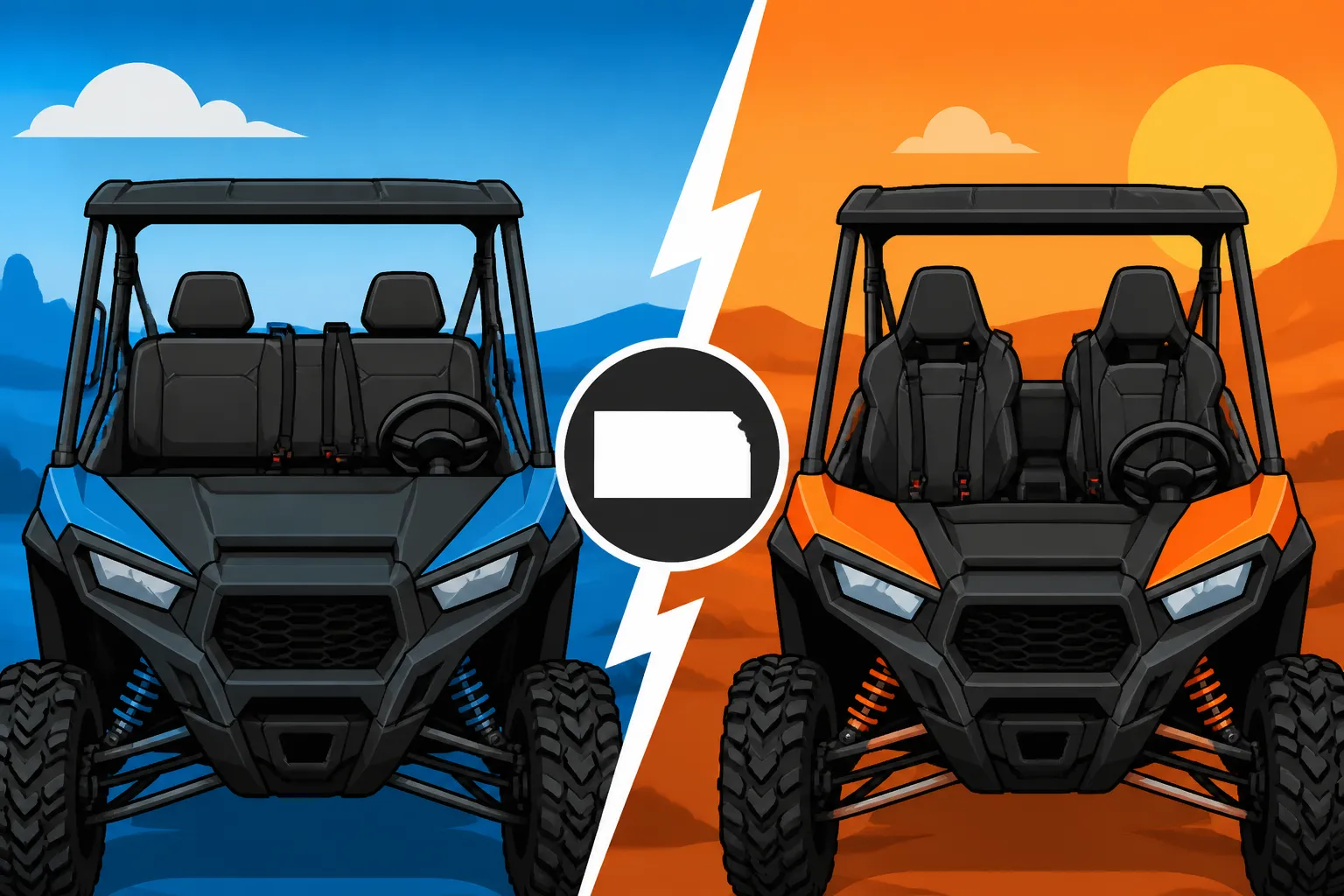
For a side-by-side to potentially qualify as a Work-Site Utility Vehicle (WSUV) in Kansas, one of the key design elements it needs to have is bench seating. This means a continuous, undivided seat that typically spans the width of the vehicle's cabin, allowing multiple occupants to sit side-by-side without individual, distinct seatbacks or cushions separating them. Think of the front seat in an older pickup truck or a park bench. The intent behind this criterion is often tied to the utility aspect of the vehicle – carrying a crew or materials with flexible seating arrangements. It implies a design focused more on practical, multi-person transport than individual, secure racing-style seating. If your side-by-side has a long, flat or slightly contoured seat that two or three people can share without individual dividers, it likely meets the "bench seating" description. This feature, combined with others, helps solidify its WSUV identity.
How "Bucket Seating" Changes the Conversation
Conversely, if your side-by-side is equipped with bucket seats, it generally won't meet the specific seating requirement for a WSUV. Bucket seats are designed for individual occupants, featuring contoured shapes, distinct backrests, and often side bolsters that "bucket" the rider in place. These seats offer more support and are commonly found in sport-oriented side-by-sides, designed for aggressive trail riding where drivers and passengers need to be securely held in their seats against lateral forces. While bucket seats are fantastic for comfort and safety in certain riding conditions, their presence usually signals a machine that doesn't fit the WSUV definition, even if it might otherwise have utility features. This distinction is paramount because if your machine has bucket seats, it will likely be titled simply as an "all-terrain vehicle" (ATV) or a general "nonhighway vehicle" rather than a specific WSUV. This impacts how [Kansas Titles a Side-by-Side] and, crucially, how it can be legally operated.
Real-World Examples of Seating Configurations
Let's consider some common scenarios. Imagine a Polaris Ranger or a John Deere Gator that comes standard with a single, wide, continuous seat across the front. This is a classic example of bench seating, making it a strong candidate for WSUV classification, assuming it meets the other criteria like weight, width, and steering. These machines are often found on farms, ranches, or large commercial properties, designed for hauling, towing, and transporting workers.
Now, picture a Can-Am Maverick X3 or a Polaris RZR. These machines almost universally feature individual, deeply bolstered bucket seats for each occupant, often with four or more seats arranged in a tandem fashion. These are prime examples of sport UTVs. Despite their power and off-road capability, the presence of bucket seats means they would typically not qualify as a WSUV under Kansas law. They would instead be titled as a general nonhighway vehicle, meaning their permissible use on public roads, if any, would be far more restricted than a WSUV in an authorized municipality. When looking to understand how the law applies to your specific machine, you might find resources from services like LawDepot helpful for understanding legal terminology or drafting documents like a bill of sale that accurately describe your machine's features.
Titling Implications of Your Side-by-Side's Seating
The type of seating in your side-by-side isn't just a quirky detail; it has tangible consequences for its official title and how you interact with the Kansas Department of Revenue and county treasurer's offices.
Navigating the Titling Process for WSUVs with Specific Seating
If your side-by-side genuinely meets the WSUV criteria, including the bench seating requirement, you'll be applying for a specific [Kansas Work-Site Utility Vehicles Explained] title. This distinct title acknowledges its utility-focused design and can open up different avenues for limited road use in certain municipalities that have passed specific ordinances. When you visit your [Kansas County Treasurer Offices], you'll need to present your Manufacturer's Certificate of Origin (MCO), which should clearly state the vehicle's specifications, including its seating capacity and type. The clerk will verify these details against the WSUV definition. Make sure you're prepared to explain why your machine fits the WSUV class, especially emphasizing the bench seating if it's not immediately obvious. Having your paperwork in order is crucial, and utilizing templates from services like LawDepot for any supplementary affidavits, such as a bill of sale for a private purchase, can make the process smoother. The titling process for a WSUV still falls under the nonhighway vehicle umbrella, meaning you'll get a title but no traditional license plate or annual registration tag.
When Seating Doesn't Fit the WSUV Description: Alternative Titling Paths
If your side-by-side has bucket seats, or if it lacks other WSUV characteristics like the specific weight and width, it will typically be titled as a general "nonhighway vehicle" or an "all-terrain vehicle" (ATV), depending on its other attributes. This is still a mandatory titling requirement in Kansas for most new or newly acquired off-road machines. The titling process itself will be similar – you'll still go to the county treasurer's office with your MCO or bill of sale and pay the necessary [Kansas ATV Title Cost] and any applicable sales tax. The key difference is the type of nonhighway title you receive. Without the WSUV designation, your machine will have fewer options for limited road use, even in cities that have adopted ordinances for UTVs. It underscores the point that a title is not a license to drive on all roads; it's simply proof of ownership and compliance with state titling laws.
Common Pitfalls and Misunderstandings During Titling
One of the biggest mistakes owners make is assuming all side-by-sides are treated the same, or that a "UTV" automatically qualifies as a WSUV. This isn't the case in Kansas. If you mistakenly try to title a sport UTV with bucket seats as a WSUV, you'll likely be corrected at the treasurer's office, causing delays and confusion. Another pitfall is not having clear documentation. If you're buying a used side-by-side, ensure the seller provides a clear bill of sale that accurately describes the machine, including its seating. This is where a standardized form from a service like LawDepot can be incredibly beneficial. If you’re unsure, it’s always best to ask the county treasurer's office directly about the specific requirements for your machine before you go, especially concerning [Kansas Title Paperwork Explained]. They are the experts on the ground for these unique classifications.
Beyond Seating: Other Crucial WSUV Criteria to Consider
While seating is a key indicator for WSUV classification, it’s not the only one. Kansas law looks at a combination of factors to truly define a Work-Site Utility Vehicle. Understanding these other criteria is essential for a complete picture.
Dimensions and Weight: The 48-Inch and 800-Pound Rules
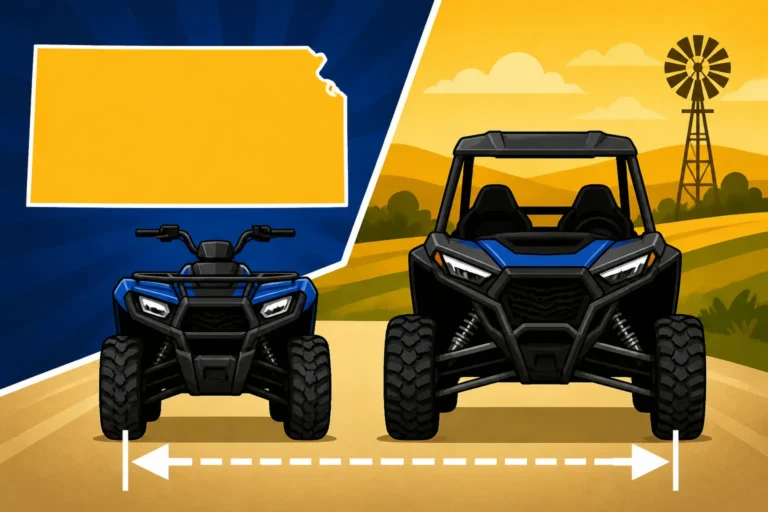
Beyond the seating, a Work-Site Utility Vehicle in Kansas must meet specific physical dimensions. Kansas law defines a WSUV as having a width of not more than 48 inches and an unladen (empty) dry weight of more than 800 pounds. These are strict measurements, and your machine must fall within this range to qualify. The "48 inches" refers to the widest point of the vehicle, excluding mirrors. This specific width often points to machines designed to navigate narrower work pathways, gates, or areas where larger UTVs might not fit. The "more than 800 pounds" rule also distinguishes these machines from smaller, lighter ATVs or golf carts. It suggests a more robust build, consistent with a vehicle designed for heavier-duty utility tasks. These dimensions, combined with bench seating, paint a clear picture of the type of machine Kansas intends to classify as a WSUV. You can find more details on [48 Inches and 800 Pounds] if you are curious.
Steering Mechanism: Wheel Versus Handlebars
Another critical differentiator in how a side-by-side is classified is its steering mechanism. To be considered a Work-Site Utility Vehicle, the machine must be "equipped with a steering wheel." This is a straightforward distinction: if your side-by-side has a steering wheel, like a car, it's consistent with a WSUV. If it has handlebars, like a motorcycle or a traditional ATV, it will not qualify as a WSUV. This distinction is vital because it separates single-rider ATVs and some older, smaller utility vehicles from the UTVs that are more car-like in their operation and often designed for multiple occupants. The presence of a steering wheel, along with bench seating and specific dimensions, helps to define the WSUV class. Understanding [Why a Steering Wheel Changes Your Title Class] can prevent confusion.
Understanding the "Work-Site" Aspect for Legitimate Use
It's important to remember that the "Work-Site Utility Vehicle" designation isn't just about the physical characteristics; it also implies a certain intended use. While the title itself doesn't impose restrictions on where you can operate it on private land, the very name of the classification points to its primary purpose. If a Kansas city or county has an ordinance allowing WSUVs on public roads, it's typically under the assumption that these vehicles are being used for legitimate work-related tasks, agricultural purposes, or transportation within a defined area. This isn't an invitation for joyriding on public streets. If you're considering purchasing or titling a side-by-side in Kansas, take the time to understand all these nuances. Resources like LawDepot can assist with understanding general legal concepts or providing forms, but for specific interpretations of Kansas vehicle statutes, always consult directly with your county treasurer's office or a legal professional familiar with state law. Ensuring your machine is correctly titled according to its features and intended use will save you a lot of potential headaches and penalties down the line.
| Feature | Work-Site Utility Vehicle (WSUV) Criteria (Kansas) | General Nonhighway Vehicle / ATV Criteria (Kansas) |
|---|---|---|
| Seating Type | Bench seating | Can be bench or bucket seating (often bucket for sport UTVs) |
| Width | Not more than 48 inches | Varies; can be wider than 48 inches |
| Unladen Dry Weight | More than 800 pounds | Varies; can be less than 800 pounds |
| Steering Mechanism | Steering wheel | Handlebars (for ATVs) or steering wheel (for some UTVs) |
| Primary Purpose | Utility, work-related tasks | Recreation, farm work, utility (broader) |
| Titling Category | Specific WSUV title (under Nonhighway Vehicle) | General Nonhighway Vehicle / ATV title |
| Limited Road Use | Potentially allowed by local ordinance (specific conditions apply) | Generally restricted, fewer exceptions than WSUV |
Disclaimer
This article is for general informational purposes only and does not constitute professional advice. Laws, prices and regulations vary by location and change over time. Consult a qualified professional for guidance on your specific situation.