Kansas Nonhighway Affidavits
It’s a tale as old as time in the Sunflower State: you finally get your hands on that perfect ATV or UTV, whether it’s a sweet deal from a private seller, a thoughtful gift, or a treasured inheritance, only to discover there’s no proper title. This situation can throw a real wrench in your plans, leaving you scratching your head about how to make your new machine legally yours. This comprehensive guide will walk you through the often-confusing world of Kansas nonhighway affidavits, specifically the TR-13 form, and how it can be your lifeline to rightful ownership.
Understanding the Kansas Nonhighway Title System
Navigating the world of off-road vehicle ownership in Kansas can feel a bit like wading through tall prairie grass – there are rules, but sometimes they’re not immediately obvious. The first step to understanding why affidavits become necessary is to grasp how Kansas classifies and titles ATVs and UTVs.
Why "Nonhighway" Matters for ATVs and UTVs
Unlike your family car, which gets a standard vehicle title and a license plate, most ATVs and UTVs in Kansas are categorized as "nonhighway vehicles." This isn't just a quirky label; it defines their legal standing and how they interact with public roads. Essentially, a nonhighway vehicle is intended for off-road use, private property, or very specific, limited road use under special circumstances. Because of this designation, you won't ever get a traditional license plate or annual tag for your ATV, no matter how many forms you fill out. The title you receive, known as a nonhighway title, serves solely as proof of ownership, not as a permit for road travel. [Why an ATV Is Titled as a Nonhighway Vehicle] can give you even more context on this important distinction.
The crucial takeaway here is that even though your ATV or UTV won't be cruising down I-70, it still absolutely needs a title. Without it, proving you actually own the machine can be incredibly difficult. Imagine trying to sell it, and potential buyers are rightfully wary of a machine with no official paperwork. Or worse, if it ever gets stolen, recovering it without a title is an uphill battle. This "nonhighway" classification is foundational to understanding why a specific affidavit process exists when a traditional title isn't available.
The Importance of a Clean Title in Kansas
Think of a title as your off-road machine's birth certificate and deed rolled into one. It’s the official document issued by the state that legally establishes who owns the vehicle. In Kansas, this is handled at your local county treasurer's office. When you have a clean title in your name, you have undeniable proof that you are the rightful owner. This is incredibly important for several reasons. First, it protects your investment. If someone else tries to claim your machine, your title is your ultimate defense. Second, it makes selling or transferring ownership straightforward. A buyer will want to see that title, plain and simple, to ensure they’re not buying a stolen machine or one with complicated ownership history.
Without a title, you’re in a precarious position. You might have a bill of sale, which is good, but it’s not the final word on legal ownership in the eyes of the state. Problems arise quickly if you try to register or sell an untitled machine. Many potential buyers will walk away, unwilling to take on the headache. Lenders won't finance a machine without a title, and insurers might have questions. The standard way to get a title in Kansas is by presenting a manufacturer's certificate of origin (MCO) for a new machine or a properly assigned title from the previous owner for a used one. For a deeper dive into the documentation involved, check out [Kansas Title Paperwork Explained]. When these standard documents aren't available, that's precisely when a nonhighway affidavit steps into the spotlight as a necessary alternative.
When a Nonhighway Affidavit Becomes Your Best Friend
Life happens, and sometimes, the perfect off-road machine comes into your possession without the perfect paperwork. This is where the Kansas nonhighway affidavit, specifically the TR-13 form, truly shines. It's designed to help you establish legal ownership when a traditional title transfer isn't an option.
Common Scenarios Requiring an Affidavit
It’s frustrating to have a machine you love but can’t officially call your own. The need for a nonhighway affidavit usually stems from a few common situations that many Kansas riders encounter. Perhaps you purchased an ATV from a private seller who, for whatever reason, never bothered to title it themselves or simply lost the title years ago. Maybe you received a UTV as a generous gift from a family member, and the original title has vanished. Or, even more commonly, you might have inherited a quad from a beloved relative, and the title can't be found among their papers, or the process of transferring it through probate is too complex for a nonhighway vehicle. All these scenarios leave you, the current possessor, in a bind. You have the machine, but you lack the legal document needed to prove your ownership.
Another scenario could be that you’ve had the machine for years, moved multiple times, and the title simply disappeared during a move. Now, you want to sell it, and suddenly you realize the problem. This form helps bridge that gap, giving you a pathway to get that crucial piece of paper. If you've ever found yourself with a machine and nothing more than a simple handwritten receipt, you know the confusion. For more on navigating those specific situations, you might want to read [Kansas Title Without a Bill of Sale].
The "No Longer Available" Dilemma
One of the most common and exasperating reasons people turn to a nonhighway affidavit is what the state refers to as the "title no longer available" or "cannot be obtained" situation. This often happens when you buy a machine from a private party, and either the previous owner has lost their title and can't, or won't, apply for a duplicate, or perhaps they've moved away and can't be reached. Even more challenging is when the previous owner has passed away, and there’s no clear heir or executor to sign off on the title transfer. In these cases, you are left holding the bag, or rather, the handlebars, without any official way to prove the machine is yours.
Trying to get a duplicate title from a person who is unreachable or unwilling can feel like chasing a ghost. The county treasurer's office can only issue a duplicate title to the last titled owner. If that person isn't cooperating or can't be found, you're stuck. This is precisely the kind of quagmire the TR-13 affidavit is designed to solve. It allows you to present your case, explaining why the original title cannot be obtained and demonstrating your legitimate claim to the machine. Without this pathway, many perfectly legitimate owners would be unable to obtain legal documentation. If you've been grappling with a lost title and an unreachable owner, you'll find more insights in [Replacing a Lost Kansas Nonhighway Title].
Diving Deep into the TR-13 Affidavit
The TR-13 form is the specific document in Kansas that acts as your nonhighway affidavit. It’s not just any old piece of paper; it’s a sworn statement that carries legal weight, designed to help you secure a title when traditional methods fall short.
What is the TR-13 Affidavit, and How Does It Work?
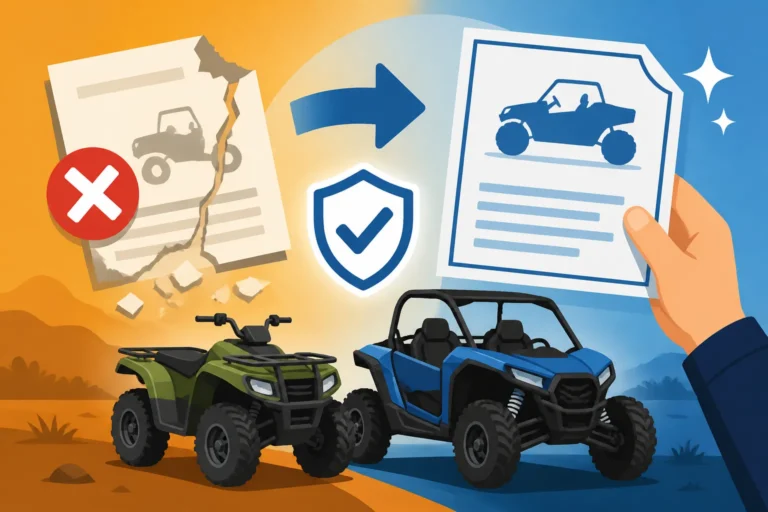
The TR-13, officially known as the "Affidavit of Fact," is a Kansas Department of Revenue form specifically used to establish ownership of a vehicle when a certificate of title cannot be obtained or assigned in the conventional manner. For nonhighway vehicles like ATVs and UTVs, it’s a critical tool. The core purpose of this affidavit is to provide a detailed, sworn account of how you came to possess the machine and why the previous title or Manufacturer's Certificate of Origin (MCO) is unavailable. You're essentially telling your story under oath to the county treasurer's office, giving them the necessary information to make a judgment on issuing a new title in your name.
When you fill out a TR-13, you're not just scribbling down notes; you’re providing legal declarations. This form helps bypass the typical title transfer process by providing an alternative, legally recognized method of demonstrating ownership. It’s important to treat this document with the seriousness it deserves, ensuring all information is accurate and complete. While the TR-13 is a specific state form, understanding how to structure clear, concise legal documents is a valuable skill. If you ever need to create additional sworn statements or other legal forms to bolster your case, resources like LawDepot offer customizable templates that can help you draft professional and legally sound documents to support your affidavit.
Key Information You'll Need to Complete a TR-13
Completing the TR-13 Affidavit of Fact requires careful attention to detail. Any missing information or inaccuracies can cause delays or even lead to denial. First and foremost, you'll need to provide your complete personal information as the applicant – your name, address, and contact details. Then comes the critical information about the machine itself: the full Vehicle Identification Number (VIN), make, model, year, and even the body style (e.g., ATV, UTV, dirt bike). This information must be precise and match any existing records or markings on the machine. You'll often find the VIN stamped on the frame.
Next, and perhaps most importantly, you'll need to clearly state how you acquired the machine. Was it a purchase, a gift, or an inheritance? You must also provide the name and last known address of the person from whom you acquired it. Finally, you’ll reach the crux of the affidavit: explaining why a proper title or MCO cannot be obtained. This section requires a detailed explanation. Did the seller lose the title? Is the previous owner deceased or unreachable? Be as specific as possible. The form usually requires your signature to be notarized, meaning you’ll need to sign it in front of a public notary who will then stamp it, confirming your identity and that you signed it under oath. This notarization adds significant legal weight to your statement. To understand more about this specific form and its use, see [Using a TR-13 Affidavit When There Is No Title].
Supporting Documentation for Your Affidavit
While the TR-13 affidavit itself is a powerful tool, it rarely stands alone. To give your application the best chance of approval, you'll need to provide robust supporting documentation. The county treasurer's office wants to see a clear paper trail, even if it’s an unconventional one. The most crucial piece of supporting evidence is often a bill of sale, even if it's handwritten. This document, no matter how informal, proves you paid money (or received it as a gift) and identifies the seller. Make sure it includes the date, the price, a description of the machine, and the VIN, along with both buyer and seller signatures. [Using a Handwritten Bill of Sale to Title a Quad] emphasizes just how important this can be.
Beyond a bill of sale, consider any other evidence you have. Did you make a payment via bank transfer or a check? Bring copies of those records. Do you have photos of the machine, especially showing the VIN, perhaps from when you first acquired it? These can be helpful. If you’ve attempted to contact the previous owner, keep records of your calls, texts, or emails. For inherited machines, a death certificate and any relevant probate documents or an affidavit of heirship will be necessary. The more evidence you can provide to corroborate your story on the TR-13, the stronger your case will be. If you're looking to create a comprehensive bill of sale or other supporting legal agreements, platforms like LawDepot offer templates that can help ensure you don't miss any critical details.
The Process: From Affidavit to Title in Hand
Once you’ve meticulously filled out your TR-13 and gathered all your supporting documents, the next step is to submit your application and wait for the official review. This isn't an overnight process, but knowing what to expect can ease the anxiety.
Submitting Your Affidavit to the County Treasurer
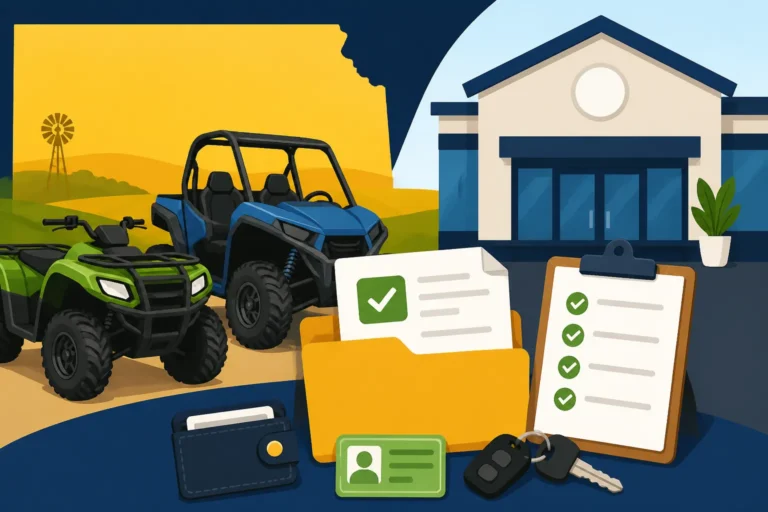
Unlike some vehicle-related processes that might go through a state agency, the titling of ATVs and UTVs in Kansas, even with an affidavit, is handled at the local level. Your destination is your local county treasurer's office. This is where you'll present your completed, notarized TR-13 Affidavit of Fact along with all your carefully assembled supporting documents. It’s always a good idea to call ahead or check your county treasurer's website to confirm their hours and any specific requirements they might have. They might even have a checklist of documents to bring.
When you go, make sure you have your photo ID, all your original documents (and copies for them to keep), and be prepared to pay the applicable title fee and sales tax. The clerks at the counter are generally very helpful, but they need you to come prepared. They are the gatekeepers to your new title, and they will meticulously review everything you provide. Remember, you're titling the machine in the county where you reside or where the machine is primarily kept. For more information on where this process happens, check out [Title an ATV at the County Treasurer, Not the State] and [Kansas County Treasurers Handle Titles].
What to Expect During the Review Process
After you've submitted your TR-13 and all your supporting paperwork, the county treasurer's office will begin its review. This isn't just a quick glance; the clerks and staff will carefully examine your affidavit and all the attached evidence. They're looking for consistency, accuracy, and legitimacy. They want to ensure that your claim to ownership is solid and that there are no red flags, such as indications that the machine might be stolen or that you're attempting to circumvent proper transfer procedures. They may cross-reference the VIN with state and national databases to check for theft reports or existing liens.
It's not uncommon for them to have questions or to ask for additional information or clarification. This is why being honest, thorough, and having all your facts straight from the beginning is so important. If there's something unclear, they will reach out. The review process can vary in length. While some straightforward cases might be processed relatively quickly, more complex scenarios, especially those involving extensive missing information or unique circumstances, could take longer. Patience is key during this period. For a general idea of processing times, though not specific to affidavits, you can refer to [Kansas Title Processing Time].
The Outcome: Approval, Denial, and Next Steps
Once the county treasurer’s office has completed its review, you’ll receive a decision. The best-case scenario, of course, is approval. If your TR-13 affidavit and supporting documentation are deemed sufficient, and your claim of ownership is verified, a shiny new Kansas Nonhighway Title will be issued in your name. Congratulations! You now have undeniable legal proof of ownership for your ATV or UTV. This is the moment you've been waiting for, and it means you can confidently sell your machine, insure it, or simply enjoy knowing it’s officially yours.
However, sometimes an application can be denied. This can be incredibly frustrating, but it's important to understand why. Was there insufficient evidence? Was a crucial piece of information missing from the affidavit or supporting documents? Did they find a discrepancy? If denied, the county treasurer's office should provide you with a reason. Don't give up immediately; often, a denial means you need to gather more evidence, clarify details, or re-submit with a stronger case. In rare and highly complex situations, especially those involving disputes over ownership or very old, untraceable machines, you might need to consult with an attorney to explore other legal avenues. For creating other legal documents, or if your situation requires a more robust legal approach, LawDepot can be a useful resource for general legal templates that might help. Ultimately, the county treasurer's office holds the final authority on issuing titles based on affidavits.
Common Pitfalls and Pro Tips for Nonhighway Affidavits
Navigating the affidavit process can be tricky, and it’s easy to stumble into common mistakes that could delay or even prevent you from getting your title. Knowing these pitfalls ahead of time can save you a lot of headache.
Avoiding Common Mistakes When Using a TR-13
One of the biggest mistakes people make when submitting a TR-13 Affidavit of Fact is providing incomplete information. Every blank on the form is there for a reason, and if you leave sections empty or provide vague answers, your application will likely be rejected. Another frequent error is forgetting to have the document notarized. A TR-13 without a notary stamp is just a piece of paper; with it, it's a sworn legal statement. Always double-check that your signature is notarized before submission. A lack of sufficient supporting evidence is also a major pitfall. A bare TR-13 without a bill of sale, proof of payment, or explanation of why the original title is missing is a weak application.
Perhaps the most serious mistake, and one that carries legal consequences, is attempting to use an affidavit for a machine you know to be stolen or misrepresenting facts on the form. This is illegal and can lead to significant penalties. Always ensure every statement you make on the affidavit is truthful and accurate to the best of your knowledge. Being thorough, honest, and meticulous will serve you best. For a broader look at errors owners make, check out [Kansas Title Mistakes Kansas Owners Make Most Often].
The Importance of a VIN Inspection and Search
Even with a comprehensive TR-13 affidavit, the county treasurer’s office might require a Vehicle Identification Number (VIN) inspection. This is a crucial step in ensuring the machine is accurately identified and to confirm that it is not stolen. A VIN inspection usually involves a law enforcement officer or an authorized individual physically verifying the VIN on the machine matches the one on your paperwork. This is a protective measure for both you and the state. It helps prevent fraud and ensures that legitimate owners are the ones receiving titles.
Beyond the physical inspection, the VIN will almost certainly be checked against national databases for stolen vehicles and outstanding liens. This is a standard procedure for any vehicle titling process, and nonhighway vehicles are no exception. If the VIN comes back as stolen, the machine will likely be impounded, and you could face serious legal issues. Therefore, it's always in your best interest to conduct your own VIN check before you even purchase an untitled machine. Ask the seller for the VIN, run it through an online database, and if anything seems suspicious, walk away. Always be a responsible buyer. You can find more details on this by reviewing [Checking a Used Quad Against Stolen Vehicle Records].
Seeking Professional Assistance When Needed
While many TR-13 affidavit cases are straightforward enough for individuals to handle, some situations can be incredibly complex. If you're dealing with a complicated inheritance scenario, a contentious ownership dispute, or simply an old machine with a tangled history, it might be wise to consult with an attorney. A legal professional can help you understand your rights, navigate the intricacies of property law, and ensure your affidavit and supporting documents are as robust as possible. They can also advise you on alternative legal paths if the TR-13 process doesn’t work out.
For general guidance on drafting various legal documents or understanding legal forms, resources like LawDepot can be incredibly helpful for creating additional statements or formalizing agreements that might strengthen your affidavit application. And don't forget the invaluable resource right in your community: your county treasurer's office. If you have specific questions about the TR-13 form itself, the required documentation, or the local process, calling their office can save you time and frustration. They are there to help you navigate the process, and asking questions is always better than making assumptions. For more general advice on interacting with your treasurer, consult [Questions Worth Asking a Treasurer's Office].
Understanding Costs and Timeframes
Getting your nonhighway title through an affidavit isn't just about paperwork; it also involves understanding the associated fees and the timeline for the process. Being prepared for these aspects can help manage your expectations and ensure a smoother experience.
Fees Associated with Titling via Affidavit
Even when using a nonhighway affidavit, there are specific fees you'll need to pay to obtain your Kansas title. The good news is that the actual title fee for a nonhighway vehicle in Kansas is quite modest. You can expect to pay the standard [Kansas Charges $10 for a Title] fee. This covers the cost of processing and issuing your new official document. However, this isn't the only expense. You'll also be responsible for paying Kansas sales tax on the purchase price of the machine, unless it was a gift where no money changed hands, or it's an inherited item. This sales tax is typically collected by the county treasurer at the time of titling. For a full breakdown on this, see [Kansas Sales Tax Collected at Titling].
Beyond the state-mandated fees, you might incur a small fee for having your TR-13 affidavit notarized, which typically ranges from a few dollars to a slightly higher amount depending on the notary. If you miss the state's titling deadline (more on that below), you could also face [Kansas Title Late Filing Penalties], which are additional charges that accrue for delayed submission. While generally not exorbitant, these penalties can add up, making timely submission important. Always budget for these various costs to avoid surprises.
Realistic Timeframes for the Affidavit Process
When you acquire an ATV or UTV in Kansas, the clock starts ticking. The state generally gives you [Kansas Gives You 60 Days to Apply] for a title from the date of purchase or assignment. This "Sixty Days From the Assignment Date" is a crucial period. If you're using an affidavit because a title isn't available, it means you're already in a somewhat unusual situation, and this 60-day window still applies to when you submit your completed affidavit and supporting documents to the county treasurer.
The actual processing time for an affidavit can vary. While the county treasurer's office strives for efficiency, reviewing an affidavit often requires more scrutiny than a standard title transfer. They need to verify information, potentially conduct VIN checks, and ensure all supporting documents are valid. This means your new title might not be issued on the spot. It could take anywhere from a few days to several weeks, depending on the complexity of your case and the workload of the office. It's wise to plan for this potential waiting period and follow up politely if you haven't heard anything after a reasonable amount of time.
What Happens If You Miss the Deadline?
Missing the 60-day deadline to apply for your title in Kansas, even when using a nonhighway affidavit, can result in additional costs. As mentioned, [Kansas Title Late Filing Penalties] are assessed when you fail to submit your titling application within the specified timeframe. These penalties are designed to encourage prompt action and ensure vehicles are properly titled in a timely manner. The penalty often starts small but can increase the longer you delay.
While an affidavit might be accepted past the 60-day mark, you'll almost certainly be required to pay these late fees on top of the standard title fee and sales tax. This underscores the importance of acting quickly once you acquire a machine, especially one that requires an affidavit. Don't let the complexity of gathering documents delay your submission. Get your TR-13 notarized and all your supporting evidence together as soon as possible. Addressing the issue promptly can save you money and ensure you have that crucial proof of ownership sooner rather than later.
Disclaimer
This article is for general informational purposes only and does not constitute professional advice. Laws, prices and regulations vary by location and change over time. Consult a qualified professional for guidance on your specific situation.