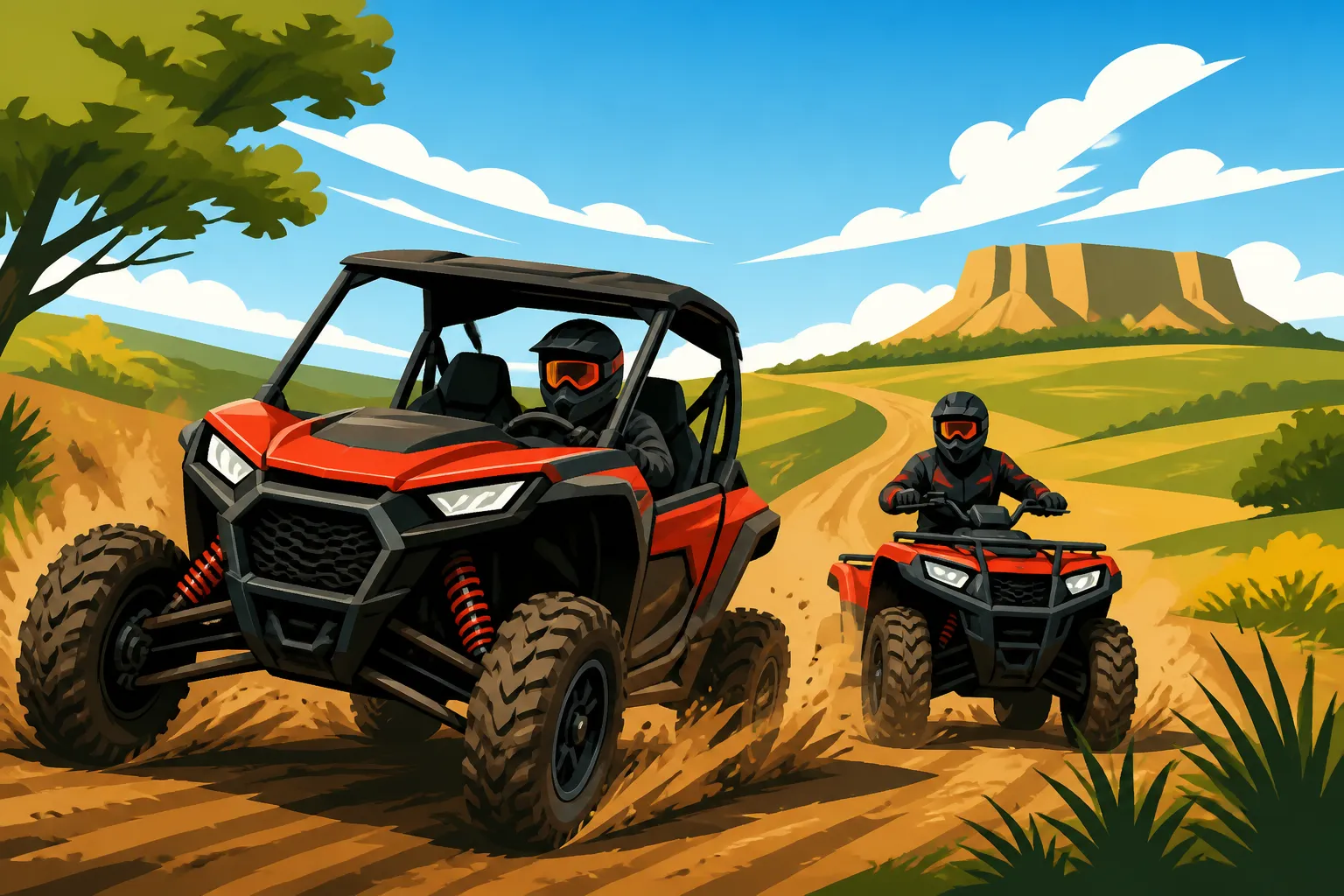
School Creek ORV Area in Kansas
School Creek ORV Area is a small, designated riding destination near Milford Lake, and the details that make or break a visit are easy to overlook: machine width, permitted vehicle types, trail conditions, and access rules. This guide explains how to plan a responsible ride, what to check before towing, and how to decide whether School Creek fits your machine and experience level.
What to know about School Creek ORV Area
Where the riding area fits around Milford Lake
School Creek ORV Area is associated with Milford Lake, a U.S. Army Corps of Engineers project in north-central Kansas. The lake sits near Junction City and Manhattan, while the nearby communities of Wakefield and Milford help orient a trip through this part of the state. The riding area is a defined place to take certain off-highway vehicles, not permission to ride anywhere along the lake or across surrounding public land.
That distinction matters when you arrive. Milford Lake has recreation sites, roads, shorelines, and other areas with their own rules. A trail entrance or parking spot does not mean every nearby track is open to motorized use. Stay within the signed riding area and follow posted boundaries, even if a worn path appears to continue beyond them. The [Kansas Corps of Engineers Riding Areas] guide can help put School Creek in context with other Corps-managed riding opportunities.
Before leaving home, confirm the route to the actual ORV entrance using current maps or directions from the Milford Lake project office. A general map pin for “Milford Lake” is not specific enough when you are towing a trailer and trying to find an approved access point. Check for road closures, entrance changes, or restrictions that could affect your arrival. If your phone loses service, having the directions saved or written down can keep a minor navigation problem from becoming a long detour.
How large the area is and what that means
School Creek is commonly described as covering about 300 acres. That gives riders a useful sense of scale, but acreage alone does not tell you how much rideable trail is available, how the routes connect, or how long a visit will last. A riding area’s usable experience depends on the marked route network, terrain, weather, and your pace—not just the number printed in a guide.
For a first visit, think of School Creek as a compact destination rather than a sprawling trail system where you can ride all day without repeating ground. You may cover familiar sections more than once, pause often to check trail direction, or take a relaxed pace with a younger rider. Experienced riders may want to treat it as one part of a Milford Lake outing rather than assuming the acreage guarantees a full day of varied riding.
The [School Creek's 300 Acres in Kansas] overview is a useful companion if you are comparing the area with other places to ride. Still, use size as a planning clue, not a promise about available mileage or trail difficulty. The shape and condition of the routes can change with maintenance and weather. Take time to read the information posted at the entrance, and build a flexible plan that works even if a section is closed or more challenging than expected.
Check whether your machine is allowed
The 50-inch limit is a key planning detail
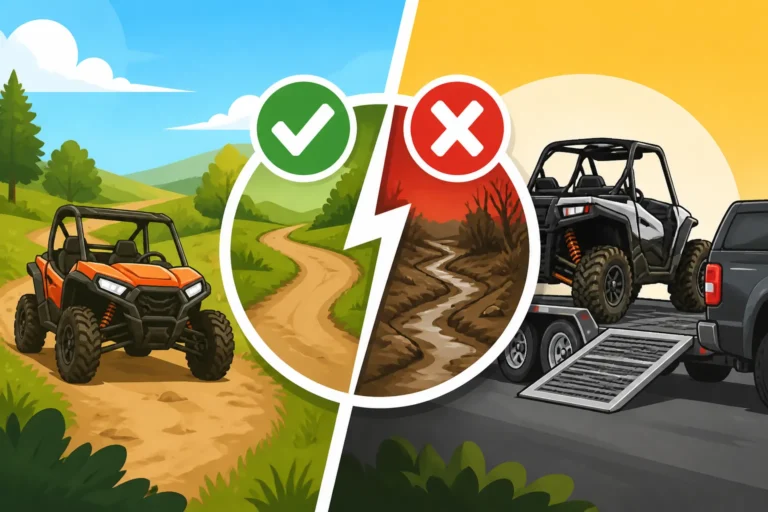
School Creek is associated with a 50-inch width limit, so machine size should be one of the first things you verify—not a last-minute guess in the parking area. A machine that looks narrow beside a full-size UTV may still be too wide for an area with a strict maximum. Measure your vehicle according to the applicable posted rule, and check the official guidance for how width is assessed before you tow.
The [Kansas's 50-Inch Limit at School Creek] guide focuses on that restriction. It is especially relevant if you have a side-by-side, a modified quad, or an older machine with accessories that extend beyond the body. Tires, wheel spacers, bumpers, and other additions may affect the machine’s overall width. Don’t rely on a brochure figure if the vehicle has been changed since it left the factory.
A useful rule of thumb is to measure the machine as it is set up for the ride, then compare the result with the current posted requirement. If your measurement is close to the limit, ask the project office how it applies the rule rather than assuming a small difference will be overlooked. A trailer full of gear is a frustrating place to discover your vehicle is not eligible. It is far easier to resolve uncertainty at home than at the entrance.
Vehicle type matters as much as width
A width limit is only one part of eligibility. School Creek is generally associated with dirt bikes and quads, but riders should verify the current allowed vehicle categories before planning around that description. A vehicle can meet a width requirement and still be outside the category permitted at a particular area. Conversely, a machine that is commonly used off-road is not automatically allowed on every designated route.
This is why side-by-side owners should be particularly careful. Many UTVs exceed a narrow-area limit, and some places restrict them by type regardless of a particular machine’s dimensions. Do not treat a small-looking youth UTV, a compact utility vehicle, or a golf cart as automatically acceptable. Get an answer for the exact make, model, and configuration you intend to bring.
The [Kansas Trails That Allow Dirt Bikes] and [Kansas Trails That Allow Side-by-Sides] guides can help when you are comparing destinations for a specific machine. If School Creek is not a fit, that does not mean your weekend has to be canceled; it may simply mean choosing another riding area with rules suited to your vehicle. Confirm access before you load, and make sure every rider in the group understands which machines are permitted.
| Planning question | What to check before you go |
|---|---|
| Is my machine within the width limit? | Measure the machine in its riding configuration and confirm how the posted limit is applied. |
| Is my vehicle type permitted? | Verify the allowed categories for the exact area, not just the machine’s general off-road use. |
| Are modifications relevant? | Consider tires, spacers, bumpers, racks, and other parts that may change width. |
| Is the area open for my planned visit? | Check for closures, seasonal restrictions, weather notices, and entrance information. |
| What should I carry? | Bring identification, proof of ownership if appropriate, safety gear, water, and a backup navigation plan. |
Plan your route and arrival
Find the approved entrance before you tow
A location near Milford Lake can sound simple to reach until you are pulling a trailer on unfamiliar roads. Some map apps may route to the lake, a nearby recreation site, or an unpaved road without clearly distinguishing the ORV entrance. Before setting out, confirm that the destination pin is for the riding area itself and that your planned approach is suitable for your vehicle and trailer.
If you are coming from Junction City, Manhattan, or farther away on I-70, allow extra time for the final stretch. Rural roads can involve turns that are easy to miss, and a trailer limits where you can safely turn around. Download an offline map or save the route while you have service. If you use a trail-navigation app such as onX Offroad, treat it as a planning aid rather than the final authority on access: posted signs and land-manager directions take priority.
A quick call to the Milford Lake project office can clear up questions that a map cannot answer. Ask which entrance serves the ORV area, whether any roads or gates are closed, and whether there are current operating restrictions. Keep the questions specific. “Is School Creek open?” may not reveal whether a certain vehicle type is excluded or whether the access road is temporarily affected. A few minutes spent confirming the details can save a long drive with the wrong setup.
Set a realistic schedule for a compact riding area
Do not plan the day around a mileage estimate you found for a different season or an old route map. At a relatively compact area, the ride may be shaped more by your group’s pace, the condition of the ground, and stops to check directions than by distance. Families, beginners, and mixed-experience groups often move more slowly because riders need time to regroup and talk through tricky spots.
Choose a meeting point and a simple regrouping routine before anyone starts riding. For example, agree that the group stops at signed junctions and waits at the entrance if someone becomes separated. If you are riding with children or first-timers, make sure the least experienced rider sets the pace. A quick, confident lap by the strongest rider can leave the rest of the group feeling rushed or pushed beyond their comfort level.
Leave some space in the schedule for loading, unloading, gear checks, and a brief inspection of the machine before heading out. If you expect to combine riding with other Milford Lake activities, keep the plans loose. A washed-out section, an equipment issue, or a slower pace can change the timing. Riders looking for other nearby options can also explore [Kansas Trails Near Manhattan], but confirm each location’s machine rules and access conditions separately.
Prepare for trail conditions and Kansas weather
Rain can change the ride quickly
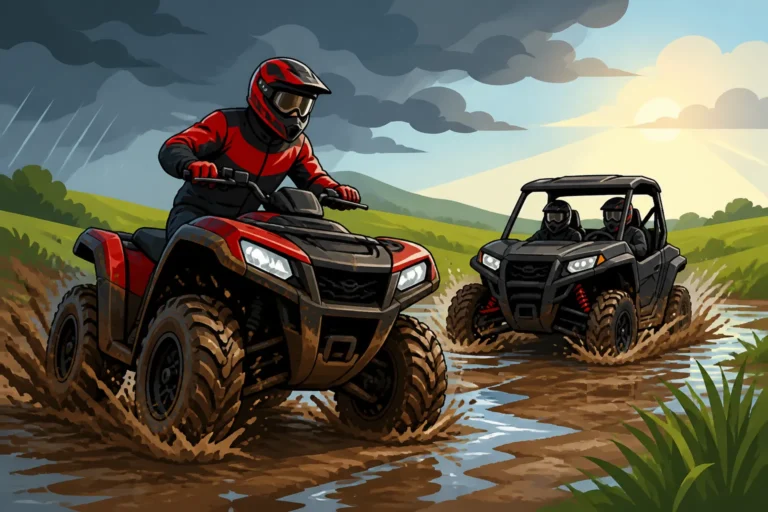
Kansas weather can shift between dry, dusty conditions and heavy rain that leaves dirt routes soft or damaged. A trail that felt manageable during a dry visit may become slippery, rutted, or difficult to pass after a storm. That is not just an inconvenience: riding on saturated ground can deepen ruts, widen the route as people search for firmer lines, and contribute to damage that affects future visitors.
Check the forecast for the area, not only the weather where you live. A storm near Milford Lake may affect trail conditions even if the morning looked clear in Manhattan or Junction City. If rain is expected, call ahead or look for current official notices before hitching up. The [Kansas Trail Closures After Rain] guide offers broader advice on why conditions and closures matter across the state.
If the ground is clearly too wet, the responsible choice may be to postpone. That can be disappointing after arranging a group ride, but pushing through muddy routes can create a bigger problem for the land and for your machine. If you arrive and find standing water, deep ruts, or a closure sign, do not use the shoulder or an unofficial bypass to get around it. Turn back, report a problem through the appropriate project contact, and save the ride for better conditions.
Pack for heat, wind, and a long day outside
A short ride can still leave you exposed to Kansas sun, wind, dust, and changing temperatures. Bring drinking water for every rider, not just one shared bottle, and plan for more than the amount you think you will need. Pack basic first-aid supplies, sun protection, and a layer that can handle a cool breeze or an unexpected change in weather. Keep these items secured so they cannot shift or fall off during the ride.
Dust is another practical concern, especially when riders are close together. Leave enough room to see and breathe comfortably, and use eye protection appropriate for off-road riding. A spare pair of goggles or clean lenses can make a real difference if the first set gets scratched or coated in dust. For children, check that helmets and protective gear fit correctly before leaving home rather than trying to make an ill-fitting setup work at the trailhead.
Bring the small items that can prevent a minor problem from ending the outing: a basic tool kit suited to your machine, a charged phone, a paper or offline map, and a plan for what to do if a rider or vehicle needs help. Keep in mind that a phone signal may be unreliable in some areas. The [Kansas Trail Conditions Before You Tow] guide can help you build a pre-trip routine, while onX Offroad or another mapping tool can be useful when you have saved the relevant information in advance.
Ride responsibly and keep the area usable
Follow signs and remain on designated routes
The safest assumption at a public riding area is that only signed or otherwise designated routes are open to motorized use. A faint track, an old tire mark, or an open-looking field is not proof that riding is allowed. At Milford Lake, land may serve different recreation and resource-management purposes, and a boundary can be less obvious on the ground than it looks on a screen.
Use entrance signs and route markers as your guide. If a marker is missing or confusing, stop and reassess instead of guessing. Do not create a new route around mud, a fallen branch, or a closed section. Shortcuts can spread into multiple tracks and leave the land in worse condition, while crossing an unclear boundary can put your group in an area where motorized use is prohibited.
Respect other visitors even when they are not riding. People may be walking, fishing, camping, or using nearby public areas. Slow down where visibility is limited, watch for people and animals, and give others room. The [Kansas Trail Etiquette Locals Expect] guide covers habits that help keep shared riding areas pleasant. A little courtesy—especially near access points and trail intersections—can prevent a recreational site from becoming a source of conflict.
Keep your group together without crowding
Before starting, decide how your group will handle intersections, stops, and a rider who falls behind. On a compact route system, it is easy for one person to take a wrong turn while the rest continue. Agree that riders wait for the person behind them at confusing points, and set a clear rule for what to do if someone does not appear at the next regrouping spot.
Keep enough space between machines to maintain visibility and control. Riding too close can leave the next person in a dust cloud, reduce reaction time, and make it harder to spot a rut or obstacle. The lead rider should adjust speed to the least experienced person in the group, not to the fastest machine. If the group includes children, give them simple instructions about stopping, waiting, and not attempting an unfamiliar obstacle just because someone else has crossed it.
Avoid alcohol or other impairment before riding, and be honest about fatigue. A rider who is tired may make poor decisions even on a familiar route. Take breaks, check that everyone has water, and turn around if a machine develops a problem. Leaving a route clean, keeping noise reasonable, and packing out all trash are small actions, but they help preserve access for the next family or local rider.
Choose the right ride for your experience level
Make a first visit low-pressure
If you have not been to School Creek before, treat the first visit as a chance to learn the layout rather than a test of endurance. Start by reading signs and walking through any instructions posted at the entrance. Take a careful first loop at a comfortable speed, and pay attention to route markings, sight lines, and places where the trail surface changes.
New riders often feel pressure to keep up, particularly when they arrive with friends who have more experience. Set expectations beforehand: nobody needs to prove anything, and turning back is a sensible decision. A parent can help a child feel more comfortable by reviewing basic controls, hand signals, and stopping procedures before the machine is started. If the young rider seems overwhelmed, pause in a safe place rather than trying to push through.
Families comparing places to ride may find [Kansas Trails for Kids] helpful. The important question is not simply whether an area is labeled family-friendly, but whether the vehicle fits the rules, the riders have appropriate experience, and the terrain is right for them that day. For beginner plans, choose a manageable pace, keep the group small enough to supervise, and avoid letting a child ride beyond the adult’s ability to assist.
Match machine and rider to the terrain
The right machine for a rider depends on more than engine size. Consider how easily the person can reach the controls, understand braking, and manage the vehicle’s weight at low speed. A young rider who can sit on a quad comfortably may still need practice before handling uneven ground, tight turns, or a sudden stop. Supervision should be close enough that an adult can intervene promptly.
Experienced riders should also resist assuming that a familiar machine makes an unfamiliar area effortless. Different surfaces and route layouts can change how a quad responds. Loose ground, ruts, and hidden obstacles can call for slower steering and more attention than a smooth field. If you have changed tires, added accessories, or altered suspension, remember that those adjustments may affect both handling and whether the vehicle meets the area’s size rules.
For a mixed group, plan around the person with the least experience and the machine with the most limitations. That may mean taking breaks, skipping a section, or choosing a different destination. The goal is a ride everyone can enjoy, not a route completed at any cost. Check the current access details before each trip, because a machine that was acceptable at one location or on one visit may not meet the rules at another.
Compare School Creek with other riding plans
When School Creek may be a good fit
School Creek can be appealing if you have a permitted dirt bike or quad, want a designated riding opportunity near Milford Lake, and are comfortable with a more compact area. Its location can make it an option for riders in north-central Kansas who want to plan around the lake region without committing to a much longer drive. The key is arriving with a machine that fits the rules and an expectation that acreage does not automatically translate into extensive trail mileage.
It may also suit riders who enjoy a simple outing: unload, check the posted information, ride at a measured pace, and spend time in the surrounding area afterward. If your group prefers a large network, long loops, extensive amenities, or broad vehicle eligibility, compare the destination carefully before choosing it. School Creek should not be treated as a catch-all option for every ATV, UTV, or recreational vehicle.
A useful way to decide is to write down your group’s priorities before booking the day. Is the most important factor proximity, a place for dirt bikes, a child-friendly pace, or access for a wider UTV? The answer may point you toward School Creek—or toward another location better suited to your equipment. The [Kansas ATV Trails: Where You Can Actually Ride] overview can help you consider alternatives without assuming that every public recreation site permits off-road riding.
Have a backup plan if the rules or conditions do not fit
A backup plan is especially helpful if you are traveling with a group or towing from far away. If School Creek is closed, too wet, or unsuitable for your machine, decide in advance whether you will reschedule, visit another approved riding area, or switch to a non-riding activity around Milford Lake. This prevents the group from making an unsafe or unauthorized decision simply because everyone is already there.
Do not treat nearby land as a substitute riding area unless motorized use is clearly allowed. A lake, public access road, recreation area, or adjacent parcel can have different rules from the ORV area. If the posted information conflicts with an old map or a third-party app, follow the on-site directions and ask the project office. Keep a note of the contact information and a second destination whose current rules you have already checked.
A planning app such as onX Offroad can help you save a route, mark a meeting point, and keep a backup map available offline. It cannot establish that a particular trail is open or that your machine is eligible. Use it alongside official information, not instead of it. That combination—current access confirmation, a realistic plan, and a willingness to change course—is more useful than trying to force a ride when conditions or rules are not in your favor.
Use a pre-trip checklist
Confirm the details that can change
Before you load the trailer, verify the area’s current status and the requirements for your exact vehicle. Check the official Milford Lake or Corps project information for closures, access directions, and posted restrictions. If there is any uncertainty about the width limit or permitted machine type, ask directly rather than relying on a social media comment, an old review, or a map label.
Look at the forecast and recent rainfall, and decide what conditions would make you postpone. Make sure the tow vehicle and trailer are ready for the route, and that your machine is in good working order. Check tires, brakes, fuel, controls, and any safety equipment you depend on. If you are bringing a group, share the plan so everyone knows the arrival point, expected pace, and what to bring.
Do the final check the night before as well as the morning of the trip. Weather and access information can change, and it is much easier to adjust plans before everyone is on the road. If your group has traveled a long distance, share a contact plan and make sure someone knows where you expect to ride. Keep the information practical and specific rather than assuming every rider has already read the same rules.
Pack for a ride that may take longer than expected
Bring water, basic first aid, protective gear, charged communication devices, and a way to navigate without dependable service. Include any machine-specific tools and supplies needed for a minor repair. Secure loose items on the vehicle and trailer so they cannot fall onto the road or trail. If you are carrying food, pack it so it can be kept clean and removed with the rest of your trash.
For a group with children, bring gear that fits each child properly and consider an extra layer, spare gloves, and a change of clothes. A small problem—cold hands, a scratched visor, or an empty water bottle—can quickly turn a pleasant outing into a miserable one. Build in a short rest stop before anyone is exhausted, and make sure riders can recognize the agreed meeting point.
Finally, take a moment to check the riding area’s entrance information when you arrive. Confirm that your machine and planned route match the posted rules, then adjust if something does not. School Creek is most enjoyable when the logistics are settled before the first engine starts: you know where you can ride, your equipment fits the area, and everyone understands how to keep the visit safe and considerate.
Disclaimer
This article is for general informational purposes only and does not constitute professional advice. Laws, prices and regulations vary by location and change over time. Consult a qualified professional for guidance on your specific situation.