Using a Handwritten Bill of Sale to Title a Quad
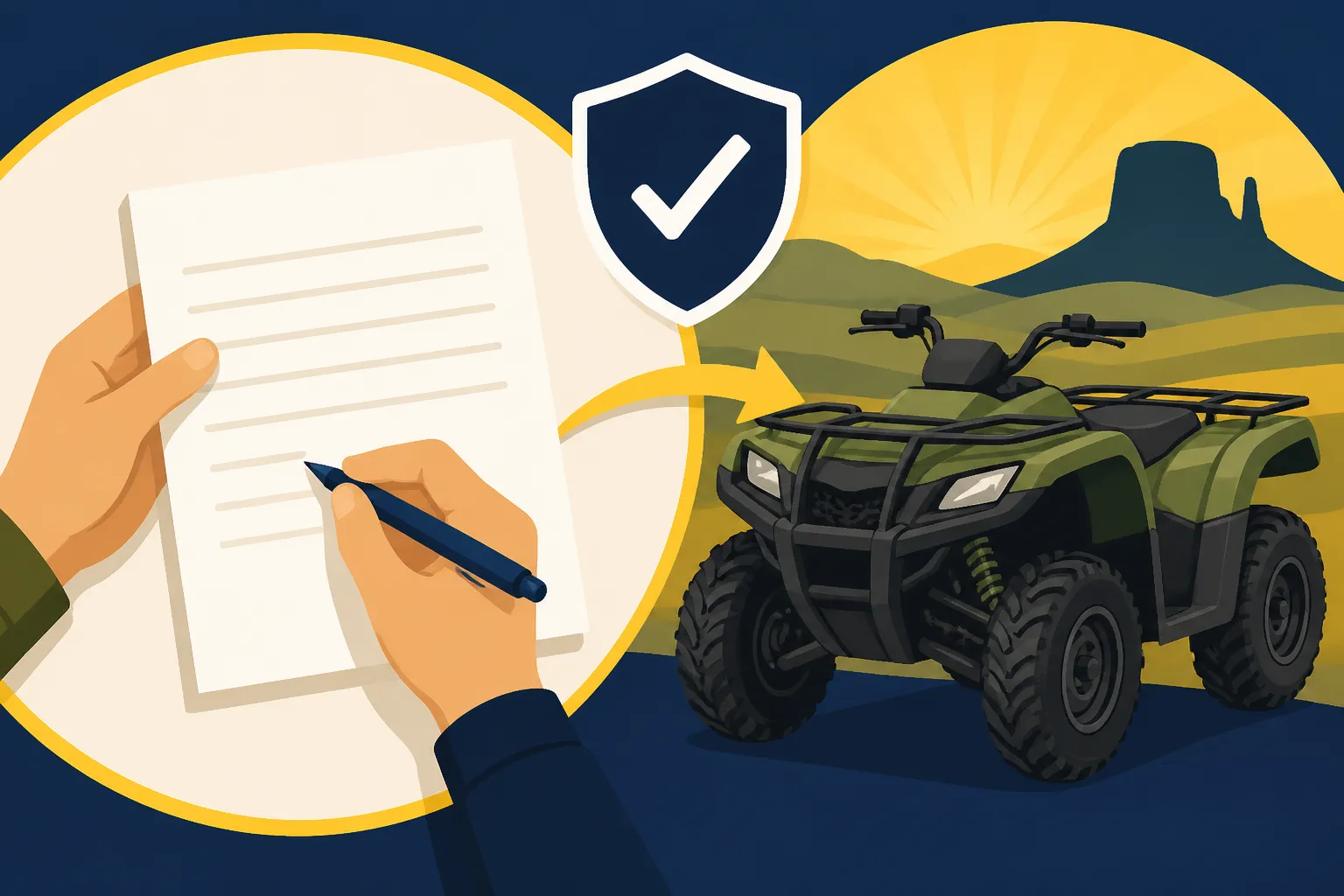
So you've found the perfect quad, maybe a steal from a neighbor or a listing online, and the deal is sealed with a handshake and a handwritten bill of sale. Now comes the moment of truth: heading to the Kansas County Treasurer's office to get that machine legally titled in your name. Many folks feel a knot of anxiety in their stomach, wondering if that scribbled piece of paper will actually be enough. This guide is here to unravel that worry, explaining exactly how to use a handwritten bill of sale to title your ATV in Kansas and ensure you're riding legal, not guessing.
Why a Handwritten Bill of Sale Can Feel Like a Hurdle
Buying an ATV or UTV through a private sale in Kansas often means you skip the shiny showroom and the stack of pre-printed, official-looking paperwork that comes with a dealership purchase. Instead, you might end up with a simple, handwritten bill of sale – a testament to a quick deal between individuals. While this informality can be convenient, it often leaves buyers feeling uneasy about the next crucial step: titling their new-to-them machine.
The Anxiety of Informal Documents
It's completely normal to feel a bit apprehensive about walking into a government office with a document that looks like it was penned on the kitchen table. You might wonder, "Is this actually legal?" or "Will the clerks at the treasurer's office even accept this?" This anxiety stems from the fear of rejection, wasted time, and the potential for a smooth transaction to turn into a bureaucratic nightmare. After all, you've just shelled out your hard-earned cash, and you want to make sure your new quad is legally yours without a hitch.
Dealerships provide standardized forms, often printed with company logos and specific fields for every piece of information required by the state. A handwritten bill of sale, by contrast, feels less "official" and might lead you to question its validity. However, don't let that initial feeling deter you. With the right information and presentation, a handwritten bill of sale is absolutely acceptable for titling an ATV in Kansas, provided it contains all the necessary details.
What Kansas Law Requires for Proof of Ownership
Kansas law is practical when it comes to proving ownership for nonhighway vehicles like ATVs. What they really need is clear evidence of who bought the machine, who sold it, and an unambiguous description of the vehicle itself. A formal, notarized bill of sale is certainly an option and can add an extra layer of security, but it's not a strict requirement for the bill of sale itself. What's absolutely paramount, however, is the proper assignment of the machine's previous title. The bill of sale supplements this, confirming the transaction details and purchase price.
The core principle is that the county treasurer's office needs to establish a clear chain of ownership. Your handwritten bill of sale acts as a critical link in that chain, documenting the transfer from the seller to you. Without it, or without a properly assigned title, that chain is broken, and you'll find yourself stuck at the counter. The key is to make sure your handwritten document is as thorough and clear as any pre-printed form.
Crafting a Bulletproof Handwritten Bill of Sale for Your Quad
When you're dealing with a private sale, the responsibility of creating a valid bill of sale often falls to either the buyer or the seller, or sometimes a collaborative effort on the spot. Don't underestimate the power of a well-written, even if handwritten, document. It's your primary proof of purchase and a vital piece of the titling puzzle in Kansas.
Essential Information to Include
To ensure your handwritten bill of sale is accepted at the [Kansas County Treasurers Handle Titles] office, it must contain several key pieces of information. Think of it like this: if a stranger picked up this piece of paper, could they understand exactly what was sold, by whom, to whom, and for how much?
Here’s a checklist of what absolutely needs to be on that piece of paper:
- Buyer's Full Name and Address: Your complete legal name and current residential address.
- Seller's Full Name and Address: The seller's complete legal name and current residential address. This name should ideally match the name on the existing title.
- Date of Sale: The exact date the transaction occurred and ownership officially transferred. This is important for calculating the [Kansas Gives You 60 Days to Apply] for your title without late penalties.
- Purchase Price: The agreed-upon amount of money exchanged for the quad. This figure will be used to calculate your [Kansas Sales Tax Collected at Titling].
- Quad's Make, Model, Year, and VIN: This is non-negotiable. The Vehicle Identification Number (VIN) is the unique identifier for your ATV and must be accurate. Double-check it against the quad itself and any existing title. Include the make (e.g., Polaris, Honda, Kawasaki), model (e.g., RZR, Foreman, Brute Force), and year.
- Description of the Quad: A brief but clear description, such as "red 2020 Honda TRX420 Rancher ATV." You can also note engine size, color, or any other distinguishing features. An odometer reading is less common for ATVs, but if present, include it.
- Statement of Transfer of Ownership: A simple sentence like "I, [Seller's Name], hereby sell and transfer ownership of the above-described ATV to [Buyer's Name]."
- Signatures of Buyer and Seller: Both parties must sign the document.
- Printed Names of Buyer and Seller: Directly below their signatures, print their full names clearly.
If you're looking for a structured way to ensure you don't miss anything, even for a handwritten document, you could look at online resources that offer templates. Brands like LawDepot provide standardized forms that you can print out and fill in by hand, giving you a professional framework even if the final execution is manual. This helps ensure all the critical fields are present and accounted for.
Why Clarity and Legibility Matter
Imagine the county clerk trying to decipher illegible handwriting or interpret vague descriptions. It's a recipe for delays and frustration. When preparing your handwritten bill of sale, treat it as seriously as a legal contract, which it essentially is.
- Write Clearly: Use your best penmanship. If your handwriting is notoriously difficult to read, consider printing the information or having someone with clearer handwriting fill it out for you.
- Use Proper Ink: Stick to blue or black ink. Avoid pencils, felt-tip markers that might bleed, or any ink color that might fade or be difficult to photocopy.
- Avoid Erasures and White-Out: If you make a mistake, it's best to draw a single line through the error, write the correct information above or next to it, and have both the buyer and seller initial the correction. Excessive corrections or white-out can raise suspicion about the document's authenticity.
- Make Copies: Once completed and signed, make photocopies or take clear photos of the document. Both the buyer and seller should retain a copy for their records. You'll need the original for the treasurer's office.
A well-organized, legible document makes the clerk's job easier and your titling process smoother. Remember, the county treasurer's office processes countless titles every day; the clearer your paperwork, the less likely it is to be flagged for further review.
What to Do If the Original Title Is Missing
This is where a handwritten bill of sale alone won't be enough, and the process becomes a bit more complicated. In Kansas, a bill of sale proves the transaction, but the actual certificate of title is the legal proof of ownership that gets transferred. If the seller doesn't have the original, properly assigned [Kansas Nonhighway Title Explained], you cannot simply title the quad with just a bill of sale.
This scenario often requires additional steps and specific affidavits. You might need to utilize documents like the [Kansas Nonhighway Affidavits] or even a [Using a TR-13 Affidavit When There Is No Title] if the previous owner truly cannot produce the title. This often involves waiting periods or even legal processes to establish clear ownership before a new title can be issued. Always be wary of purchasing a machine if the seller cannot provide a clear, original title, as it can lead to significant headaches and potential legal battles if the machine was stolen or has undisclosed liens. Always check for previous liens or stolen status using the VIN before purchasing.
The Titling Process with Your Handwritten Bill of Sale
You’ve got your quad, your perfectly crafted handwritten bill of sale, and now it's time for the final step: officially getting that title in your name. Knowing what to expect and what to bring to the county treasurer's office will save you a lot of stress and potential re-trips.
Gathering Your Documents for the County Treasurer
Walking into the [Kansas County Treasurer Offices] prepared is half the battle. You don't want to get all the way there only to find you've forgotten a crucial piece of paper. Based on [Kansas Title Paperwork Explained], here’s what you absolutely need to bring:
- The Original Handwritten Bill of Sale: This is your primary proof of purchase and the focus of this guide!
- The Seller's Properly Assigned Title or MCO: This is the most critical document.
- If the quad was previously titled in Kansas, you need the original Kansas Nonhighway Title certificate, properly signed over to you by the seller. The seller's signature on the title assignment must match the name printed on the title.
- If the quad is brand new or has never been titled before (common with older machines that might have been used strictly on private land), you’ll need the Manufacturer’s Certificate of Origin (MCO). This MCO must be properly assigned from the dealer (if applicable) and then to you by the seller.
- Proof of Kansas Residency: A Kansas driver's license or state ID card usually suffices. If your license doesn't reflect your current address, bring a utility bill, bank statement, or lease agreement with your name and current Kansas address.
- Your Identification: A valid government-issued photo ID.
- Payment for Fees and Sales Tax: You'll need to pay the [Kansas ATV Title Cost] (a relatively small fee) and the [Kansas Sales Tax Collected at Titling]. This tax is based on the purchase price listed on your bill of sale. Be prepared for debit cards, credit cards, or checks, but it's always wise to call ahead to confirm accepted payment methods.
It's helpful to organize these documents in a folder. When in doubt about what to bring, especially for complex situations, call your local county treasurer's office directly. They are the ultimate authority on what they'll require. Check out [What to Bring to the Treasurer's Office to Title] for a detailed checklist.
What to Expect at the County Treasurer's Office
Once you arrive at the county treasurer's office, the process typically goes something like this:
- Check-in: You'll likely take a number or be directed to a specific counter for vehicle titling.
- Document Presentation: When your turn comes, you’ll present all your gathered documents to the clerk. They will meticulously review the handwritten bill of sale, comparing the information (especially the VIN and names) to the assigned title or MCO.
- VIN Verification: In some cases, particularly if there are discrepancies or if the machine is older, the clerk might require a VIN verification. This usually involves a visual inspection to ensure the VIN on the machine matches the paperwork. For ATVs, this might not be required as often as for road vehicles, but be prepared for the possibility. [Photographing a VIN in a Farmyard] can be a useful preparatory step.
- Sales Tax and Fees: The clerk will calculate the sales tax owed based on the purchase price on your bill of sale, plus any local sales taxes applicable to your county. They will also collect the state title fee. Remember, you have [Sixty Days From the Assignment Date] to complete this without incurring late penalties.
- Processing: If all documents are in order and fees are paid, the clerk will process your application. You'll typically receive a receipt and perhaps a temporary document proving your application is in process.
- Title by Mail: Your official Kansas Nonhighway Title certificate will be mailed to you, usually within a few weeks. It won't come with a tag, as [Why a Kansas Nonhighway Title Never Comes With a Tag] explains, because [Kansas Has No OHV Registration] for ATVs.
Common Pitfalls and How to Avoid Them
Even with the best preparation, things can go awry. Here are some common issues people face when using a handwritten bill of sale and how you can prevent them:
- Missing or Incorrect VIN: A VIN that doesn't match the machine or the title is a guaranteed red flag. Double-check it before you even sign the bill of sale. Always ensure the VIN on the bill of sale exactly matches the VIN on the actual ATV. [Finding the Serial Number on an Older Kansas Quad] can sometimes be a challenge.
- Signatures Not Matching the Title: The seller's signature on the title assignment must match the printed name on the title. If the seller’s legal name has changed or is different, additional documentation might be required.
- Incomplete Information on the Bill of Sale: Any missing critical details (like the purchase price, date of sale, or full addresses) can lead to rejection. Refer back to the "Essential Information to Include" section.
- Seller Not Actually Owning the Quad: This is a nightmare scenario. Always verify the seller's identity and ensure they are the legitimate owner listed on the title. Before money changes hands, seriously consider [Checking a Used Quad Against Stolen Vehicle Records] to avoid buying stolen property.
- Attempting to Title Without the Previous Title (and No Affidavit Process): A bill of sale is not a substitute for a missing title. If the title is truly lost and no [Kansas Nonhighway Affidavits] have been executed, you’ll have a significant hurdle. Make sure the seller provides a clear, unencumbered, and properly assigned title or MCO.
- Out-of-State Titles: If you're bringing a quad from another state, the process for [Kansas Titles for an Out-of-State Machine] or [Titling an ATV in Kansas From Out of State] will follow different rules, but a bill of sale is still a key component.
By being meticulous and anticipating these potential problems, you can dramatically increase the likelihood of a smooth titling experience.
Titling Documents Comparison
To help you visualize what's expected, here’s a quick comparison of the information required on a handwritten bill of sale versus what the county treasurer will be looking for on the accompanying title document.
| Feature / Document | Handwritten Bill of Sale (Your Document) | Assigned Title / MCO (Seller's Document) |
|---|---|---|
| Buyer Info | Full Name, Address | N/A (You become new owner) |
| Seller Info | Full Name, Address | Name as Registered Owner (on title front) |
| Date of Sale | Yes | Date of Assignment (on title back) |
| Purchase Price | Yes (for sales tax calculation) | N/A |
| Machine Details | Make, Model, Year, VIN | Make, Model, Year, VIN (on title front) |
| Signatures | Buyer & Seller | Seller (assigning ownership) |
| Notarization | Not required but can add validity | Not required for assignment |
| Original Copy | Required at Treasurer's Office | Required at Treasurer's Office |
Beyond the Bill of Sale: Protecting Your Investment
Once your quad is officially titled in your name in Kansas, you might feel a huge sense of relief – and rightly so! However, the bill of sale and title are more than just bureaucratic necessities; they are critical components of protecting your investment in the long run.
Why a Title Is Still Your Best Proof of Ownership
While your handwritten bill of sale proves the transaction occurred, the official Kansas Nonhighway Title is the undisputed legal document of ownership. It's the equivalent of a deed to your home or a title to your car. Without it, your ownership is much harder to prove, and you could face significant issues down the line.
Think about these scenarios:
- Resale Value: When you decide to sell your quad, a clear title in your name makes the process infinitely smoother. Buyers are often hesitant, and rightfully so, to purchase a machine without a title. It signals legitimate ownership and allows the next buyer to easily title it themselves. An untitled quad will almost always sell for less.
- Insurance: While [Do You Need ATV Insurance in Kansas?] depends on your specific city ordinances and circumstances, many owners choose to carry comprehensive coverage. To make an insurance claim (e.g., for theft or damage), your insurance company will require proof of ownership, which is the title.
- Avoiding Legal Headaches: If your quad is ever stolen, or if there's a dispute over ownership, your title is your strongest defense. Without it, proving you lawfully own the machine can be a complex and costly ordeal. This is [Why an ATV Is Titled as a Nonhighway Vehicle] in the first place, to establish a clear legal record.
Considering Additional Documentation
Beyond the bill of sale and the title, there are a few other steps you can take to further protect yourself:
- Photographs: Take several clear photos of the quad at the time of purchase, including detailed shots of the VIN plate or sticker. These photos can serve as additional proof of the machine's condition at the time of sale and its unique identifiers.
- Keep Copies: Always keep copies of all transaction documents – the handwritten bill of sale, the assigned title, receipts, and any correspondence with the seller or county treasurer. Store them in a safe place, both physically and digitally.
- Formal Templates: While a handwritten bill of sale is accepted, if you prefer a more structured approach for future private sales, consider using templates from legal document providers like LawDepot. These forms walk you through all the necessary fields, making it harder to forget crucial information, even if you fill them out by hand.
After Titling: What Comes Next?
Once you’ve successfully titled your quad, you can generally expect to receive your physical title certificate in the mail within a few weeks. What comes next largely depends on where and how you plan to ride your ATV.
In Kansas, ATVs are generally designated as nonhighway vehicles, which means they are not registered for road use and, therefore, do not receive an annual tag or license plate. This is why [Kansas Has No Annual Tag Fee]. Your nonhighway title simply signifies legal ownership.
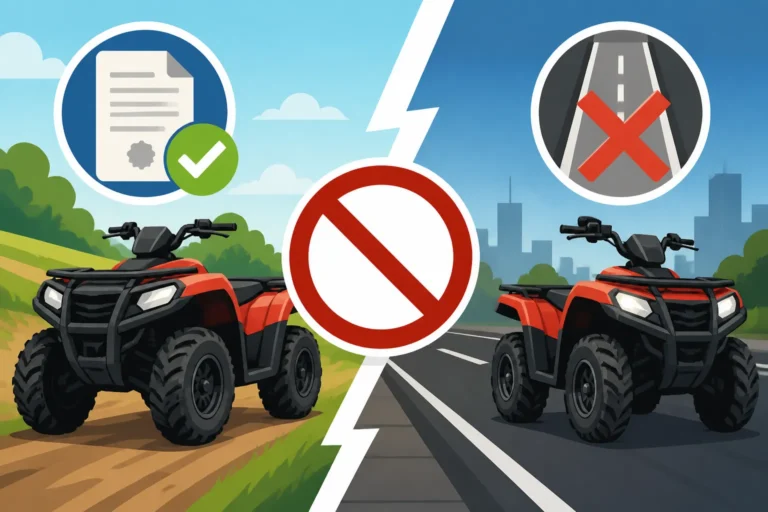
If you plan to ride on specific trails, such as those at [Tuttle Creek ORV Area in Kansas] or [Syracuse Sand Dunes Park in Kansas], always check their specific rules and any required permits or fees. For road use, remember that [Kansas ATV Road Rules Under 8-15,100] generally ban ATVs on public roads unless specific local ordinances allow it or for agricultural purposes. Your title doesn't automatically grant you road access; it just confirms you own the machine.
Armed with a properly executed handwritten bill of sale and a clear understanding of the Kansas titling process, you can confidently navigate what might initially seem like a daunting bureaucratic hurdle. Enjoy your quad, knowing it's legitimately yours!
Disclaimer
This article is for general informational purposes only and does not constitute professional advice. Laws, prices and regulations vary by location and change over time. Consult a qualified professional for guidance on your specific situation.