Sixty Days and No Longer
It's incredibly frustrating when you've finally landed that perfect ATV or UTV for tearing up the trails or getting work done on the farm, only to realize there's a ticking clock for getting it legally titled. Many folks in Kansas don't realize that once you take possession of that machine, you have a strict 60-day window to get your nonhighway title sorted. This guide is here to walk you through exactly what that 60-day deadline means, why it exists, and how you can navigate the process smoothly to avoid any unnecessary headaches or penalties.
Understanding the 60-Day Titling Deadline in Kansas
You've just bought your new (or new-to-you) off-road machine, and the excitement is palpable. You're ready to hit the dirt, but hold on a minute! Kansas law is pretty clear: you have a limited window to get that title transferred into your name. This isn't just a suggestion; it's a hard and fast rule designed to keep everything orderly in the eyes of the state. Ignoring it can lead to more than just a slap on the wrist.
Why 60 Days? The Legal Basis
The 60-day rule for titling ATVs and UTVs in Kansas is rooted in state statutes that govern vehicle ownership and sales. While it might seem like a bureaucratic hurdle, the intent is actually pretty practical: it helps maintain accurate records of ownership, ensures sales tax is collected promptly, and ultimately helps prevent issues like stolen machines being resold without proper documentation. For nonhighway vehicles like ATVs and UTVs, the state wants a clear paper trail, just as they would for a car or truck, even if your quad isn't destined for public roads. This deadline kicks in the moment a sale is finalized and ownership changes hands. It's the state's way of saying, "Let's get this squared away sooner rather than later." It streamlines the process for everyone involved, from the county treasurer's office to future buyers.
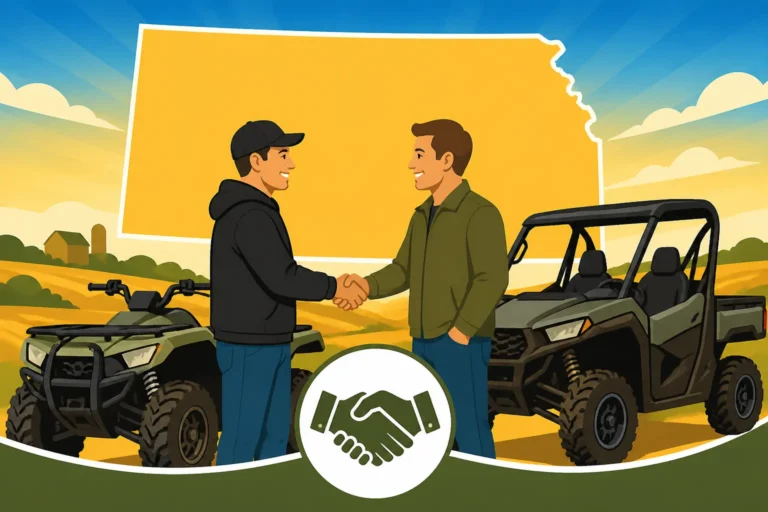
Imagine you've just bought a used side-by-side from a private seller out in rural Kansas. You shake hands, the money changes hands, and you load it up. In that moment, the 60-day clock begins. It's not when you decide to title it, or when you finally get around to it. It's about the transaction date. This legal framework is a key part of how [Kansas Titles ATVs as Nonhighway Vehicles], ensuring these machines are properly accounted for, even if they never see pavement.
What Triggers the Clock?
The 60-day clock officially starts ticking from the "assignment date" on the Manufacturer's Certificate of Origin (MCO) if it's a new machine, or the existing title if it's a used one. For a brand-new ATV or UTV purchased from a dealer, that assignment date will be when the dealer formally transfers ownership to you. They'll typically fill out their part of the MCO, sign it over, and that's the day. If you're buying a used machine from a private seller, the assignment date will be the date the previous owner signed over their title to you.
It's crucial to understand this exact trigger because it's the official timestamp the county treasurer's office will use. Let's say you bought a quad on June 1st, and the seller dated the title transfer as June 1st. You then have until July 31st to complete the titling process. This means having all your paperwork in order and actually submitting it at the treasurer's office. It doesn't mean just thinking about it or starting to gather documents. When you are presented with the MCO or title, always double-check that the assignment date is accurate and matches your date of purchase. A common pitfall is a seller backdating the assignment, which can immediately put you behind schedule before you even leave their driveway. This specific timeframe is detailed in [Sixty Days From the Assignment Date], emphasizing the importance of this date.
Consequences of Missing the Deadline
So, what happens if you miss that 60-day deadline? Kansas law imposes penalties for late titling. These typically come in the form of a late fee, which starts accruing after the 60 days are up. While I can't give specific figures, know that this fee usually increases the longer you delay. It's not just a one-time penalty; it can continue to add up over time, making your long-term ownership more expensive than it needs to be. This means that a simple delay could cost you significantly more than the initial [Kansas Charges $10 for a Title] fee.
Beyond the monetary penalty, missing the deadline can create other complications. If you need to sell the machine down the line, a delayed title in your name might raise questions from a potential buyer, or even make the sale more difficult. You can't legally prove ownership until that title is transferred. Plus, without a title in your name, if the machine is stolen or involved in an accident, proving you're the rightful owner for insurance claims or law enforcement purposes can become a bureaucratic nightmare. The state also uses the titling process to collect sales tax, so delaying the title means delaying that collection, which is another reason for the penalties. It's simply not worth the hassle or the extra cost to put it off.
Step-by-Step Titling Process Within the 60 Days
Navigating the titling process might seem daunting, especially with a deadline looming, but it's actually quite straightforward if you know what to expect. The key is preparation and understanding the sequence of steps. By breaking it down, you can tackle it efficiently and keep that 60-day clock from causing you any stress.
Gathering Your Essential Paperwork
Before you even think about heading to the county treasurer's office, you need to gather all the necessary documents. Think of this as your mission critical pre-flight checklist. Missing even one item can mean being sent home to start over, which eats into your precious 60 days.
Here’s a breakdown of what you'll typically need:
- Manufacturer's Certificate of Origin (MCO) or Previous Title:
- New Machine: For a brand-new ATV or UTV, you'll receive an MCO from the dealer. This is essentially the birth certificate of your machine. Make sure the dealer has properly completed their assignment section, including the date of sale and their signature.
- Used Machine: For a used machine, you'll need the original title, properly signed over to you by the previous owner. Ensure their signature matches the name printed on the title, and that they've filled in the odometer reading (if applicable, though often not for ATVs/UTVs), the sale price, and the date of sale. Check for any liens listed on the title that haven't been released.
- Bill of Sale: While not always strictly required if the title or MCO has all the sale details, a separate bill of sale is highly recommended, especially for private sales. It acts as a clear record of the transaction. It should include the buyer's and seller's names and addresses, a detailed description of the machine (make, model, VIN), the purchase price, and the date of sale. Using a template from a reputable source like LawDepot can help ensure you don't miss any critical information. This is especially important for verifying the sale price for tax purposes.
- Proof of Identification: You'll need a valid government-issued photo ID, such as a driver's license or state ID card. This confirms your identity as the person applying for the title.
- Proof of Address: A utility bill, lease agreement, or other official document showing your current Kansas residential address might be required. The treasurer's office needs to confirm you reside in the county where you're titling the machine.
- Proof of Sales Tax Payment (if applicable): If you purchased the machine from a Kansas dealer, they likely collected the sales tax at the time of sale. Bring proof of this payment. If you bought it from a private seller or an out-of-state dealer, you will pay the sales tax directly to the county treasurer at the time of titling. This is where [Kansas Sales Tax Collected at Titling] comes into play.
- Application for Certificate of Title: This form (often called a Form TR-212a or similar) will be filled out at the treasurer's office, or you might be able to download and pre-fill it. It asks for information about you and the machine.
Having all these documents organized in a folder before you leave the house will save you immense time and frustration. For a comprehensive overview of what paperwork is needed, check out [Kansas Title Paperwork Explained].
Visiting Your Local County Treasurer's Office
Once your paperwork is squared away, your next stop is the local county treasurer's office. This is where the magic (or at least the official processing) happens. Remember, you title your machine in the county where you reside, not necessarily where you bought it.
- Locating Your Office: A quick search online for "[Your County Name] Kansas County Treasurer" will usually give you their address and hours of operation. It's always a good idea to call ahead or check their website for current wait times or specific requirements, especially if you're going during peak hours.
- What to Expect: When you arrive, you'll likely need to take a number or wait in line. Be patient; these offices can get busy. When it's your turn, you'll present all your gathered documents to a clerk. They will review everything, checking for completeness and accuracy. They'll verify the VIN on your documents against state records and process your application. Don't be shy about asking questions if you're unsure about any part of the process. They are there to help you, and it's better to clarify something now than to face issues later. It's the local [Kansas County Treasurers Handle Titles] that are your go-to resource.
During this visit, the clerk will also calculate any sales tax owed (if not already paid) and the title fee. This is the moment to have your payment method ready.
Completing the Application and Paying Fees
The final stage at the treasurer's office involves completing the formal application and settling any outstanding fees.
- The Application Form: The clerk will provide you with the official "Application for Certificate of Title and Registration" form (often referred to as a TR-212a or similar, though nonhighway vehicles like ATVs typically only get a title, not a registration for annual tags). You'll need to fill in details about your name, address, the machine's make, model, year, and VIN. Double-check everything for accuracy, as errors can cause delays.
- Fees: You'll be responsible for a few fees:
- Title Fee: Kansas charges a modest fee for issuing a nonhighway title. While the exact figure can vary over time, it's typically a small flat rate. This is the fee for the physical title document.
- Sales Tax: If sales tax wasn't collected by a Kansas dealer at the point of sale, you'll pay the state and any applicable local sales tax directly to the county treasurer. This is calculated on the purchase price of the machine. Make sure you have your bill of sale handy to show the purchase price.
- Late Fee (if applicable): If you've missed the 60-day deadline, the late fee will be added to your total. This is why it's so important to get everything done within that initial two-month window.
- Payment Methods: Most county treasurer offices accept various payment methods, including cash, checks, and often credit or debit cards. It's wise to confirm their accepted payment types beforehand to avoid any surprises.
Once all forms are correctly completed and all fees are paid, the clerk will process your application. You'll usually receive a temporary receipt or a printout confirming your application. The actual title document for your nonhighway vehicle will then be mailed to you, typically within a few weeks. It's a relief to finally have that official paperwork in hand, knowing you've successfully navigated the 60-day deadline!
Common Scenarios and Navigating Challenges
Life isn't always a smooth, paved road, especially when it comes to paperwork and vehicle titles. You might encounter situations that throw a wrench in the typical titling process. But don't despair; Kansas law often has provisions for these bumps in the road, even if they add an extra step or two.
Dealing with Private Sales and Missing Paperwork
Buying an ATV or UTV from a private seller can sometimes be a fantastic deal, but it also carries a higher risk of paperwork issues. What if the seller lost the original title? Or perhaps they never bothered to title it themselves after buying it years ago? This is a common frustration, but it's not always a dead end.
- No Title? Affidavit in Lieu of Title: If the seller genuinely doesn't have a title for the machine, Kansas law offers a pathway. You might be able to use a specific affidavit, often called an "Affidavit in Lieu of Title" (Form TR-903 for example, though forms can change). This form essentially states that you are the rightful owner, provides details about how you acquired the machine, and explains why a title isn't available. You'll typically need to have this notarized, and it often requires supporting documentation like a detailed bill of sale and perhaps even a VIN inspection. Some county treasurers may also require a bond for untraceable ownership. If you're creating such a bill of sale or affidavit, resources like LawDepot can provide useful templates to ensure you're covering all your bases legally.
- Handwritten Bill of Sale: For private sales, a handwritten bill of sale is perfectly acceptable, as long as it contains all the critical information: buyer and seller names/addresses, machine description (VIN, make, model), date of sale, and purchase price. Both parties should sign it. This document is vital proof of your transaction, especially when the original title might be in question.
- Lien on the Title: Sometimes, an old lien might still be listed on a used title, even if the loan was paid off long ago. If this happens, you'll need the seller to provide a lien release from the financial institution. The treasurer's office cannot transfer the title until all liens are cleared.
- Deceased Seller: If you purchased a machine from someone who has since passed away, or if you inherited a machine, the process involves additional steps, often requiring probate documents or an affidavit of heirship. This ensures legal transfer of ownership from the deceased's estate.
Dealing with these situations requires patience and diligence. It's always best to be proactive and ask the seller about title status before you finalize the purchase. For more on navigating these scenarios, especially when it comes to missing documents, see [Kansas Nonhighway Affidavits] and [Kansas Titles After a Private Sale].
Titling an Out-of-State Machine
Moving to Kansas with your existing ATV or UTV, or buying a machine from a seller in a neighboring state like Missouri or Oklahoma, introduces its own set of considerations for the 60-day rule. The general principle remains: you have 60 days from the date you bring the machine into Kansas (or the purchase date, whichever applies) to get it titled in the state.
- Proof of Ownership from Other States: You'll need the original title from the previous state. Ensure it's properly signed over to you. If the other state didn't issue titles for nonhighway vehicles (some states don't), you'll need sufficient proof of ownership from that state, which might include registration documents, a bill of sale, or a notarized affidavit from the previous owner.
- VIN Inspection: For machines brought in from out of state, the county treasurer's office may require a VIN inspection. This is usually done by a local law enforcement officer (sheriff's deputy or police officer) or sometimes by the treasurer's office staff themselves. The purpose is to verify that the VIN on the machine matches the paperwork and hasn't been tampered with. Call your local treasurer's office to confirm if and where this inspection is needed.
- Sales Tax Differences: If you purchased the machine from an out-of-state dealer, you will likely need to pay Kansas sales tax when you title it, minus any sales tax you can prove you paid in the other state. The treasurer will calculate the difference, if any, based on Kansas's rates. It's not a double tax, but rather ensuring Kansas collects its share.
The 60-day window is just as critical for out-of-state machines. Don't assume that because it was titled elsewhere, the Kansas deadline doesn't apply. It absolutely does, and the clock starts ticking when that machine physically enters the Sunflower State under your ownership. For detailed guidance, consult [Titling an ATV in Kansas From Out of State] or [Kansas Title for a New Resident].
When Life Happens: Exceptions and Special Circumstances
Sometimes, circumstances arise that are beyond a simple purchase or transfer. Kansas law tries to account for these as well. While the 60-day rule is firm, the method of titling might adapt.
- Inherited Machines: When you inherit an ATV or UTV, the 60-day clock typically starts from the date the estate is settled and the machine is legally assigned to you. You'll need documents like the deceased owner's death certificate, a copy of the will (if applicable), and court orders or affidavits of heirship. This can be a complex process, so it’s often best to talk to the county treasurer's office early to understand the exact requirements for [Kansas Titles for an Inherited Machine].
- Auction Purchases: Machines bought at auction usually come with a bill of sale from the auction house. This document, along with any previous title the auction house provides, is what you'll use to title the machine. The 60-day clock starts from the date of the auction sale. Ensure the bill of sale clearly identifies the machine by VIN.
- Lienholder Title Applications: If you finance your ATV or UTV, the bank or credit union (the lienholder) might send the title application directly to the county treasurer's office on your behalf, to ensure their lien is recorded. While this takes some burden off you, you should still confirm with your lender that the application was submitted promptly to avoid any late fees. You will still typically be responsible for providing your personal identification and paying any sales tax not handled by the dealer. This is particularly relevant when dealing with [Kansas Title and Lien Records].
In all these scenarios, thorough documentation and open communication with your county treasurer's office are your best tools for successfully navigating the titling process within or around the 60-day deadline.
Key Documents and Fees for Kansas Nonhighway Titles
To help you keep track of what you need and what to expect, here’s a summary of the typical requirements for titling an ATV or UTV in Kansas. Remember, specific forms and exact fee amounts can change, so it's always smart to verify with your local county treasurer's office before you go.
| Document/Item | Purpose | Provided By | Where to Submit/Pay |
|---|---|---|---|
| Manufacturer's Certificate of Origin (MCO) | Proof of origin for new machines | Dealer (for new machines) | County Treasurer's Office |
| Previous Title (Signed Over) | Proof of ownership for used machines | Previous owner (for used machines) | County Treasurer's Office |
| Bill of Sale | Record of transaction, verifies purchase price and date | Seller (private sale) or Dealer | County Treasurer's Office |
| Photo Identification | Verifies applicant's identity | You | County Treasurer's Office |
| Proof of Kansas Address | Confirms residency in the titling county | You (e.g., utility bill, lease) | County Treasurer's Office |
| Application for Title (TR-212a or similar) | Official request for a Kansas title | County Treasurer's Office (or download online) | County Treasurer's Office |
| Title Fee | Cost for issuing the physical nonhighway title | You | County Treasurer's Office |
| Sales Tax | State and local tax on the purchase price | You (if not collected by a KS dealer) | County Treasurer's Office |
| Late Fee | Penalty for titling after 60 days | You (if applicable) | County Treasurer's Office |
| VIN Inspection (if required) | Verification of vehicle identification number (often for out-of-state) | Law Enforcement/Treasurer's Office staff (if needed) | County Treasurer's Office |
| Lien Release (if applicable) | Proof that a previous loan on the machine is paid off | Lienholder (e.g., bank, credit union) | County Treasurer's Office |
| Affidavit in Lieu of Title (if applicable) | Used when the original title is unavailable | You (with supporting documents) | County Treasurer's Office |
The 60-day deadline for titling your ATV or UTV in Kansas is more than just a suggestion; it's a legal requirement designed to keep ownership records clear and to ensure proper taxes are collected. While the process can seem intricate at first glance, breaking it down into manageable steps – gathering your documents, visiting the county treasurer's office, and completing the application – makes it much less intimidating. By understanding what triggers the clock, knowing the specific paperwork you'll need, and being aware of the consequences of delay, you can easily avoid late fees and ensure your off-road machine is legally recognized in the Sunflower State. Don't let that ticking clock turn your excitement into a headache; get your title squared away within those 60 days.
Disclaimer
This article is for general informational purposes only and does not constitute professional advice. Laws, prices and regulations vary by location and change over time. Consult a qualified professional for guidance on your specific situation.